China Non Fossil Power Generation Targets 50% By 2030
| General Studies Paper III: Sustainable Development, Government Policies & Interventions |
Why in News?
Recently, China has officially committed to generating 50% of its electricity from non-fossil sources by 2030, accelerating its clean-energy transition.
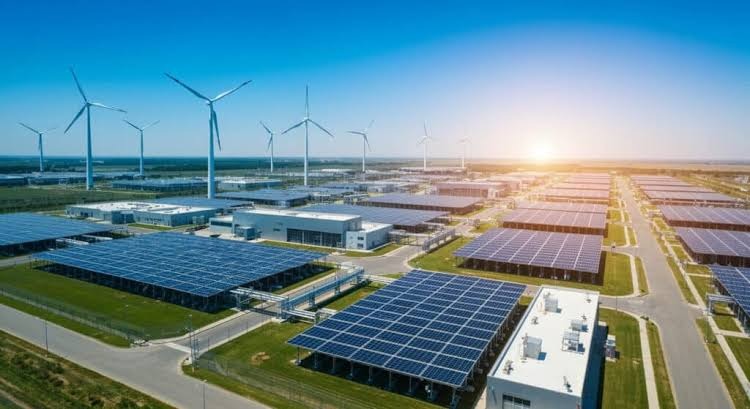
Highlights of China’s 2030 Non-Fossil Power Target Plan
- Policy: China unveiled the 15th Five-Year Plan (2026–2030), setting a landmark target for 50% of electricity generation from non-fossil sources by 2030, compared with 42.3% in 2025.
- The plan aims to create a clean, low-carbon, secure and efficient national energy system.
- Scope: The target covers hydropower, solar, wind and nuclear energy.
- Simultaneously, wind and solar are projected to contribute over 50% of China’s installed electricity capacity by 2030, making them the largest segment of the country’s power fleet.
- Energy Consumption: Beyond electricity generation, China aims for non-fossil energy to account for 25% of total primary energy consumption by 2030, reinforcing its commitment to diversify the national energy mix while lowering carbon intensity.
- Carbon Reduction: The plan establishes a binding target to reduce power-sector carbon emissions intensity by more than 10% during 2026–2030.
- It will support China’s broader climate commitments of peaking emissions before 2030 and achieving carbon neutrality by 2060.
- Energy Security: Despite accelerating renewables, coal, oil and natural gas remain strategic backup fuels.
- China seeks to balance decarbonisation with energy security, ensuring reliable electricity supply during periods of high demand and renewable intermittency.
- Infrastructure: The roadmap targets 300 GW of non-pumped hydro energy storage, 160 GW of pumped-storage hydropower, and 110 GW of nuclear capacity by 2030 to improve grid stability and clean-power integration.
- China plans 2 million tonnes annually of renewable hydrogen production, 40 million EV charging points, 50 GW vehicle-to-grid capacity, and 50 GW virtual power plants, strengthening grid flexibility.
Status of China’s Clean Energy Transition and Policy Framework
- Global Leadership: China is the world’s largest renewable-energy market, leading globally in solar, wind, hydropower and battery manufacturing.
- It also achieved its 2030 wind and solar capacity target six years early, reinforcing its dominance in the global energy transition.
- Renewable Capacity: By February 2026, China’s installed renewable capacity reached 2,381 GW, accounting for 60.3% of total power capacity.
- Solar (1,232 GW) and wind (651 GW) together constituted 1,883 GW, the world’s largest combined renewable fleet.
- Power Infrastructure: By May 2026, China’s total installed electricity capacity crossed 4.01 TW (4,010 GW), the highest globally.
- Non-fossil sources represented 62% of installed capacity, highlighting a structural transformation of its electricity infrastructure.
- Grid Modernisation: China is expanding Ultra High Voltage (UHV) transmission corridors linking western renewable bases with eastern industrial centres.
- Under the 15th Five-Year Plan, west-to-east clean-power transmission capacity will exceed 420 GW, improving nationwide grid reliability.
- Nuclear Expansion: Alongside renewables, China is rapidly expanding nuclear power. As of May 2026, 36 reactors were under construction—nearly half of all reactors being built worldwide—strengthening low-carbon baseload electricity.
- Investment: China invested over US$625 billion in clean energy during 2024, the world’s highest annual investment.
- Capital flows increasingly support renewables, electricity grids, storage systems, electric mobility and advanced manufacturing.
- Governance Framework: The transition is coordinated by the National Energy Administration (NEA) under the National Development and Reform Commission (NDRC).
- Policy direction originates from the State Council, ensuring integrated planning across provinces and strategic sectors.
- China employs Five-Year Plans, the Dual Carbon Goals, renewable portfolio mechanisms, large-scale infrastructure planning, preferential financing, and industrial support policies.
- China follows a “build first, replace later” strategy—rapidly expanding clean-energy capacity while gradually reducing fossil dependence. .
- This phased model seeks to balance economic growth, industrial competitiveness, electricity reliability and long-term decarbonisation.
Implications for Global Climate Goals and Energy Markets
- Accelerating Global Climate Action: China, the world’s largest carbon emitter, accounts for roughly one-third of global CO₂ emissions.
- Expanding non-fossil electricity to 50% by 2030 could significantly lower global power-sector emissions and strengthen momentum toward achieving the Paris Agreement objectives.
- Progress Towards Net-Zero Pathways: China’s energy transition supports its Dual Carbon Goals.
- Given China’s global emissions share, faster implementation could partially offset weaker climate action in several other major economies.
- Reshaping Global Energy Markets: Rapid renewable deployment is expected to moderate long-term growth in coal, oil and natural gas demand, influencing international fuel prices, trade patterns and investment decisions.
- Strengthening Clean Technology Leadership: China already dominates global manufacturing of solar PV modules, batteries, electric vehicles and wind equipment.
- Continued policy support is likely to expand its technological leadership, lowering global clean-energy costs.
- Critical Minerals and Supply Chains: China maintains a dominant position in lithium, graphite, cobalt and rare-earth processing.
- Growing clean-energy deployment enhances its strategic influence over global critical mineral supply chains, now central to energy security.
- Geopolitical Competition: China’s clean-energy leadership is intensifying industrial competition with the United States, European Union and other economies through subsidies, tariffs, domestic manufacturing incentives and strategic technology partnerships.
- Influence on Developing Countries: Affordable Chinese renewable technologies improve clean-energy access across Asia, Africa and Latin America, enabling faster decarbonisation.
- Global Climate Governance: China’s transition strengthens its negotiating influence in UN climate conferences, green finance initiatives and South-South climate cooperation, positioning it as a major agenda-setter in international climate diplomacy.
India’s Clean Energy Transition
- Global Standing: India is the world’s 3rd-largest renewable energy market and 3rd globally in installed renewable energy capacity, after China and the United States.
- It also ranks 3rd in solar, 4th in wind, reflecting its growing leadership in the global clean-energy transition.
- Capacity: As of 31 March 2026, India has 283.46 GW of non-fossil installed capacity, comprising 274.68 GW renewable energy and 8.78 GW nuclear power.
- Renewable sources now account for more than half of India’s installed electricity capacity, achieved ahead of its original 2030 trajectory.
- Infrastructure Expansion: India’s total installed power capacity reached 520.51 GW by January 2026 and continues to expand through new generation, interstate transmission corridors and Green Energy Corridors.
- Energy Composition: India’s renewable portfolio includes 150.26 GW solar, 56.09 GW wind, 51.41 GW large hydro, 11.75 GW bioenergy, and 5.17 GW small hydro.
- Solar remains the fastest-growing segment, driven by utility-scale parks and rooftop installations.
- Policy Framework: The transition is guided by the National Electricity Policy, National Green Hydrogen Mission, PM Surya Ghar Yojana, Green Energy Open Access Rules, Renewable Purchase Obligations (RPOs) and India’s Panchamrit commitments announced at COP26.
- The Ministry of New and Renewable Energy (MNRE) leads renewable deployment, while the Ministry of Power, Central Electricity Authority (CEA), Central Electricity Regulatory Commission (CERC) and SECI oversee planning, regulation, grid integration and project implementation.
- India has emerged as a major destination for solar module, battery and green hydrogen manufacturing, supported by Production Linked Incentive (PLI) schemes, attracting significant domestic and international investment.
- India is strengthening renewable integration through advanced transmission systems, battery storage, pumped-storage projects and stricter grid management standards.
- India employs competitive tariff-based bidding and Viability Gap Funding (VGF) to keep power accessible.
- Furthermore, localized schemes like PM Surya Ghar Muft Bijli Yojana are being utilized to decentralize generation and lower consumer costs.
- Challenges: Despite rapid progress, India faces constraints including transmission bottlenecks, delayed land acquisition, renewable intermittency, storage shortages.
- DISCOM financial stress and uneven implementation across states is also a major challenge, requiring coordinated policy reforms.
- Future Outlook: India targets 500 GW non-fossil capacity by 2030 while balancing energy security, affordability and sustainability.
- The goal of 500 GW is part of the broader Panchamrit commitment, which aims to reduce carbon intensity by 45% by 2030 and achieve Net Zero by 2070.
FAQs:
-
What is China’s non-fossil power target for 2030?
China targets 50% of electricity generation from non-fossil sources by 2030 under its 15th Five-Year Energy Plan.
-
Why is China increasing its non-fossil energy capacity?
To strengthen energy security, reduce emissions, meet rising electricity demand, and advance long-term climate commitments.
-
What sources of non-fossil energy does China use?
China uses solar, wind, hydropower, nuclear energy, and other renewable sources for non-fossil electricity generation
-
How will this target affect global climate goals?
Greater clean electricity from China could significantly reduce global emissions and accelerate the worldwide energy transition.
-
Is China the world’s largest renewable energy producer?
Yes. China is the world’s largest builder and producer of renewable energy capacity.
-
How does this target support China’s carbon neutrality goals?
It supports peaking emissions before 2030 and achieving carbon neutrality by 2060 through cleaner electricity generation.
-
What challenges could China face in achieving this target?
Rapid electricity demand, coal dependence, grid integration, renewable intermittency, and energy security remain major challenges.
-
How will the policy impact global energy markets?
It will boost demand for renewable technologies while gradually reducing long-term dependence on fossil fuels.
Disclaimer: Information in this article is based on official announcements and public records. Regulations and implementation details may evolve over time.