Air Kerala Eyeing Russian Aircraft for Upcoming Launch, Preparing for Initial Takeoff
| General Studies Paper III: Inclusive Growth |
Why in News?
Recently, Air Kerala entered preliminary discussions with Russia’s United Aircraft Corporation (UAC) to acquire 20 Il-114-300 turboprops, while its immediate launch remains planned with leased ATR 72-600 aircraft.
Air Kerala and Its Launch Plans
- About The Company: Air Kerala is a proposed low-cost regional airline backed by Zettfly Aviation.
- Airline is promoted by UAE-based entrepreneurs Afi Ahmed and Ayub Kallada.
- The airline is headquartered in the Aluva/Kochi region of Kerala.
- It aims to build a regional aviation network.
- In July 2024, the Ministry of Civil Aviation granted Air Kerala an initial No-Objection Certificate (NOC) for scheduled commuter air transport services.
- The airline still has to satisfy regulatory requirements and obtain its Air Operator Certificate (AOC) from DGCA.
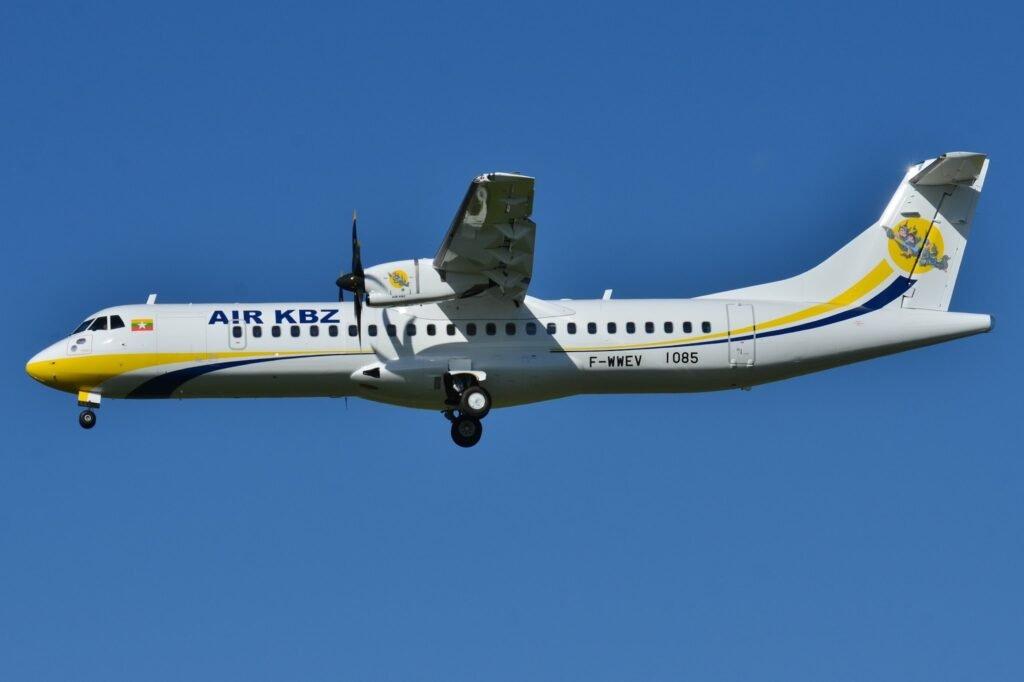
- Launch Plans: Air Kerala planned to commence operations with ATR 72-600 turboprop aircraft.
- Aircraft in this category are suitable for short-haul routes, smaller airports and relatively lower passenger-demand markets.
- CEO Harish Moideen Kutty said the airline expects the leased aircraft around December-January and could begin services approximately 30–35 days afterward, subject to completion of regulatory documentation.
- Air Kerala wants to connect smaller towns and cities with larger aviation hubs.
- Company is currently in preliminary discussions with Russia’s United Aircraft Corporation (UAC) regarding acquiring up to 20 Il-114-300 regional turboprops.
- The development emerged during INNOPROM India in New Delhi in September 2026.
- UAC is seeking arrangements with Indian operators for 105 Il-114-300 aircraft in total, involving Pinnacle Air, Air Kerala and Sleek Aviation.
- The airline is also examining participation in UDAN/RCS bidding where suitable routes become available.
- Kerala has a strong tourism economy, dispersed urban centres and substantial international travel demand.
- Better regional air links can support tourism, business travel, employment, healthcare access and local economic activity.
About ATR 72-600 Turboprop Aircraft
- Intro: The ATR 72-600 is a twin-engine regional turboprop passenger aircraft designed mainly for short-haul routes.
- ATR stands for Avions de Transport Régional.
- It belongs to the ATR 72 family and is particularly suited to regional airports, island routes and lower-density markets.
- Manufacturer: The company is a Franco-Italian aircraft manufacturer, created in 1981 through cooperation between France’s Aérospatiale and Italy’s Aeritalia, now represented by Airbus and Leonardo respectively. ATR is headquartered near Toulouse, France.
- Development: The ATR 72-600 programme was launched in 2007, building on the earlier ATR 72-200 and -500 generations.
- The -600 introduces substantial improvements in avionics, cockpit systems, communications, flight management and passenger cabin design. It received European certification in May 2011.
- Features:
- The first ATR 72-600 was delivered to Royal Air Maroc in August 2011. Royal Air Maroc therefore became the launch operator of the aircraft.
- The aircraft uses two Pratt & Whitney Canada PW127M turboprop engines.
- Unlike a conventional jet engine, a turboprop engine uses a turbine to drive a propeller, making it particularly efficient for relatively short regional sectors.
- Its maximum certified passenger capacity can reach 78 seats, while common configurations use around 68–74 seats.
- ATR also obtained certification for a 78-seat high-density configuration, increasing its flexibility for airlines seeking greater capacity.
- The ATR 72-600 is designed for short-to-medium regional operations, rather than long-distance international travel.
- Its major advantage is fuel efficiency. ATR states that competing regional jets can have operating costs at least 45% higher, reflecting the turboprop’s suitability for short sectors.
- The ATR 72-600’s turboprop configuration provides an important emissions advantage on regional sectors.
- The -600 features a modern glass cockpit, improved avionics, communications and flight-management systems.
- Users: The ATR 72-600 has achieved a global customer base across Europe, Asia-Pacific, Africa, the Middle East, the Caribbean and the Americas.
- Examples include Air New Zealand, Azul, Air Serbia, Garuda Indonesia, Air Sénégal, Air Botswana, Royal Air Maroc and Caribbean Airlines.
- Recent expansion continues, with Cambodia Airways receiving its first ATR 72-600 in June 2026.
Russian Made IL-114-300 Regional Turboprop
- About: The Ilyushin Il-114-300 is a modernised Russian twin-engine regional turboprop aircraft designed primarily for short-haul and local air routes.
- It is intended especially for regions with limited airport infrastructure and difficult climatic conditions.
- The aircraft is being developed by United Aircraft Corporation (UAC) under Russia’s state aerospace-industrial system.
- Development: The aircraft is a substantially modernised derivative of the earlier Il-114.
- The original Il-114 programme dates from the Soviet period, while the -300 version was developed to provide a renewed Russian regional aircraft. Flight testing of the modernised aircraft resumed in 2024.
- Features:
- The Il-114-300 is designed as a 68-seat regional aircraft, making it relevant for airlines serving routes where a larger narrow-body jet would provide excessive capacity.
- The aircraft uses two Russian-built TV7-117ST-01 turboprop engines driving six-bladed propellers.
- A major design objective is operation in difficult climatic conditions. Aircraft’s intended use in Siberia, the Russian Far East and northern regions, including locations where airport infrastructure may be relatively poor.
- Approx. 1,450 meters for take-off; capable of handling unpaved/poorly equipped small airfields.
- The aircraft has undergone additional testing in severe environments. Testing included operations in Yakutia at temperatures approaching −45°C.
- A major milestone came in 2026, when Russia’s federal aviation regulator Rosaviatsia granted the Il-114-300 its type certification.
- Russia has been preparing the aircraft for commercial service during 2026. Initial deliveries are expected to begin with Russian regional operators.
- UAC’s leadership has indicated an intended production rate of roughly 6–12 aircraft annually, depending on demand.
India’s Regional Connectivity Policy: UDAN
- The Regional Connectivity Scheme (RCS): UDAN (Ude Desh ka Aam Naagrik), launched in 2016, seeks to make air travel more affordable and improve connectivity to unserved and underserved airports.
- The first UDAN flight operated between Shimla and Delhi on 27 April 2017.
- Fares are capped at ₹2,500 for roughly a one-hour flight on designated regional routes to keep travel accessible for common citizens.
- Viability Gap Funding (VGF), the government provides financial subsidies (shared between the central and state governments) to airlines to offset operational losses on low-demand routes.
- Participating airlines receive concessions including reduced excise duty on aviation turbine fuel and waived landing and parking charges from airport operators.
- UDAN evolved through multiple versions. UDAN 1.0 established the basic regional-connectivity framework.
- UDAN 2.0 expanded the model to include helipad connectivity and underserved airports. Later versions introduced tourism routes, seaplanes, and helicopter operations.
- By 30 June 2026, according to the Ministry of Civil Aviation data showed 95 airports, including 17 heliports and two water aerodromes, connected under the UDAN framework, with 677 routes, 3.58 lakh flights and about 168 lakh passengers. Viability Gap Funding had reached approximately ₹4,881.10 crore.
- The Union Cabinet approved a Modified UDAN in March 2026 for FY 2026–27 to FY 2035–36. The scheme has a total outlay of ₹28,840 crore, signalling a much longer-term approach to regional aviation development.
- The modified scheme proposes development of 100 airports from existing unserved airstrips.
- It also provides for operations and maintenance support for about 441 aerodromes, addressing an important weakness of regional aviation.
- The new framework proposes 200 modern helipads, particularly for hilly, remote, island and aspirational regions.
- A proposed ₹10,043 crore in Viability Gap Funding over ten years is intended to support airline operators.
- Modified UDAN also seeks to support indigenous aviation capability, including procurement of HAL Dhruv helicopters and HAL Dornier aircraft.
Frequently Asked Questions (FAQs):
1. What aircraft is Air Kerala currently planning to operate?
Air Kerala currently plans to launch with leased ATR 72-600 turboprops for regional routes.
2. Why is Air Kerala considering Russian-made aircraft?
It is considering Il-114-300 turboprops to expand regional capacity and diversify its future aircraft supply.
3. Is Air Kerala planning to use ATR 72-600 aircraft?
Yes. ATR 72-600 aircraft remain its planned initial operating fleet, while Russian aircraft are a longer-term possibility.
4. When is Air Kerala expected to start operations?
Air Kerala is targeting operations after receiving aircraft and completing regulatory requirements, with launch timing subject to final approvals.
5. What type of airline is Air Kerala planned to be?
Air Kerala is planned as a regional, low-cost/ultra-low-cost carrier, initially focusing on underserved domestic markets.
6. Why are regional aircraft important for Air Kerala?
They offer lower-capacity, efficient operations, making smaller cities and underserved regional routes commercially more viable.
Disclaimer: Information in this article is based on official announcements and public records. Regulations and implementation details may evolve over time.
| Also Read: Government Mandates 60% Free Airline Seat Selection |