




Chandrababu Naidu High Denomination Notes Demand
| General Studies Paper II: Federalism, Government Policies |
Why in News?
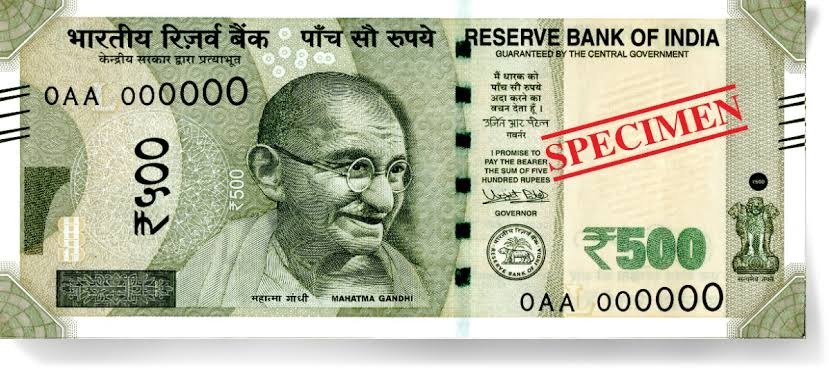
Recently, Andhra Pradesh Chief Minister Chandrababu Naidu renewed his demand urging the Centre to scrap high-denomination currency notes like ₹500. Strategically timed around demonetisation’s 10th anniversary.
Chandrababu Naidu’s Withdrawal Demand for High-Denomination Currency
- Andhra Pradesh Chief Minister N. Chandrababu Naidu has renewed his demand for withdrawing high-denomination currency.
- Naidu first called for banning ₹500 and ₹1,000 notes in June 2013. Later, as the head of the Prime Minister’s committee on digital economy, he submitted a detailed digital currency report to PM Narendra Modi right before the 2016 demonetisation.
- He openly criticized the subsequent introduction of the ₹2,000 note, calling for its immediate phaseout.
- On November 9, 2026, he reiterated that ₹500 notes should be scrapped.
- His renewed demand in November 2026 deliberately timed with the 10th anniversary of the 2016 demonetisation drive.
- According to the RBI Annual Report 2024–25, ₹500 notes constituted approximately 86% of currency value and 40.9% of banknotes by volume. This demonstrates India’s substantial dependence on the ₹500 denomination.
- Naidu argues that high-value banknotes establish a vicious circle of financial corruption.
- Naidu argues that high-value cash facilitates vote-buying, illegal transactions, bribery and unaccounted wealth accumulation.
- Large-value notes allow substantial amounts to be transported and concealed relatively easily.
- Phasing them out would directly counteract institutional black money accumulation, eradicate poverty, and foster transparency.
- He asserts that tracking financial crimes becomes seamless when citizens are structurally incentivized to transition to UPI and QR-code-based digital payments.
- He strongly advocates for a monetary system where only ₹100 and ₹200 banknotes remain in physical circulation to drastically limit cash-heavy illicit transactions.
What Is Denomination?
- About: Currency denomination represents the designated face value printed on a financial instrument, banknote, or coin.
- It defines the specific, official transactional worth of that physical token within an economy.
- Scrapping a currency denomination is called demonetization.
- Framework: In India, the Reserve Bank of India Act, 1934 provides the statutory foundation for currency issuance.
- Section 22 grants RBI the sole right to issue banknotes in India. Under Section 24, denominations are specified by the Central Government on RBI Central Board recommendations.
- Section 26(2) provides the mechanism for withdrawing legal-tender status through a government notification.
- Evolution:
- 1938 to 1946: The RBI originally printed ₹1,000 and ₹10,000 notes under British administration, which faced India’s inaugural demonetization in January 1946 to combat wartime tax evasion.
- In 1946, India’s first demonetisation scrapped Rs 500, Rs 1,000 and Rs 10,000.
- 1954 to 1978: The central government reintroduced ₹1,000, ₹5,000, and ₹10,000 notes to assist commercial growth.
- In 1978, the High Denomination Bank Notes (Demonetisation) Act of 1978 permanently stripped their legal tender status.
- 1987 to 2016: Rising economic volumes prompted the release of ₹500 notes in 1987 and the return of ₹1,000 notes in 2000, both of which were abruptly invalidated in November 2016 to counter illicit parallel economies and counterfeit circulation.
- The Income Tax Department launched Operation Clean Money to scrutinize large cash deposits using advanced data analytics.
- 2016 to Present: A new ₹2,000 note was introduced for rapid remonetization in 2016. This highest-ever active banknote was subsequently withdrawn from active circulation by the RBI in 2023.
- By March 31, 2026, approximately 98.45% of their originally circulating value had returned to RBI.
- India currently has ₹10, ₹20, ₹50, ₹100, ₹200 and ₹500 banknotes in active issuance, alongside coins and previously issued valid notes.
- 1938 to 1946: The RBI originally printed ₹1,000 and ₹10,000 notes under British administration, which faced India’s inaugural demonetization in January 1946 to combat wartime tax evasion.
Implications of Withdrawing Large Currency Notes
- Withdrawing high-value notes directly targets unaccounted wealth stashed in physical cash.
- It forces individuals holding undeclared cash to route it through formal banks, exposing tax evasion and disrupting parallel economies.
- Large denominations are the primary targets for fake currency operations used to fund cross-border terrorism.
- Withdrawing these notes immediately chokes illegal hawala channels and destroys existing networks of counterfeit notes. This drastically improves national security.
- Removing large cash options triggers a massive, immediate migration toward digital transaction ecosystems.
- In India, past cash interventions drastically accelerated the adoption of the Unified Payments Interface (UPI) and mobile wallets.
- This structural shift drives transaction transparency, reduces cash-handling logistics, and builds a robust fintech infrastructure.
- Forcing cash into bank accounts brings millions of unbanked citizens into the formal financial system.
- Initiatives like Jan Dhan accounts leverage this shift to expand access to institutional credit, insurance, and direct welfare transfers.
- A stark digital divide remains; rural populations and the elderly face severe exclusion due to poor internet infrastructure and low digital literacy.
- This monetary policy acts as a primary catalyst for moving toward a cash-light society where transactions leave digital footprints.
- A formalized economy significantly expands the government’s tax base and boosts macro efficiency.
- A complete transition exposes the nation to intense cybersecurity risks, data privacy breaches, and temporary GDP slowdowns during the initial cash crunch.
- According to the Reserve Bank of India (RBI) Annual Report, counterfeit ₹500 notes have seen a sharp upward trend.
- In 2024–25, the detection of fake ₹500 notes rose by 37.3%, reaching 1.18 lakh pieces (valued at ₹5.88 crore) compared to 85,711 pieces in 2023–24.
- In 2025–26, counterfeit ₹500 detections increased by another 20% year-on-year, pushing the total to nearly 1.42 lakh pieces.
Note: The RBI is conducting extensive field trials of two billion pieces of polymer (plastic) banknotes in ₹10 and ₹20 denominations under Section 25 of the RBI Act.
- Made from biaxially oriented polypropylene (BOPP), these plastic notes eliminate currency duplication (counterfeiting) by integrating advanced security features like transparent windows and specialized elements that are nearly impossible to replicate.
- They last 2.5 to 4 times longer than cotton-pulp paper, are water-resistant, and significantly lower the country’s long-term currency replacement expenditures.
Frequently Asked Questions (FAQs):
1. Why has Andhra Pradesh Chief Minister Chandrababu Naidu urged the Centre to scrap higher-denomination currency notes?
To curb corruption, black money, vote-buying and illegal cash transactions while promoting digital payments and transparent governance.
2. Which currency notes does Chandrababu Naidu want the government to withdraw?
He proposes scrapping ₹500 denomination currency notes.
3. Which currency denominations has Naidu suggested should remain in circulation?
He recommends retaining only ₹100 and ₹200 denomination banknotes.
4. How does Chandrababu Naidu believe withdrawing high-value notes could help reduce corruption?
Smaller denominations could complicate bulk cash distribution, discourage electoral bribery and encourage traceable digital transactions.
5. Has the Central Government announced any decision to withdraw ₹500 notes?
No. Naidu’s statement is a proposal; neither the Centre nor RBI has announced such a withdrawal.
Disclaimer: Information in this article is based on official announcements and public records. Details may evolve over time.
| Also Read: Tamil Nadu Replaces Official Currency Symbol |