


Punjab Stubble Burning Cases 2026: Records 2,787 Cases, 710 FIRs Under Section 223
| General Studies Paper III: Environmental Pollution and Degradation, Climate Change |
Why in News?
Punjab Stubble Burning Cases 2026 reached 2,787 incidents, prompting 710 FIRs under Section 223 BNS. It highlights enforcement challenges and persistent agricultural pollution.
Punjab Stubble Burning Cases 2026 Latest Data
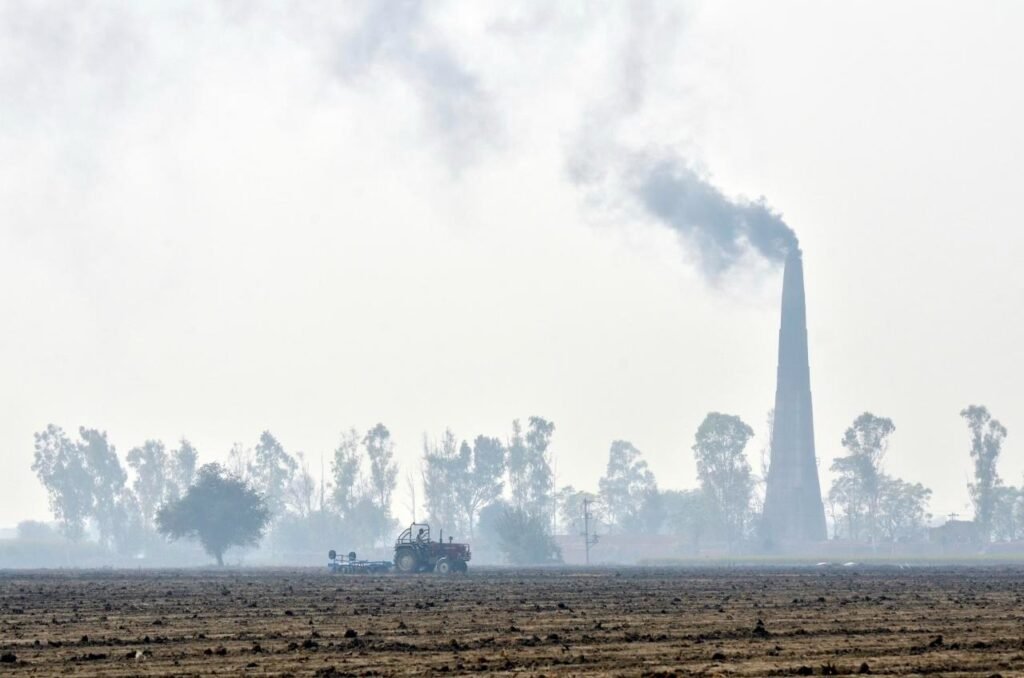
- Punjab recorded 2,787 stubble-burning incidents between 15 September and 5 November 2026, according to the latest Punjab Pollution Control Board (PPCB) report.
- Over 70% of these cases (1,974) occurred in a sudden, compressed spike within the final eight days.
- Tarn Taran district continues to lead the state as the worst-affected hotspot with 586 farm fires, closely followed by Ferozepur with 361 cases.
- Other heavily hit agrarian districts driving the bulk of regional emissions include Sangrur reporting 240 incidents, Amritsar with 221, Bathinda with 216, and Patiala with 156 confirmed farm fire cases.
- Out of 2,194 physical field inspections executed by ground monitoring teams, active crop residue burning was verified and confirmed at 994 locations. This reflects a strike rate of roughly 45% of satellite-flagged thermal alerts.
- Law enforcement agencies registered 710 FIRs under Section 223 of the Bharatiya Nyaya Sanhita (BNS) for disobeying public orders.
- Total environmental compensation penalties reached ₹46.10 lakh across 914 cases, of which ₹24.85 lakh has been successfully recovered by the treasury.
- Aggressive administrative penalties saw the marking of 829 ‘red entries’ inside the land revenue records of non-compliant farmers.
- The administration also issued 786 formal warning notices across the state and initiated prosecution proceedings against 18 officials for failure to prevent localized fires.
- Punjab’s total area under paddy cultivation spans 32.87 lakh hectares, with 87.60% of harvesting completed as of November 5.
- To provide viable alternatives to burning, the state executed a ₹576 crore crop-residue management action plan, offering 50% machine subsidies to individual farmers and 80% to cooperative Custom Hiring Centers.
What is Stubble Burning?
- About: Stubble Burning refers to the practice of setting fire to agricultural residue remaining in fields after harvesting crops, particularly paddy and wheat.
- Farmers commonly burn leftover stalks, leaves and straw to clear fields quickly before cultivating the next crop.
- In northwestern India, the practice is particularly associated with the rice–wheat cropping system.
- Reasons:
- Short Crop Cycle: Delayed paddy harvesting and the narrow sowing window for wheat encourage rapid residue clearance. Farmers prioritise timely wheat cultivation to avoid productivity losses.
- Labour Shortages: Manual collection and removal of large quantities of paddy straw require considerable labour, time and expenditure.
- High Machinery Costs: Happy Seeders, Super Seeders, balers and other specialised machines involve substantial investment. Small and marginal farmers may struggle to purchase or access them.
- Limited Residue Markets: Inadequate procurement, transportation, storage and industrial demand reduce the economic attractiveness of collecting straw.
- Cropping Pattern: Assured procurement and established markets for rice and wheat have encouraged intensive rice–wheat cultivation in Punjab.
- Government water-preservation acts and Minimum Support Price (MSP) structures lock farmers into rigid rice-wheat mono-cropping.
- Impacts:
- Air Pollution: Burning releases particulate matter (PM2.5 and PM10), carbon monoxide, nitrogen oxides and other pollutants, deteriorating regional air quality.
- Smoke can travel across state boundaries, aggravating winter pollution in the Indo-Gangetic Plain, including Delhi-NCR.
- Climate Change: Emissions of greenhouse gases, including carbon dioxide, methane and nitrous oxide, contribute to atmospheric warming.
- Soil Degradation: Fire destroys beneficial microorganisms and organic matter while releasing valuable plant nutrients.
- Burning can harm soil biodiversity, beneficial insects and nearby vegetation.
- Indian Council of Agricultural Research (ICAR) identifies substantial losses of carbon, nitrogen, phosphorus, potassium and sulphur from burning residues.
- Human Health: Exposure to smoke increases respiratory irritation and aggravates asthma and other cardiopulmonary conditions, particularly among children, older people and outdoor workers.
- Air Pollution: Burning releases particulate matter (PM2.5 and PM10), carbon monoxide, nitrogen oxides and other pollutants, deteriorating regional air quality.
India’s Stubble Burning Legal Framework and Policies
- Framework:
- Section 223, Bharatiya Nyaya Sanhita (BNS), 2023: This provision deals with disobedience of an order duly promulgated by a public servant.
- It provides the criminal-law basis for FIRs when applicable prohibitory orders are knowingly violated.
- Violations that cause health hazards carry up to one year of imprisonment or a ₹5,000 fine.
- Environmental Protection Act, 1986: Provides the broader statutory framework for environmental protection, pollution prevention and regulatory action.
- Air (Prevention and Control of Pollution) Act, 1981: Establishes the framework for preventing, controlling and abating air pollution through pollution-control authorities.
- Commission for Air Quality Management (CAQM) Act, 2021: Establishes CAQM to coordinate air-quality management in Delhi-NCR and adjoining areas. It issues directions concerning crop-residue burning and regional pollution control.
- Supreme Court Intervention: In the M.C. Mehta v. Union of India proceedings, the Supreme Court has directed governments to strengthen implementation of CAQM directions, establish monitoring committees and submit compliance reports.
- The Commission for Air Quality Management (CAQM) actively spearheads State police primarily to register First Information Reports (FIRs) under BNS provisions.
- Authorities issue severe “red entries” in land records to bar non-compliant farmers from securing bank loans or selling land.
- Section 223, Bharatiya Nyaya Sanhita (BNS), 2023: This provision deals with disobedience of an order duly promulgated by a public servant.
- Policies:
- In-Situ Technological Interventions: Farmers are encouraged to adopt specialized machinery to eliminate farm fires.
- The tractor-mounted Happy Seeder and Super Seeders plant wheat directly into fields without clearing paddy residue.
- The microbial Pusa Decomposer solution breaks down stubborn agricultural waste naturally inside the soil within 25 days.
- Ex-Situ Biomass Interventions: Alternative mitigation focuses on utilizing leftover agricultural waste outside the fields.
- Crop residues undergo industrial pelletization to produce green fuel pellets for commercial thermal power plants.
- Advanced biochar production through pyrolysis helps lock carbon away while enhancing long-term organic soil fertility.
- Subsidies and Financial Schemes: The Central Sector Scheme on Crop Residue Management (CRM) drives equipment affordability.
- It offers individual farmers a 50% financial subsidy to purchase residue-clearing machinery.
- To support marginal workers, Custom Hiring Centres (CHCs) receive 80% funding to provide rent-free machinery access to small agricultural fields.
- Paddy Straw Supply Chains: State governments are actively creating structured supply chain frameworks to link rural farmlands directly with commercial bioenergy enterprises.
- This structural network transfers bulk stubble to localized Compressed Biogas (CBG) units and second-generation ethanol facilities.
- The strategy converts traditional agricultural waste into a profitable revenue ecosystem for regional farmers.
- In-Situ Technological Interventions: Farmers are encouraged to adopt specialized machinery to eliminate farm fires.
Challenges in Controlling Stubble Burning in India
- Short Harvesting Window: Farmers face a narrow 10-to-15-day transition window between harvesting paddy and sowing wheat.
- The introduction of the Punjab Preservation of Subsoil Water Act delayed paddy transplantation to conserve groundwater, pushing the harvest closer to winter and leaving no time for natural stubble decomposition.
- Economic Barriers: Eco-friendly machines like Happy Seeders and Smart Straw Management (SMS) systems are prohibitively expensive for smallholders.
- Even with government subsidies ranging from 50% to 80%, the upfront capital, high tractor horsepower requirements, and added fuel costs make mechanical clearing financially unviable for marginal farmers.
- Nutritional Value Fallacy: Unlike wheat residue, which is used as animal fodder (boosa), paddy straw has high silica content, making it unpalatable and non-digestible for livestock.
- Since the residue lacks direct commercial value to the farmer, it is treated as waste and immediately incinerated.
- Infrastructure and Logistical Gaps: Alternative ex-situ utilization methods suffer from poor supply chain infrastructure.
- Biomass power plants, and store millions of tons of bulky straw within the tight seasonal window, limiting large-scale commercial off-take.
- Ineffective Enforcement: Despite judicial bans and environmental penalties (green compensation), enforcement remains weak on the ground.
- Law enforcement faces strong resistance from powerful farmer unions, turning into a politically sensitive issue that deters local administrations.
Way Forward
- Mechanized In-Situ Solutions: Deploying crop residue management machinery like Smart SMS harvesters allows farmers to sow wheat directly into standing paddy stubble. This process completely eliminates the need for open farm fires.
- Microbial Bio-Decomposers: Accelerating the application of low-cost biochemical agents like the Pusa Bio-Decomposer dissolves complex crop waste in fields.
- This enzyme spray accelerates the natural degradation process, converting rigid stalks into nutrient-rich organic manure within 20 to 25 days.
- Industrial Biomass Co-Firing: Mandating thermal power plants and brick kilns to blend coal with biomass pellets and torrefied agricultural charcoal absorbs massive seasonal waste.
- Converting loose straw into compressed industrial fuel generates a highly lucrative economic market.
- Bio-CNG and Ethanol Conversion: Channelling surplus agricultural biomass into Compressed Biogas (CBG) refineries and 2G bio-ethanol manufacturing units creates commercial value from waste.
- These ex-situ green energy infrastructures can turn hazardous pollutants into sustainable transport and industrial fuels.
- Strategic Crop Diversification: Transitioning agricultural regions away from water-intensive monoculture paddy fields toward alternative crops like maize, cotton, pulses, and oilseeds offers long-term relief.
- Groundwater Policy Realignment: Reforming the rigid calendar rules of sub-soil water preservation laws helps widen the current hyper-critical harvest-sowing window.
- Supply Chain Cooperatives: Providing targeted direct cash incentives alongside regional baling and storage infrastructure streamlines the logistics of crop residue aggregation.
Frequently Asked Questions (FAQs):
1. How many stubble-burning cases have been recorded in Punjab in 2026?
Punjab recorded 2,787 incidents between September 15 and November 5, 2026, according to PPCB data.
2. Why do farmers burn crop residue in Punjab?
Farmers burn paddy residue because of short sowing windows, labour shortages, expensive machinery and inadequate residue-management infrastructure.
3. How does stubble burning contribute to air pollution?
It releases PM2.5, PM10, carbon monoxide and greenhouse gases, worsening air quality and increasing respiratory and cardiovascular health risks.
4. What measures has the Punjab government taken to prevent stubble burning?
Measures include FIRs, environmental compensation, field inspections, warning notices, machinery subsidies, satellite monitoring and farmer awareness campaigns.
5. What are the alternatives to stubble burning for managing crop residue?
Alternatives include Happy Seeders, Super Seeders, mulching, baling, composting, bio-CNG production, biomass energy and industrial utilisation.
Disclaimer: Information in this article is based on official announcements and public records. Details may evolve over time.
| Also Read: Bharat-VISTAAR AI Platform for Farmers |