



Britain Forms New Gurkha Regiment
|
General Studies Paper II: Groupings & Agreements Involving India and/or Affecting India’s Interests |
Why in News?
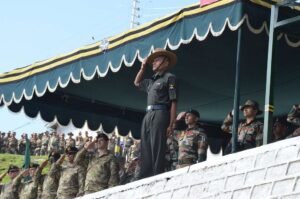
Recently, the King’s Gurkha Artillery (KGA) held its first oath-taking parade for a batch of 20 directly selected recruits from Nepal on April 20, 2026 in south-west England.
- This expansion occurs against a backdrop of a recruitment deadlock between India and Nepal that has persisted since 2020.
Britain’s New Gurkha Regiment: King’s Gurkha Artillery (KGA)
-
- Formation: King’s Gurkha Artillery (KGA) was announced in 2025 to help address a manpower crisis in the British Army.
- This is the first dedicated Gurkha artillery regiment in British history, expanding their role beyond infantry.
- Recognition: The regiment was formally christened by King Charles III, granting it royal status and identity.
- This reflects continuity of the British monarchy–Gurkha military tradition and institutional legitimacy.
- Formation: King’s Gurkha Artillery (KGA) was announced in 2025 to help address a manpower crisis in the British Army.
- Need: The unit addresses British Army manpower shortages and improves combat readiness, aligning with defence reforms and increasing military spending targets (2.5% GDP) for enhanced national security.
- Unit Size: The regiment will comprise around 400 Gurkha soldiers, with a mix of new recruits and transfers from existing units, ensuring a structured rank system.
- Formed to meet modern warfare demands, it held its historic ‘Kasam Khane’ (oath-taking) parade on April 20, 2026.
- The first intake of 20 directly selected recruits from Nepal was inducted to begin their journey as “Gurkha Gunners“.
- Deployment Base: The regiment is headquartered at Larkhill Garrison (Wiltshire), the home of Royal Artillery, ensuring integration with Britain’s core artillery command, training infrastructure, and operational doctrine
- Recruitment System: Gurkhas are recruited from Nepal through a highly competitive process, where thousands apply annually but only a few hundred are selected, ensuring elite quality manpower.
- Operational Role: The KGA operates under the Royal Regiment of Artillery, providing close fire support, participating in UK and overseas operations, and strengthening integrated combat capabilities.
- The new regiment focuses on Intelligence, Surveillance, Target Acquisition, and Reconnaissance (ISTAR) roles.
- They are specifically trained to operate advanced surface-to-air missile systems like the Javelin.
- Gurkha gunners are being trained on modern systems like the ARCHER artillery system, Light Gun, and future 155mm howitzers.
- Expansion Plan: The unit will expand into multiple artillery batteries over 4 years, with existing Gurkhas transferring alongside new recruits, ensuring a mixed experience.
|
Gurkha Regiment:
|
Strategic Importance of Gurkha Artillery for Britain
- Diplomatic Leverage: The KGA allows Britain to capitalize on the India-Nepal deadlock. Since Nepal halted recruitment for India’s Agnipath scheme in 2022, the UK has become the primary destination for elite youth. This ensures Britain secures the top 3% of Nepalese talent without regional competition.
- NATO Commitment: The KGA fulfills the UK’s NATO Force Model requirements. By providing a specialized 400-man artillery unit, Britain can deploy high-readiness forces to the Suwalki Gap or Estonia. This compensates for the shrinking size of the Regular British Army.
- Cost Efficiency: Training a Gurkha gunner is highly cost-effective. Due to a 90%+ retention rate, the Ministry of Defence (MoD) saves millions in recruitment and retraining costs. This provides a “permanent” expertise level that regular units often lack due to high turnover.
- Urban Operations: Unlike heavy armor, the KGA’s L118 Light Guns are easily moved by Chinook helicopters. This makes them perfect for Rapid Reaction Forces. They can support Special Forces in remote areas where traditional heavy artillery cannot reach.
- Soft Power: The KGA strengthens the UK-Nepal Treaty of 1923 legacy. By offering full pensions and citizenship pathways, Britain maintains a loyal “bridge” in South Asia. This counteracts growing Chinese influence within Nepal’s political and social spheres.
India–Nepal Stalemate on Gurkha Recruitment
The Nepali Gurkha soldiers’ recruitment into the Indian Army was suspended from 2022, breaking a 200-year-old military tradition under bilateral arrangements.
- Scheme Conflict: The Agnipath scheme of the Indian government replaces long-term service with a four-year tenure.
- Nepal objects to this “tour of duty” model, as it lacks the lifelong pension that was a primary incentive for Nepalese youth.
- Only 25% of recruits are regularised, leaving the remaining 75% discharged without traditional benefits.
- As a result, Nepal officially stopped recruitment rallies from August 2022, leading to zero new Nepali Gurkha intake for multiple years.
- Treaty Violation: Nepal argues the new scheme violates the 1947 Tripartite Agreement signed by India, Nepal, and the UK.
- This pact mandates that Gurkhas must be allowed to serve long enough to qualify for a pension.
- Nepal insists that changes to recruitment terms must be made through bilateral consultation.
- Security Concerns: The Nepal government fears that returning 75% of trained soldiers after only four years could pose a security risk.
- Without stable employment, these military-trained youths may be susceptible to radicalisation or recruitment by foreign mercenary groups or adversaries.
- Economic Impact: Gurkha service is a vital economic pillar for Nepal. Approximately 1.25 lakh pensioners in Nepal receive nearly $620 million annually from India.
- The halt in recruitment threatens this remittance flow, which historically accounts for roughly 3% of Nepal’s GDP.
- Geopolitical Consequences: The issue has strained India–Nepal defence ties, weakening a key pillar of bilateral relations.
- While top-level military exchanges continue, the issue contributes to broader diplomatic tensions regarding the 1950 Treaty of Peace and Friendship and territorial disputes.
|
Gorkhas in Indian Army:
|