Formation of 5 New Districts in Ladakh
|
General Studies Paper II: Indian Constitution, Government Policies & Interventions |
Why in News?
Recently, Lieutenant Governor of Ladakh, Vinai Kumar Saxena has approved creation of five new districts, aiming to decentralised governance and improve service delivery.
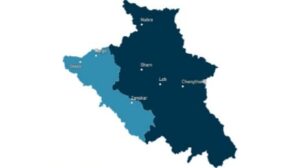
Highlights of New Districts Creation in Ladakh
-
- Administrative Approval: On 27 April 2026, Ladakh Lieutenant Governor Vinai Kumar Saxena approved the notification for creating five new districts in Ladakh.
- This follows the “in-principle” approval granted by the Ministry of Home Affairs in August 2024 to bring government services directly to remote Himalayan doorsteps, aligning with Ladakh’s UT status since 2019.
- New Districts: The five newly created districts are: Nubra, Sham, Changthang, Zanskar and Drass.
- Administrative Approval: On 27 April 2026, Ladakh Lieutenant Governor Vinai Kumar Saxena approved the notification for creating five new districts in Ladakh.
- Total Districts: With this move, Ladakh’s total districts increased from 2 (Leh, Kargil) to 7 districts.
-
- Nubra, Sham, and Changthang were carved out of Leh district, while Zanskar and Drass were formed from Kargil district.
- Under the new arrangement, the original Leh district retains 44 revenue villages while Kargil maintains 80.
- The reform includes creation of 33 new administrative units—6 tehsils, 9 niabats, 18 patwar circles.
- Specifications of New Districts:
- Zanskar District: The new Zanskar District has its official headquarters located at Padum to serve the high-altitude valley’s needs.
- Carved out of the southern part of Kargil, it includes 26 revenue villages and is strategically vital due to its borders with Himachal Pradesh and its potential for massive eco-tourism growth.
- Drass District: The Drass District operates from its headquarters in Drass-Ranbirpura to manage the welfare of its local inhabitants.
- Formerly under Kargil’s jurisdiction, it comprises 19 revenue villages and is globally recognized as one of the coldest inhabited places, holding immense military importance near the Line of Control.
- Nubra District: The Nubra District establishes its administrative headquarter at Diskit to oversee the northern frontier’s development.
- Consisting of 30 revenue villages taken from Leh, this district is famous for its cold desert landscapes and serves as the gateway to the strategically sensitive Siachen Glacier region.
- Sham District: The Sham District is headquartered at Khaltse to facilitate better governance for the western belt of the region.
- Created from the Leh district with 27 revenue villages, it focuses on enhancing heritage tourism and supporting the unique river valley agriculture that defines the lower Indus belt.
- Changthang District: The Changthang District has its headquarter at Nyoma to govern the vast eastern plateau of Ladakh.
- Carved from Leh with 24 revenue villages, it is the largest of the new districts and is home to the world-famous Pangong Lake, nomadic Changpa tribes and the nomadic producers of high-quality Pashmina wool.
- Zanskar District: The new Zanskar District has its official headquarters located at Padum to serve the high-altitude valley’s needs.
- Implementation Plan: The government is deploying Deputy Commissioners (IAS/KAS) and Superintendents of Police (IPS/IPS) to each new unit.
- Efforts are underway to build District Collectorate complexes and implement e-office systems to make these fully functional by late 2026.
Significance
- Governance Reach: Creating five districts reduces the administrative distance for villages located over 300 km away from previous centers.
-
-
- Ladakh spans 86,904 sq km with a population of about 2.74 lakh (2011 Census), making governance difficult due to harsh terrain and scattered settlements.
-
- Smaller units allow Deputy Commissioners to monitor remote sectors directly, ensuring 97% of the tribal population receives faster service delivery and grievance redressal.
- Border Security: New districts like Nubra and Drass strengthen vigil near the Line of Control and Line of Actual Control.
- Permanent administrative presence helps coordinate with the Indian Army more effectively.
- Enhanced civil infrastructure supports logistics in sensitive zones like the Siachen Glacier approach.
- Economic Growth: Decentralization spurs localized investment in Pashmina wool industries within the Changthang region.
- Focused budgets will now target eco-tourism in Zanskar and river valley agriculture in Sham.
- This specialized funding supports the Prime Minister’s Development Package which includes 9 exclusive projects for Ladakh.
- Infrastructure Shift: The move triggers the construction of five new District Collectorate complexes and police headquarters in sites like Diskit and Padum.
- It prioritizes all-weather connectivity for previously neglected valleys. Digital systems like e-office will now link every block to the central administration.
- Employment Generation: Establishing new headquarters will create significant local jobs through 359 gazetted and nearly 4,000 non-gazetted posts.
- New administrative offices require extensive supporting staff and allied services.
- This boosts regional entrepreneurship and skill development for Ladakhi youth.
- Winter Stability: Smaller districts improve disaster management during heavy snowfall when high-altitude passes usually close for months.
- Localized fuel and food stockades will be managed independently by the new district administrations.
- This ensures uninterrupted essential services even during extreme sub-zero temperatures.
- Political Aspirations: This reorganisation addresses the long-standing political demands of people in regions like Zanskar and Drass.
- It empowers grassroots governance and aligns with the “Viksit Ladakh” vision for inclusive development.
- The move strengthens the democratic fabric by bringing leadership closer to remote border citizens.
|
Process of District Formation in India:
|
|
Also Read: Demand for Sixth Schedule Status in Ladakh |