Oil India Discovers Hydrocarbons in Libya
|
General Studies Paper III: Mineral & Energy Resources |
Why in News?
Recently, Oil India Limited (OIL) discovered hydrocarbons in Ghadames Basin, strengthening India’s overseas energy security strategy amid volatile global oil markets and supply risks.
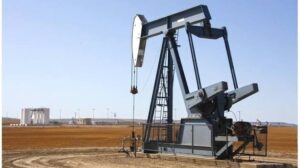
Highlights of Oil India’s Discovers Hydrocarbons in Libya
- Location: The hydrocarbon discovery was made in Area 95/96 block located in Libya’s Ghadames Basin, a highly prospective sedimentary basin in south-western Libya.
- Ghadames Basin is an intracratonic basin spanning Libya, Algeria, and Tunisia. It is renowned for its high-quality Silurian source rocks.
- Hydrocarbons were encountered in the Awynat Wanin and Awyn Kaza formations, which are known productive layers in the basin.
- Area: The exploration block covers approximately 6,600–6,630 sq km, a large onshore acreage, enhancing probability of multiple hydrocarbon accumulations.
- Consortium Structure: The project is executed by an Indian consortium where Oil India (OIL) and Indian Oil (IOCL) each hold a 25% participating interest.
- The block is operated by SIPEX (Sonatrach International Petroleum Exploration and Production Corporation).
- Well Identification: The discovery originated from the sixth exploratory well (A1-96/02) drilled under the exploration program.
- The well reached a final depth of about 8,440 feet, indicating deep subsurface exploration targeting mature hydrocarbon-bearing formations.
- Nature: The find includes both natural gas and condensate, confirming a dual hydrocarbon system. This enhances the resource profile as condensate adds higher commercial value alongside gas production.
- Production Test: Initial testing showed strong output of around 13 million cubic feet of gas per day (mmscfd) and approximately 327 barrels of condensate per day, indicating promising reservoir productivity at early stages.
- Recognition: Libya’s National Oil Corporation officially classified this as the fifth hydrocarbon discovery in the Area 95/96 block, highlighting a consistent pattern of resource presence in the region.
- Exploration Progress: Out of the planned eight exploratory wells, five have been drilled, with multiple successful discoveries including this one.
- Earlier wells (2012–2014) also yielded hydrocarbons, indicating a high success ratio in exploration drilling.
- Appraisal Status: The discovery is currently under appraisal and evaluation to determine reservoir size, characteristics, and commercial viability.
- Early results suggest significant hydrocarbon potential, but detailed studies are required before development decisions.
|
About Libya:
|
Strategic Importance for India
- Strengthening India’s Energy Security Framework: The discovery by Oil India Limited in Libya directly supports India’s energy security, as the country imports over 85% of its crude oil needs.
- Overseas discoveries reduce vulnerability to external supply shocks and ensure long-term access to hydrocarbon resources.
- Diversification Beyond Middle East: India heavily relies on the Middle East region, making it vulnerable to geopolitical disruptions like Strait of Hormuz tensions.
- This Libyan discovery helps diversify supply sources toward North Africa, reducing concentration risk.
- Expansion of India’s Overseas Upstream: The find strengthens India’s global exploration footprint, as Oil India holds a 25% participating stake in the block.
- It aligns with India’s policy of acquiring equity oil abroad, ensuring ownership-based supply rather than market-dependent imports.
- Enhancement of Long-Term Revenue: The discovery increases the asset valuation of Indian PSUs operating abroad.
- If commercially viable, it can generate steady revenue streams in foreign currency, improving financial strength and reducing India’s current account deficit linked to energy imports. (
- Strategic Positioning in Global Energy: By participating in resource-rich basins like the Ghadames Basin, India enhances its role as a global energy player.
- Such discoveries improve bargaining power in international oil markets and support India’s ambition to become a major stakeholder in global energy supply chains.
- Strengthening Africa-India Ties: This project cements India’s role as a developmental partner in Africa.
- Unlike “extractive” models, Indian consortium’s presence involves long-term infrastructure investment and technical collaboration with Libya, aligning with “Vishwa Bandhu” foreign policy pillar.
Libya’s Role in Global Energy Market
- Vast Oil Reserves: Libya holds about 48.3 billion barrels of proven oil reserves, accounting for nearly 2.7–3% of global reserves and ranking among the top 10 worldwide.
- It possesses the largest oil reserves in Africa, making it a critical long-term energy supplier.
- Oil Production: Libya’s crude oil production has recovered to around 1.3–1.4 million barrels per day (bpd) in 2025–26, with peaks reaching 1.43 million bpd recently, reflecting its strong role as a mid-sized but influential global producer.
- Libyan crude is characterized as low-sulfur “sweet crude”, which is easier and cheaper to refine.
- This makes it highly demanded in international markets, particularly in European refineries.
- Member of Global Energy Governance: As a member of the OPEC Organization of the Petroleum Exporting Countries since 1962, Libya contributes to global oil supply regulation and pricing dynamics, influencing production quotas and market stability within the cartel system.
- Approximately 85% of Libya’s oil exports historically flow to Europe, making it a crucial supplier for energy security in the European Union.
- Natural Gas Potential: Beyond oil, Libya holds substantial natural gas reserves (over 1.5 trillion cubic feet) and emerging shale potential, strengthening its role in the global gas market diversification.
- Export-Oriented Economy: Libya is a net energy exporter, with the majority of its production exported globally.
- The oil sector dominates its economy, generating major state revenues and foreign exchange earnings.
|
Recent Overseas Hydrocarbon Discoveries by Indian Oil Firms
|
|
Also Read: Discovery of Natural Gas in Andaman Shallow Offshore Block |