Government Reduces Oil Gas Royalty
|
General Studies Paper II: Government Policies & Interventions |
Why in News?
Recently, the Indian government reduced royalty rates on crude oil and natural gas production to boost domestic exploration and strengthen India’s long-term energy security amid rising import dependence.
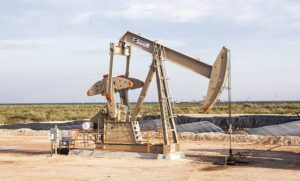
Government’s New Oil and Gas Royalty Reform
- Reform: The Union Government revised royalty rates for crude oil, natural gas and casing head condensate under the Oilfields (Regulation and Development) Act, 1948.
- The reform follows the 2025 amendments to petroleum sector regulations aimed at simplifying the upstream fiscal regime.
- The revised royalty structure was officially notified by the Ministry of Petroleum and Natural Gas (MoPNG) on 8 May 2026.
- The notification applies to multiple categories of producing fields across India’s upstream hydrocarbon sector.
- Reduction: The government reduced the effective royalty on onshore crude oil production from around 16.66% to nearly 10% under the revised formula.
- Royalty on offshore crude production was revised downward from approximately 9.09% to 8%. Separate royalty slabs were maintained for shallow-water, deepwater and ultra-deepwater production areas.
- The royalty rate on natural gas production was reduced from 10% to 8%. The government also introduced a revised methodology for calculating the well-head gas price through a flat deduction mechanism.
- Methodology: The reform removed several legacy differences between nomination blocks, pre-NELP blocks, NELP blocks and HELP regimes by introducing a more uniform royalty framework.
- Coverage: The changes apply to fields operated by National Oil Companies, private contractors, joint ventures, NELP blocks and HELP acreage, creating a broader unified royalty architecture.
- Special Provision: For blocks awarded under HELP and the Discovered Small Field Policy, ultra-deepwater production will attract zero royalty for the first seven years, followed by phased royalty obligations later.
- The revised framework introduced a standard 20% ad-valorem deduction while calculating royalty liabilities in several nomination and legacy blocks.
- The royalty rationalisation is part of a wider petroleum-sector reform process initiated after amendments to the ORD Act and PNG Rules in 2025, focused on reducing procedural complexity.
|
What are Royalty Rates?
|
Significance of This Reform
- Domestic Energy Production: The royalty reduction is significant because India imports nearly 85% of its crude oil and around 50% of natural gas requirements.
- By lowering royalty burdens, the government aims to make domestic hydrocarbon production financially more viable and reduce dependence on costly imports.
- Global Energy Uncertainty: The royalty rationalisation gains importance amid rising geopolitical tensions and volatile global crude prices.
- India’s high import exposure through the Strait of Hormuz makes domestic production expansion strategically critical for long-term energy stability and foreign exchange management.
- Upstream Exploration Activities: The reform directly supports upstream exploration and production (E&P) activities, especially in technically difficult regions such as deepwater and ultra-deepwater basins.
- The new framework provides zero royalty for the first seven years in several deepwater projects under HELP and DSF policies.
- Improved Investment Climate: The decision sends a strong policy signal to both domestic and foreign investors that India is moving toward a stable and investor-friendly fiscal regime.
- The simplified royalty methodology reduces uncertainty in long-term project planning and financing.
- Public Sector Oil Producers: The reform is highly significant for companies such as Oil and Natural Gas Corporation and Oil India Limited, whose nomination blocks form a large share of India’s domestic output.
- CLSA estimated potential fair-value gains of 7–11% for these firms after the royalty revision.
- Frontier Basin Development: The revised royalty structure introduces concessional rates for Category-II and Category-III sedimentary basins, including frontier regions such as Andaman-Nicobar, Kerala-Konkan and Bengal-Purnea basins.
- This encourages exploration in previously underdeveloped hydrocarbon areas.
|
Government Reforms Transforming India’s Oil and Gas Sector:
|
|
Also Read: India Preparedness Amid West Asia Crisis |