




ICMR H1N1 Update, No New Strain Confirmed in India
| General Studies Paper II: Diseases, Health |
Why in News?
The Indian Council of Medical Research (ICMR) clarified on August 23, 2026, that no new Influenza A (H1N1) strain has emerged in India amidst a rise in swine flu cases.
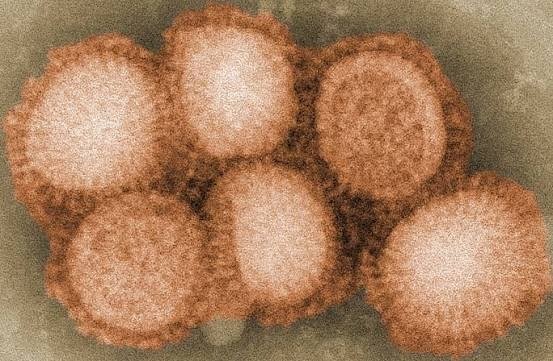
What is H1N1 Virus?
- About: The H1N1 virus, commonly known as swine flu, is a contagious respiratory tract infection.
- H1N1 is a subtype of Influenza A virus, an enveloped, segmented RNA virus.
- The circulating pandemic-derived virus is formally called A(H1N1)pdm09.
- Meaning: The name reflects two surface proteins: H = haemagglutinin (H1) and N = neuraminidase (N1).
- These proteins help the virus enter host cells and release newly formed viral particles.
- Classification: Influenza viruses are classified into A, B, C and D types.
- Influenza A and B commonly cause seasonal human epidemics, while only Influenza A has been responsible for known influenza pandemics.
- Origin: It is named swine flu because the virus strains previously circulated in pigs.
- The virus emerged in 2009 contained genetic material derived from animal influenza viruses.
- Rapid human-to-human transmission led WHO to declare an Influenza A(H1N1) pandemic in June 2009.
- Confirmed cases reached nearly 30,000 across 74 countries and territories.
- It became the first influenza pandemic of the 21st century.
- The 2009 virus originated from animal influenza, making it genetically distinct from the human seasonal H1N1 strains circulating since 1977.
- In August 2010, WHO declared the pandemic period over.
- The virus did not disappear; A(H1N1)pdm09 became a seasonal influenza virus.
- Transmission: H1N1 spreads mainly through respiratory droplets and aerosols released during coughing, sneezing, speaking or close contact.
- Transmission can increase in crowded and poorly ventilated environments.
- Symptoms: Typical symptoms include fever, cough, sore throat, headache, muscle aches and runny nose.
- Some patients may develop gastrointestinal symptoms. Most uncomplicated infections are self-limiting, but severe disease can cause viral pneumonia and respiratory failure.
- High-Risk Groups: Severe disease is more concerning among pregnant women, and young children.
- Older adults and people with underlying conditions such as respiratory, cardiovascular or metabolic disorders and weakened immunity.
- Incubation Period: The incubation period is generally 1–4 days, with an average of about 2 days.
- Infected people can transmit influenza before symptoms appear, making early containment difficult.
- Diagnosis: Diagnosis begins with clinical assessment of influenza-like illness, especially during periods of influenza circulation.
- Molecular tests, particularly RT-PCR-based assays, provide more sensitive confirmation.
- Rapid antigen tests can be useful but have lower sensitivity, so a negative result does not always exclude influenza.
- Prevention: Prevention combines annual vaccination, hand hygiene, respiratory etiquette, improved ventilation, avoiding close contact while ill, and staying home during infectious illness.
- Treatment: Oseltamivir is an important antiviral used against influenza, including A(H1N1)pdm09.
- Treatment should begin as soon as possible, ideally within 48 hours of symptom onset.
- Mild cases generally require rest, adequate fluids and symptomatic treatment under medical guidance.
- Vaccination: Seasonal influenza vaccination is the principal preventive measure.
- Vaccine composition is periodically updated because influenza viruses undergo antigenic drift.
H1N1 Cases & Management in India
- Cases:
- India detected its first positive case in Hyderabad in May 2009, followed by the first reported death in Pune in August. India recorded 27,236 cases and 981 deaths in that year.
- In 2010, National Centre for Disease Control (NCDC) recorded 20,604 cases and 1,763 deaths, making 2010 one of India’s most severe H1N1 years.
- India reported cases/deaths: 603/75 (2011), 5,044/405 (2012), 5,253/699 (2013) and 937/218 (2014).
- In 2015, India experienced another major epidemic with 42,592 reported cases and 2,990 deaths, the highest annual totals.
- NCDC recorded 1,786 cases/263 deaths in 2016 and 38,811 cases/2,270 deaths in 2017.
- In 2018, it recorded 15,266 cases and 1,128 deaths. Major burdens were reported in Maharashtra, Rajasthan, Tamil Nadu, Karnataka and Gujarat.
- In 2019, Cases increased to 28,798, with 1,218 deaths, mainly in ajasthan, Gujarat, Delhi, Karnataka and Maharashtra.
- It activity dipped in 2021 (778 cases), surged in 2022 (13,202 cases), and remained steady through 2023 and 2025.
- NCDC reported 3,320 H1N1 cases and 14 deaths by September 30, 2025. Kerala recorded the highest deaths, followed by Maharashtra and individual deaths in Himachal Pradesh, Tamil Nadu and Karnataka.
- On August 2026, Delhi alone reported 1,777 cases by August 21. ICMR says no new H1N1 strain has been detected.
- Karnataka reported over 4,000 cases, mostly around Bengaluru.
- Rising flu activity is also visible in Mumbai, Chennai, and Kerala.
- Management:
- Government manages seasonal influenza outbreaks through a structured, multi-tiered framework led by the Ministry of Health and Family Welfare (MoHFW).
- The Integrated Disease Surveillance Programme (IDSP) tracks spikes in cases using the Integrated Health Information Platform (IHIP) portal.
- It actively monitors two specific categories: Influenza-like Illness (ILI) and Severe Acute Respiratory Infections (SARI).
- Government guidelines require public health systems to test at least 5% of all outpatient ILI cases and 100% of admitted SARI cases.
- The National Centre for Disease Control (NCDC) enforces a strict triage protocol called the ABC Classification:
- Category A; Mild fever, cough, and sore throat, home isolation and symptomatic care (like paracetamol).
- Category B; High fever plus high-risk factors (children under 5, adults over 65, pregnant women, or individuals with chronic illnesses), antiviral drug Oseltamivir is immediately prescribed.
- Category C; Severe symptoms, including breathlessness, chest pain, somnolence, or low blood pressure, mandatory testing, and critical care management.
- In late 2025, the government held a national Chintan Shivir (brainstorming session) on influenza.
- This resulted in an agreement to treat flu outbreaks using a One Health approach, meaning human health, animal husbandry, and wildlife sectors now share data in real-time to catch zoonotic (animal-to-human) flu mutations before they spread.
Frequently Asked Questions (FAQs):
1. Has ICMR confirmed a new H1N1 strain in India?
No. ICMR says no new H1N1 strain has been detected; circulating viruses are established seasonal strains.
2. What did ICMR say about the current H1N1 situation in India?
ICMR said the situation reflects seasonal influenza, remains under surveillance, and there is no cause for panic.
3. Are the recent H1N1 cases caused by a new strain?
No. ICMR says circulating A(H1N1)pdm09 viruses have been present since 2025 and match recommended seasonal vaccine strains.
4. What is H1N1 or swine flu?
H1N1 is an Influenza A subtype causing seasonal respiratory illness; the post-2009 pandemic virus is called A(H1N1)pdm09.
5. What are the common symptoms of H1N1 infection?
Common symptoms include fever, cough, headache, sore throat, runny nose, muscle aches and fatigue; most people recover within about a week.
6. How does H1N1 spread from one person to another?
H1N1 spreads primarily through respiratory droplets and aerosols, particularly during close contact, coughing, sneezing or speaking.
7. Who is at higher risk of severe H1N1 infection?
Higher-risk groups include young children, elderly people, pregnant women, immunocompromised individuals and those with underlying medical conditions.
Disclaimer: Information in this article is based on official announcements and public records. Regulations and implementation details may evolve over time.
| Also Read: Nipah Virus Case Reported in West Bengal |