




Iran War Raises Global Hunger Risk
|
General Studies Paper II: Food Security, Issues Relating to Poverty & Hunger |
Why in News?
Recently, the World Bank Chief Economist warned that the Iran war could sharply worsen global hunger, with around 300 million people already food insecure and numbers expected to rise by nearly 20%.
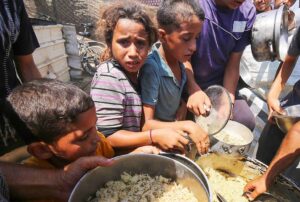
Impact of Iran War on Global Regions
- Horn of Africa Pressure: The Horn of Africa (Somalia, Ethiopia, Djibouti) faces immediate food stress due to reliance on imported wheat, rice, and fertilizers from Gulf routes.
- Recent disruptions have pushed food inflation above 30–50% in urban markets, worsening already high IPC Phase 3–4 (crisis/emergency) hunger levels, especially among pastoral communities dependent on food aid flows.
- West & Central Africa Strain: Countries like Nigeria, Niger, Mali, and Chad are highly exposed due to dependence on imported fertilizers and fuel-based agriculture systems.
- Disrupted supply chains are increasing input costs for smallholder farmers, with projected 21% rise in food insecurity risk in West & Central Africa, impacting cereal production cycles and deepening rural malnutrition.
- South Asia Vulnerability: In India, Pakistan, Bangladesh, and Sri Lanka, rising fertilizer import costs and diesel price spikes are affecting wheat, rice, and pulse productivity.
- South Asia is projected to see significant increases in food insecurity due to import dependence and high population density, with seasonal planting disruptions posing medium-term yield risks.
- Middle East Spillover Zones: Even non-combat states such as Jordan, Lebanon, Iraq, and Yemen are experiencing intensified hunger pressures due to logistics breakdowns and refugee displacement.
- Food access is constrained by border closures, inflation above wage growth, and disrupted humanitarian supply chains, increasing reliance on food aid systems.
- Southeast Asia Exposure: Economies like Indonesia, Philippines, and Vietnam face indirect shocks through global fertilizer price escalation and shipping cost inflation.
- These countries depend heavily on imported urea and potash, and reduced affordability is lowering fertilizer application rates, threatening rice yield stability and rural food security resilience.
- Latin America & Caribbean Fragility: In Haiti, Honduras, Venezuela, and parts of Central America, already weak food systems are worsening due to import price inflation and reduced humanitarian funding capacity.
- Rising global commodity prices reduce access to staples, increasing dependency on external food assistance and remittance-based survival systems, deepening chronic hunger risks.
Key Drivers of Global Food Crisis Risk
- Strait Disruption: The Strait of Hormuz, handling nearly 20–30% of global fertilizer exports, 27% oil, and 20% LNG, has faced severe disruption, with shipping declining by over 70%. This chokepoint disruption restricts global food trade flows, raising prices and reducing availability.
- Energy Price Surge: The war has sharply increased oil prices ($95–100/barrel), driving up fuel, irrigation, transport, and storage costs. Since energy is embedded in every stage of food production, rising energy costs directly translate into higher global food prices and inflation.
- Fertilizer Shock: Nearly one-third of global fertilizer trade depends on Gulf routes. Disruptions have increased fertilizer prices significantly, with key inputs like urea, ammonia, and phosphates affected. Reduced fertilizer use lowers crop yields, creating long-term food supply shortages.
- Agricultural Production Decline: Higher input costs and fertilizer shortages force farmers to cut usage or shift cropping patterns, leading to lower productivity. This is critical during planting seasons, where missed fertilizer application reduces yields across wheat, rice, and maize systems globally.
- Supply Chain Breakdown: The war has disrupted global logistics, including shipping routes, insurance costs, and port operations. Food supply chains—already fragile post-COVID and Ukraine war—are now facing multi-layered disruptions, delaying delivery of both food and agricultural inputs.
- Inflation and Food Prices: Global inflationary pressures are intensifying due to higher input and transport costs. Food prices rise disproportionately, especially in developing countries where households spend a large share of income on food.
Possible Global Hunger Risk from Iran War
-
- Rising Poverty and Inequality: The conflict could push over 32 million people into poverty globally, reversing development gains. Poor households spend a large share of income on food, so rising prices disproportionately increase hunger and social instability in developing nations.
- Malnutrition and Diet Deterioration: The crisis is leading to a shift toward cheaper, nutrient-poor diets, increasing malnutrition risks. Vulnerable groups, especially children and women, face rising rates of stunting and wasting, particularly in already food-stressed regions.
- Displacement and Food Access: War-induced displacement across the Middle East is restricting access to food. Refugees and internally displaced populations face severe shortages, relying heavily on humanitarian aid, which is itself under pressure due to global supply disruptions.
- Strain on Humanitarian Systems: Global agencies like the World Food Programme (WFP) are scaling up assistance but face funding and logistical constraints. The scale of crisis risks overwhelming aid systems, delaying food delivery to vulnerable populations.
- Food-Insecure Population: Already around 318 million people face acute food insecurity globally, and the war-driven shock is pushing additional populations into vulnerability, especially in fragile and conflict-affected states where 70% of the hungry already live.
-
- The World Food Programme (WFP) warns that prolonged Iran conflict could push an additional 45 million people into acute hunger (IPC Phase 3+).
|
Also Read: India Preparedness Amid West Asia Crisis |