




Nepal Youngest Prime Minister Balendra Shah
|
General Studies Paper II: India’s Neighbouring Countries, Effect of Policies & Politics of Countries on India’s Interests |
Why in News?
On 27 March 2026, Nepal swore in Balendra Shah as its youngest Prime Minister, a former rapper-turned-politician, marking a major political shift after youth-led protests and a landslide election victory.
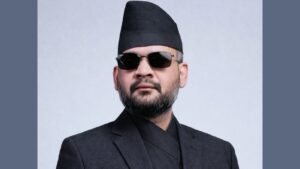
Who is Balendra Shah?
- Early Life: Balendra Shah was born on April 27, 1990, in the historic Naradevi neighborhood of Kathmandu, Nepal. He belongs to a Maithili Madheshi family with roots in the Ekdara area of Mahottari District in the Madhesh Province. He is the youngest of four siblings.
- Family: His father, Ram Narayan Shah, was a respected Ayurvedic practitioner who worked at the Naradevi Ayurvedic Hospital. His mother, Dhruvadevi Shah, hails from the Dhanusha District.
- Balen married Sabina Kafle, a public health professional, in 2018. The couple has one daughter.
- Education: He completed his SLC at Alliance Academy and his 10+2 studies at V.S. Niketan Higher Secondary School. He earned a Bachelor of Engineering (BE) in Civil Engineering from the Himalayan WhiteHouse International College in Kathmandu.
- For his postgraduate studies, he moved to India and obtained a Master of Technology (M.Tech) in Structural Engineering from the Nitte Meenakshi Institute of Technology (NMIT) in Bengaluru, affiliated with Visvesvaraya Technological University (VTU).
- He later received a researcher’s fellowship for PhD studies at Kathmandu University, focusing on the conservation of New Heritage structures.
- Career: Shah worked as a professional structural engineer. He applied his technical expertise to various infrastructure projects across Nepal.
- In the early 2010s, Shah emerged as a prominent figure in the Nepali hip-hop (Nephop) scene. He released his debut single, “Sadak Balak”, in 2012 and gained widespread fame through the YouTube battle rap series “Raw Barz” in 2013.
- His music was noted for its socially conscious themes, using sharp lyrics to critique political corruption, inequality, and government dysfunction.
- Tracks like “Balidan” and “Nepal Haseko” resonated deeply with the frustrations of Nepalese youth, building a massive digital following.
- Mayoral Tenure: He entered politics as an independent candidate and won the Kathmandu Mayor election (2022), defeating established parties. Elected as the 15th Mayor of Kathmandu, he served until January 2026.
- His administration introduced several transparency initiatives, such as the first-ever live-streaming of municipal council meetings.
- He focused on urban reforms, including the installation of tactile pavements for the visually impaired and the “Textbook-Free Friday” program in community schools.
- Premiership: Following the 2025 Gen Z protests, Shah resigned from his mayoral post to pursue national leadership.
- He joined the Rastriya Swatantra Party (RSP) and contested the 2026 general election from the Jhapa-5 constituency.
- In the March 5, 2026 general elections, the RSP secured a landslide victory (182 out of 275 seats). He defeated veteran leader and former Prime Minister K. P. Sharma Oli by a landslide margin, securing a record 68,348 votes.
- On March 27, 2026, he was sworn in as the youngest Prime Minister of Nepal at age 35, leading a majority government with a mandate focused on job creation, anti-corruption, and systemic reform.
- Recognition: In recognition of his influence, Time magazine included him in its TIME100 Next list in 2023, highlighting him as an emerging leader shaping the future.
Constitutional Process and Appointment as Prime Minister in Nepal
- Constitutional Framework: The appointment of the Prime Minister in Nepal is governed by the Constitution of Nepal, 2015 (2072). The key provision is Article 76, which lays down a step-by-step parliamentary procedure for government formation.
- Parliamentary System: Nepal follows a parliamentary system, where the Prime Minister is not directly elected by people but must be a member of the House of Representatives (HoR). The executive is collectively accountable to Parliament.
- The President of Nepal acts as the constitutional head of state and appoints the Prime Minister.
- The President’s role is largely ceremonial and bound by constitutional provisions, especially Article 76.
- Under Article 76(1), the President appoints the leader of the party with an absolute majority in the HoR as Prime Minister.
- Coalition Government: If no party has a majority, Article 76(2) allows the President to appoint a member who can command a majority with support of two or more parties. This reflects Nepal’s multi-party coalition politics and ensures flexibility.
- Largest Party Leader: If coalition formation fails within 30 days, the President appoints the leader of the largest party under Article 76(3). However, such a Prime Minister must prove majority through a vote of confidence.
- Member with Majority Claim: If the above options fail, Article 76(5) allows any member of the HoR to claim Prime Ministership by demonstrating support of majority MPs. This provision is crucial in constitutional crises and political deadlock situations.
- Vote of Confidence: A Prime Minister appointed under Articles 76(2), 76(3), or 76(5) must obtain a vote of confidence in the House within 30 days. Failure leads to loss of office and initiation of the next constitutional step.
- If no Prime Minister can secure a majority under any clause, Article 76(7) allows the President to dissolve the House of Representatives and call fresh elections within six months.
Impact on India–Nepal Relations
- Rise of Assertive Nationalism: Shah’s leadership reflects a “Nepal First” policy, emphasizing sovereignty and territorial integrity. Issues like Kalapani–Lipulekh dispute are likely to see firmer diplomatic positioning, increasing periodic tensions but also forcing clearer boundary negotiations between India and Nepal.
- Hydropower as Strategic Connector: Energy cooperation remains the core pillar of bilateral ties. Nepal exports about 1,140 MW electricity to India from 34 projects, while Shah targets 10,000 MW exports by 2034 to expand Nepal’s $40 billion GDP, positioning India as a key energy market.
- Trade and Economic Reforms: India accounts for nearly 64% of Nepal’s total trade, but Nepal faces a huge trade deficit—imports of $10 billion vs exports of $1 billion. Shah is pushing for Integrated Check Posts (ICPs), digital customs, and infrastructure upgrades to boost Nepali exports, which could rebalance economic ties over time.
- Strategic Balancing with China: Shah promotes a “balanced foreign policy”, leveraging China through Belt and Road Initiative (BRI) projects to reduce dependence on India, requiring India to accelerate connectivity and development projects to retain influence.