Tata Boeing Delivers 400th Apache Fuselage, Milestone for Made in India Initiative
| General Studies Paper III: Defence Milestone, Defence Technology |
Why in News?
Recently, Tata Boeing Aerospace Limited (TBAL) delivered its 400th India-made AH-64E Apache fuselage, strengthening indigenous aerospace manufacturing, and India’s integration into global defence supply chains.
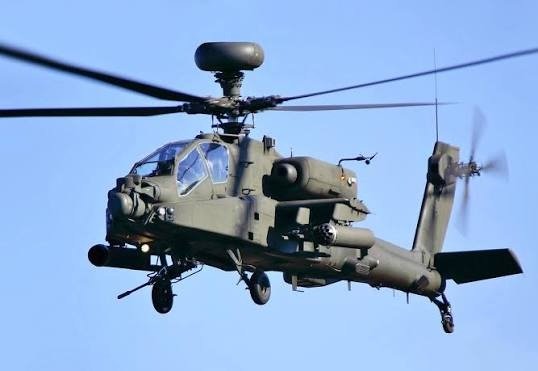
400th Apache Fuselage Milestone Highlights
- Milestone: On 7 September 2026, Tata Boeing Aerospace Limited (TBAL) rolled out its 400th fuselage for the AH-64E Apache attack helicopter.
- A fuselage is the helicopter’s main structural body, housing the cockpit, crew systems and major aircraft components.
- The milestone demonstrates India’s growing capability in complex aerospace structural manufacturing.
- Manufacturing: The 400th fuselage was produced at TBAL’s 52,000-square-metre advanced manufacturing facility in Hyderabad, Telangana.
- The facility uses advanced robotics, automation and aerospace manufacturing technologies.
- Production: TBALs Hyderabad facility subsequently became a dedicated global production centre for Apache fuselages.
- It delivered its first “Made in India” Apache fuselage on 1 June 2018.
- The 100th fuselage milestone was reached in July 2021, while the 300th was reported in 2025.
- The Indian-made fuselage forms a critical aerostructural assembly that is subsequently integrated into the final aircraft.
- The TBAL milestone established that more than 90% of parts used in Apache aerostructure assemblies were manufactured in India through 100+ MSME suppliers, complimenting “Make in India” initiative.
- Apache final assembly takes place at Boeing’s facility in Mesa, Arizona, making Hyderabad part of a genuinely international production chain.
- It delivered its first “Made in India” Apache fuselage on 1 June 2018.
- Users: TBAL-produced fuselages support global Apache customers, including the U.S. Army and India.
- The fuselages include those incorporated into the six Apaches delivered to the Indian Army in 2025. India’s Indian Air Force operates 22 AH-64E Apaches.
| Note: Tata Boeing Aerospace Limited (TBAL) is a joint venture between Boeing and Tata Advanced Systems Limited established in 2016 to manufacture advanced aerospace components and support global defense supply chains. It produced complex aerostructures for Boeing’s 737 and 777 aircraft. |
What is the AH-64 Apache?
- About: The AH-64 Apache is a twin-engine, four-bladed, tandem-seat attack helicopter designed primarily for armed reconnaissance, close combat and precision engagement of ground targets.
- Development: Its development began in the United States as an advanced attack helicopter programme.
- The Apache originated with Hughes Helicopters. The prototype YAH-64 first flew in 1975.
- Hughes Helicopters became part of McDonnell Douglas in 1984, after which production Apaches were delivered under the McDonnell Douglas name.
- Boeing later became responsible for the platform following its acquisition of McDonnell Douglas.
- Features:
- Target Acquisition: A major strength is its sophisticated Fire Control Radar (FCR) and Modernized Target Acquisition Designation Sight (M-TADS).
- These systems provide target detection and engagement capabilities in difficult conditions, including night and adverse weather.
- Weapons: The Apache can employ Hellfire missiles, Hydra rockets and a 30-mm M230 automatic cannon.
- Indian Apaches are also equipped to employ air-to-air Stinger missiles.
- These weapons provide capabilities against armoured vehicles, personnel and other battlefield targets.
- Network-Centric Warfare: The AH-64E has strong digital interoperability and battlefield networking.
- This allows information to move between the helicopter and other battlefield systems, improving situational awareness and sensor-to-shooter coordination.
- Manned-Unmanned Teaming: Modern Apache development includes the ability to control unmanned aircraft systems, reflecting the growing convergence of helicopters and drones on the battlefield.
- Latest Variant: The AH-64E Apache Guardian is the modern evolution of the Apache family.
- It incorporates improved digital connectivity, sensors, communications, flight performance, survivability and weapons integration.
- Target Acquisition: A major strength is its sophisticated Fire Control Radar (FCR) and Modernized Target Acquisition Designation Sight (M-TADS).
- Global Users: The Apache is operated internationally. Boeing currently reports approximately 1,300 Apaches in operation across 19 countries, making it one of the most widely used advanced attack helicopters.
- India’s Apache Fleet: India contracted for 22 AH-64E Apaches for the Indian Air Force in 2015.
- The IAF formally inducted the Apache in September 2019, and Boeing completed delivery of all 22 aircraft in 2020.
- India subsequently ordered six additional AH-64E helicopters for the Indian Army. These six were delivered in 2025.
- India has 28 Apaches in total: 22 with the IAF and six with the Indian Army.
- For India, Apache strengthens precision strike, anti-armour, armed reconnaissance and battlefield support capabilities.
- It is relevant to India’s requirement for effective combat aviation across mountainous, desert and other challenging environments.
Significance of 400th Fuselage Milestone
- The 400th fuselage milestone represents a change in India’s traditional defence relationship with foreign suppliers.
- Instead of being only an end-user of imported platforms, India is increasingly participating in their design-support, component manufacturing, assembly and global supply chains.
- The Apache programme directly supports the broader Make in India objective by locating sophisticated manufacturing activity inside India.
- Advanced aerospace production creates demand for engineers, technicians and specialised manufacturing personnel.
- TBAL’s latest figures indicate employment of more than 750 engineers and technicians, demonstrating the human-capital dimension of defence industrialisation.
- An Indian facility supports international Apache fleets. This indicates India’s gradual movement from a defence-importing market towards a global manufacturing and supply-chain partner.
- Such integration can increase foreign-exchange earnings, skilled employment, technology absorption, supplier development and industrial competitiveness.
- This strengthens India-US Defence Cooperation.
India–US Defence Cooperation
- India–US defence cooperation has transformed from limited military engagement into a Major Defence Partnership.
- The relationship was designated as an MDP in 2016.
- Defence cooperation now covers procurement, exercises, logistics, technology, information-sharing and defence industry.
- On 31 October 2025, India and the US signed a new 10-year Framework for the U.S.-India Major Defense Partnership in Kuala Lumpur.
- It provides policy direction for cooperation across land, maritime, air, space and cyberspace and succeeds the earlier 2023 defence-industrial roadmap.
- The partnership rests on four important enabling arrangements.
- LEMOA: Logistics Exchange Memorandum of Agreement (2016) facilitates reciprocal logistical support;
- COMCASA: Communications Compatibility and Security Agreement (2018) enables secure communications and access to advanced systems;
- BECA: Basic Exchange and Cooperation Agreement (2020) facilitates sharing of geospatial information; and
- GSOMIA provides a framework for protecting classified military information.
- Regular exercises improve interoperability, operational coordination and professional familiarity.
- Major engagements include Malabar, involving naval forces, and Yudh Abhyas, Cope India and Tiger Triumph.
- US-origin platforms have significantly strengthened Indian capabilities. Important acquisitions include P-8I maritime patrol aircraft, C-17 and C-130J transport aircraft, Apache attack helicopters, Chinook heavy-lift helicopters and MH-60R helicopters.
- The relationship increasingly emphasises co-development and co-production, rather than only buyer-seller transactions.
- DTTI provides an institutional mechanism for defence technology cooperation, while INDUS-X connects Indian and American defence start-ups, investors, researchers and industry.
- A major strategic pillar is maintaining a free, open and rules-based Indo-Pacific.
- Cooperation includes maritime-domain awareness, naval interoperability, information-sharing and capacity building.
- The two countries also cooperate through the Quad, alongside Japan and Australia.
- The partnership is expanding beyond conventional military cooperation into space, cyberspace, autonomous systems, artificial intelligence and advanced defence technologies.
- For India, the US partnership provides access to advanced technology, intelligence cooperation, logistics capabilities and high-end military platforms.
- It strengthens India’s ability to respond to emerging challenges across the Indian Ocean and wider Indo-Pacific.
- For Washington, India is an important Indo-Pacific security partner because of its geographic position, military capabilities and influence in the Indian Ocean.
- For India, the US partnership provides access to advanced technology, intelligence cooperation, logistics capabilities and high-end military platforms.
Frequently Asked Questions (FAQs):
1. When did Tata Boeing Aerospace deliver the 400th Apache fuselage?
TBAL rolled out its 400th AH-64E Apache fuselage on September 7, 2026, from Hyderabad.
2. Where was the 400th Apache fuselage manufactured?
It was manufactured at TBAL’s 52,000-square-metre advanced facility in Hyderabad, Telangana.
3. Which companies are part of Tata Boeing Aerospace Limited?
TBAL is a joint venture between Boeing and Tata Advanced Systems Limited (TASL), established in 2016.
4. What is India’s role in Apache fuselage manufacturing?
India manufactures critical Apache fuselage aerostructures, using advanced robotics, automation and aerospace technologies for global integration.
5. Are Made-in-India Apache fuselages supplied to other countries?
Yes. Indian-made fuselages are integrated into aircraft supplied worldwide, including to the U.S. Army.
Disclaimer: Information in this article is based on official announcements and public records. Regulations and implementation details may evolve over time.
| Also Read: Sea King 42B Squadron Retirement |