



US Secretary Marco Rubio India Visit
|
General Studies Paper II: Bilateral Grouping and Agreements, Effect of Policies & Politics of Countries on India’s Interests |
Why in News?
Recently, the US State Department announced Secretary Marco Rubio’s maiden visit to India from May 23–26, signaling deeper Indo-Pacific alignment through Quad diplomacy.
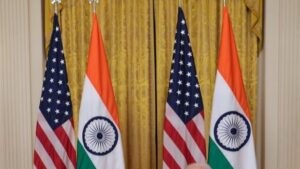
US Secretary Marco Rubio’s Upcoming India Visit 2026
- US Secretary of State Marco Rubio will visit India from May 23–26, marking his first official India trip after assuming office.
- His visit will prioritize negotiations on interim India–US trade agreement after earlier tariff disputes disrupted bilateral commerce.
- Discussions may cover market access, technology transfer, pharmaceuticals, semiconductors, and supply-chain resilience.
- Both nations are attempting to stabilize economic ties before the July 2026 tariff-review deadline.
- Rubio’s itinerary includes New Delhi, Jaipur, Agra, and Kolkata.
- These visits aim to project wider American engagement with India’s cultural, commercial, and strategic centers.
- Jaipur and Kolkata may support economic and public diplomacy outreach initiatives alongside official meetings.
- Rubio is likely to meet Prime Minister Narendra Modi, External Affairs Minister S. Jaishankar, and National Security Adviser Ajit Doval.
- High-level engagements will focus on strategic coordination, defence planning, and long-term Indo-US geopolitical cooperation in Asia.
- Rubio is expected to hold meetings with senior Indian officials on defence cooperation, military technology sharing, and Indo-Pacific security coordination.
- Discussions may include maritime surveillance, joint military exercises, defence manufacturing, and interoperability between armed forces under expanding strategic partnership frameworks.
- India will host the Quad Foreign Ministers’ Meeting in New Delhi on May 26. The meeting is expected to include India, the United States, Japan, and Australia.
- Regional security, South China Sea tensions, humanitarian cooperation, and critical mineral supply chains are likely agenda points.
- The visit also coincides with celebrations linked to America’s 250th anniversary, symbolizing expanding democratic and geopolitical partnership between both nations.
Significance of Marco Rubio’s India Visit
- Countering Regional Dominance: Washington views New Delhi as its primary democratic anchor to balance China’s expanding influence across the Indo-Pacific.
- Rubio’s visit aims to institutionalise security protocols and reduce India’s legacy reliance on Russian military hardware via accelerated technology transfers.
- Supply Chain Security: Advancing the Critical Minerals Initiative, the two powers are building redundant supply chains for lithium, cobalt, and rare earths.
- This joint investment strategy bypasses China’s export monopolies on raw components vital for electronics and defense systems.
- Trade and Tariff Reset: Following months of friction over Washington’s 50% tariffs on Indian goods and steep H-1B visa fees, Rubio is working to codify a stable interim trade deal. The goal is to establish a permanent platform for market access.
- Energy Security Strategy: Amid market disruptions from the West Asia crisis, the US is aligning with India over oil market stability.
- Discussions target securing the Strait of Hormuz while regulating exceptions for Indian energy purchases.
- Advanced Defense Hardware: The visit may accelerate key co-production projects, moving beyond buyer-seller dynamics.
- This momentum underpins the newly cleared US support packages for India’s Apache helicopters and M777 Howitzers.
|
India–US Relations:
|
|
Also Read: India‑US Trade Deal Regarding GM Crops |