SpaceX Share Price Crash
| General Studies Paper II: Business |
Why in News?
Recently, SpaceX shares crashed after a euphoric IPO debut, erasing over $600 billion in market value as profit-booking.
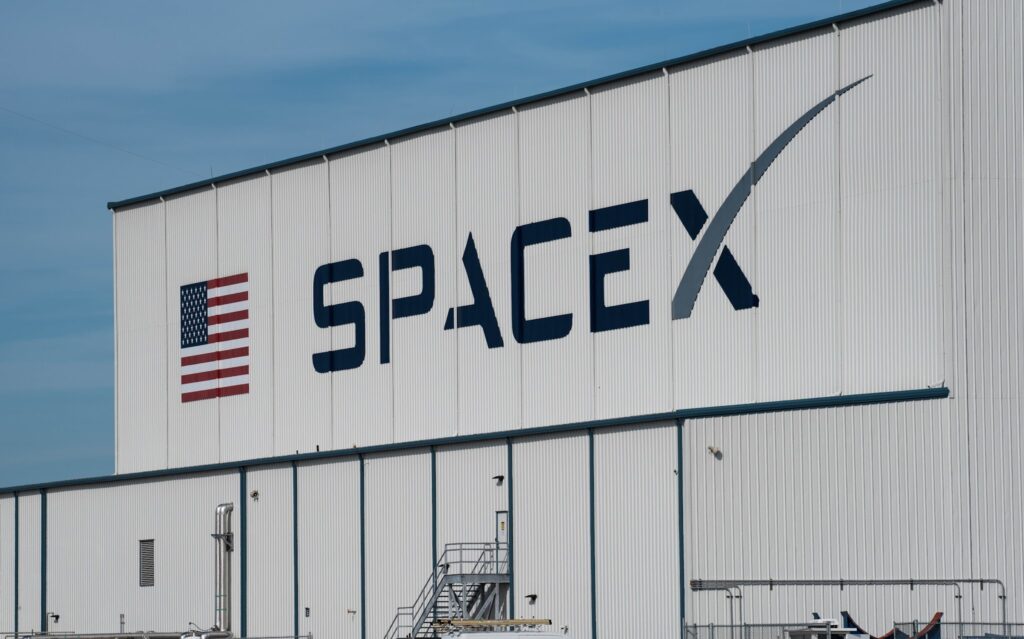
SpaceX IPO Debut and Market Value Erosion: Understanding the Share Price Crash
- Record-Breaking IPO Launch: SpaceX entered the Nasdaq on 12 June 2026 at an IPO price of $135 per share, raising about $75 billion, the largest IPO in history.
- Shares closed their debut session at $160.95, valuing the company at roughly $2.1 trillion and making founder Elon Musk the world’s first trillionaire.
- Post-Listing Rally: Investor enthusiasm pushed SpaceX shares above $225, a gain of nearly 60% from the IPO price.
- At its peak, the company’s valuation briefly approached $3 trillion, surpassing several established technology giants.
- Market Value Erosion: The rally proved unsustainable. Within a few trading sessions, SpaceX lost more than $400–600 billion in market capitalization.
- Shares fell below their first-day closing level and dropped over 30% from peak levels.
- Despite strong growth prospects, investors questioned paying trillions of dollars for a company still facing significant profitability challenges.
- Profit-Booking: Following extraordinary gains, traders began locking in profits. Analysts noted that such profit-taking is common after major IPO rallies.
- Bearish bets increased rapidly. Estimates suggested 5–7% of public float, around 40 million shares, had been sold short, reflecting growing skepticism regarding valuation levels.
Key Factors Behind the Decline
- Extreme Post-IPO Valuation: The biggest trigger was valuation anxiety. After listing at $135, SpaceX surged above $225, briefly approaching a $2.7–3 trillion valuation.
- Many analysts argued that such pricing far exceeded current fundamentals and embedded decades of future growth into today’s share price.
- Weak Profitability Metrics: Investors increasingly focused on earnings. Company filings showed 2025 revenue of about $18.7 billion but a net loss of $4.9 billion, raising questions about whether current cash flows justify a multi-trillion-dollar valuation.
- Massive Debt Refinancing Plan: Sentiment deteriorated after SpaceX announced a $20 billion senior notes offering. Markets interpreted the borrowing plan as a sign that substantial capital would be used to refinance existing obligations rather than fund new growth projects.
- Profit Booking: The stock’s rapid rise encouraged early investors to lock in gains. Following a 60% post-listing surge, large-scale profit-taking emerged, creating intense selling pressure and accelerating the correction.
- Collapse of IPO Euphoria: Initial excitement surrounding the world’s largest IPO gradually faded. Investors shifted from narrative-driven buying to evaluating revenues, margins, debt, and execution risks, leading to a reassessment of fair value.
- Bearish Options Market Signals: Options markets turned defensive. Rising put-call ratios indicated investors were purchasing protection against further declines, with active trades targeting share prices near $120 and $100.
- AI Spending and Capital Intensity: Investors became worried about heavy spending on AI infrastructure, Starlink expansion, and Starship development. High capital requirements increased fears that profitability could remain distant despite strong revenue growth.
- Fear of Future Share Supply: Markets also began pricing in future lock-up expirations and insider share sales. Investors feared that additional shares entering the market could dilute scarcity and exert further downward pressure on prices.
Impact
- Wealth Destruction in IPO History: The correction erased more than $600 billion in market capitalization within days, making it one of the largest post-IPO value declines ever recorded. The event highlighted how rapidly speculative valuations can unwind in modern equity markets.
- Sharp Decline in Elon Musk’s Net Worth: Because Elon Musk retained a substantial ownership stake after listing, the sell-off reduced his paper wealth by hundreds of billions of dollars.
- Although he remained among the world’s richest individuals, the episode demonstrated the volatility of founder-linked wealth.
- Pressure on Nasdaq and Growth Indices: SpaceX had quickly become one of the largest-weighted technology stocks. Its decline contributed to weakness across major U.S. growth benchmarks, dragging sentiment in technology, aerospace and innovation-focused indices.
- Spillover to Commercial Space Companies: Publicly traded space-sector firms experienced increased volatility as investors reassessed industry valuations.
- Companies linked to satellite services, launch systems and space infrastructure faced renewed scrutiny regarding profitability and cash generation.
- Institutional Portfolio Losses: Major pension funds, mutual funds and ETF managers that accumulated SpaceX shares after listing suffered significant mark-to-market losses.
- Several growth-oriented funds reported SpaceX as a major contributor to weekly portfolio declines.
- Reduced Retail Investor Confidence: The crash affected millions of retail investors who entered during the IPO frenzy.
- Market analysts noted declining risk appetite as traders shifted from speculative growth stocks toward companies with established earnings and cash flows.
- Higher Financing Costs for Space Ventures: The decline increased investor caution toward capital-intensive space businesses.
- Venture capital and institutional investors began demanding stronger revenue visibility before funding large-scale aerospace and satellite projects.
- Reassessment of AI and Space Narratives: Investors became more selective toward companies benefiting from AI, Starlink and space-economy themes. Markets increasingly demanded measurable earnings rather than long-term visionary narratives alone.
SpaceX: Business Model and Long-Term Growth Prospects
- About: SpaceX is a U.S.-based aerospace and space-technology company founded in 2002 by Elon Musk.
- Its objective is reducing launch costs, expanding satellite connectivity, and enabling long-term human settlement beyond Earth.
- Business Model: SpaceX generates revenue from launch services, Starlink subscriptions, satellite deployment, defense contracts, and spacecraft missions. This diversified model reduces dependence on a single business segment.
- Industry estimates indicate Starlink contributes the majority of SpaceX’s operating cash flow.
- With millions of broadband subscribers across more than 100 countries, recurring subscription revenue provides predictable cash generation.
- SpaceX’s competitive advantage lies in reusability. Repeated use of Falcon boosters significantly lowers launch costs compared with traditional expendable rockets.
- The company designs engines, satellites, spacecraft, software, and launch systems largely in-house. This vertical integration reduces supplier dependence and improves quality control.
- Financial Performance: The company reported $18.7 billion revenue in FY2025, up from roughly $14.1 billion in 2024, representing annual growth of about 33%.
- Starlink generated approximately $11.4 billion revenue, accounting for about 61% of total company revenue. It remains the largest and most profitable business.
- The launch division generated about $4.0–4.1 billion revenue in 2025. Despite strong revenue growth, SpaceX reported a FY2025 net loss of approximately $4.94 billion.
- Company disclosures showed approximately $20.7 billion capital expenditure in 2025 and over $10 billion during Q1 2026 alone, highlighting the extraordinary investment.
- As of March 2026, Starlink served approximately 10.3 million subscribers globally through a constellation of around 9,600 low-Earth-orbit satellites.
- Long-Term Vision: The central long-term objective of SpaceX is establishing a self-sustaining human settlement on Mars. The company aims to transport large numbers of people and cargo to create a permanent off-Earth civilization.
- SpaceX plans to make Starship the world’s most powerful fully reusable spacecraft. The goal is dramatically reducing the cost of transporting payloads and humans into space.
- SpaceX is developing systems for missions to the Moon through partnerships with NASA. Starship is planned to support lunar landings, cargo delivery, and future lunar infrastructure.
- Growing cooperation with agencies such as NASA and the U.S. Department of Defense strengthens revenue visibility through launch contracts, secure communications, and national-security missions.
FAQs:
1. Why Did SpaceX Shares Fall?
SpaceX shares fell due to valuation concerns, profit-booking, debt-financing plans, and rising investor caution after the IPO rally.
2. How Has SpaceX Performed Since Its IPO?
After debuting at $135, shares surged above $225 before correcting sharply amid market reassessment of valuations.
3. What Percentage Did SpaceX Shares Decline?
SpaceX shares dropped more than 30% from their peak, erasing over $600 billion in market value.
4. Is Investing in SpaceX Safe?
SpaceX remains a high-growth but high-risk investment due to volatility, large capital spending, and ongoing profitability challenges.
5. How Did the Crash Affect SpaceX’s Valuation?
The decline reduced SpaceX’s valuation from nearly $3 trillion to around $2 trillion, though it remains among the world’s largest companies.
Disclaimer: Information in this article is based on official announcements and public records. Regulations and implementation details may evolve over time.