




Andhra Pradesh Treated Wastewater Reuse Policy
| General Studies Paper III: Water Management, Government Policies & Interventions, Issues Relating to Development |
Why in News?
Recently, Andhra Pradesh approved the Policy on Treated Wastewater Reuse Policy 2026, promoting water security through wastewater recycling.
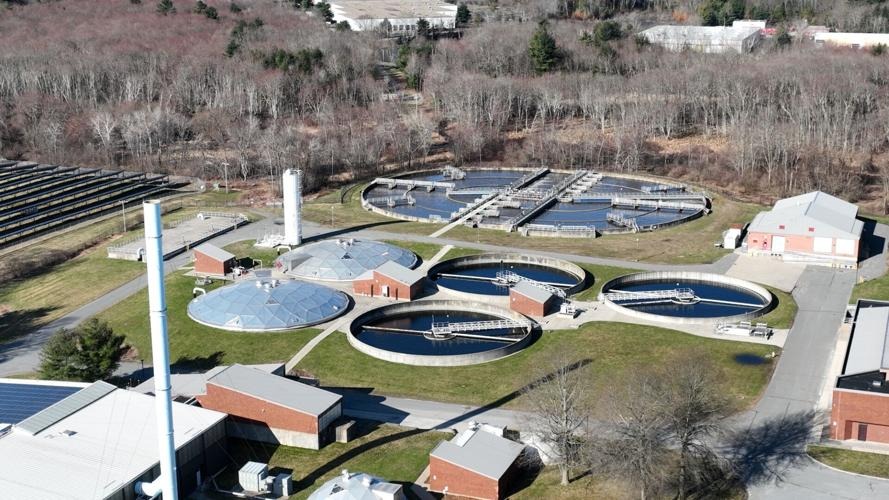
Highlights of Andhra Pradesh Treated Wastewater Reuse Policy
- Approval: In June 2026, Andhra Pradesh approved the Policy on Reuse of Treated Used Water, 2026, promoting water security through wastewater recycling.
- Coverage: This establishes Andhra Pradesh’s first comprehensive framework for collection, treatment, allocation, pricing, monitoring, and reuse of treated wastewater.
- It covers all 123 Urban Local Bodies (ULBs), making it one of India’s broadest urban water-reuse initiatives.
- Vision: The policy supports Swarna Andhra Vision 2047 by promoting a circular water economy, reducing dependence on freshwater.
- It aims to improve urban water security, strengthen climate resilience, and lower pollution from wastewater discharge into natural water bodies.
- Implementation: Implementation will follow a phased roadmap: 20 ULBs by 2027, 40 by 2028, 90 by 2029, and all 123 ULBs by 2030.
- The policy targets 20% of urban water demand through treated wastewater by 2030, ensuring measurable progress.
- Industrial Reuse Mandates: Industrial water reuse is compulsory in selected sectors.
- Targets include 20% industrial water demand through treated water by 2028 and 40% by 2030.
- Thermal power plants within 50 km of STPs and industries requiring over 10 KLD must adopt treated water wherever feasible.
- Non-Potable Applications: Treated water is designated only for non-potable uses such as industries, construction, landscaping, parks, road cleaning, firefighting, railway yards, bus depots, ports, and municipal services. Drinking purposes are explicitly prohibited.
- Urban Infrastructure Reforms: The policy promotes dual-piping systems in new residential, commercial, and institutional buildings.
- This enables separate distribution of potable and treated water, thereby conserving scarce freshwater resources.
- Monitoring: A multi-tier institutional framework includes ULB-level Treated Used Water Cells, district enforcement bodies, State Technical Committees, and High-Powered Committees.
- A digital Management Information System (MIS) will track treatment, quality, users, and tariffs in real time.
- Financial Model: Unlike conventional wastewater disposal, treated water will be priced as a commodity, creating revenue streams for ULBs, encouraging public-private partnerships (PPPs), and improving the financial sustainability of wastewater infrastructure.
- Environmental Significance: The policy will reduce groundwater extraction, minimize freshwater stress, and curb water pollution.
- It will enhance resource efficiency, and advance sustainable urban development, aligning with India’s broader climate adaptation and water conservation goals.
Rational for Sustainable Wastewater Reuse in Andhra Pradesh
- Rising Urban Water Stress: Rapid urbanisation and increasing domestic demand are placing immense pressure on freshwater resources in Andhra Pradesh.
- The population of Andhra Pradesh has expanded by approximately 4.11 times over the past 125 years, continuous population expansion has driven an exponential increase in daily per-capita water needs.
- Reducing Freshwater Dependence: Industries, commercial establishments, and municipal services consume substantial quantities of high-quality freshwater for non-drinking purposes.
- The policy substitutes these uses with treated water, preserving freshwater for drinking, agriculture, and ecological needs.
- Tackling Wastewater Pollution: Large volumes of untreated or underutilised wastewater pollute rivers, lakes, canals, and groundwater.
- The policy promotes systematic collection, treatment, monitoring, and reuse, significantly reducing pollution loads.
- Promoting a Circular Water Economy: Instead of treating wastewater as waste, the policy recognises it as a valuable resource.
- Through allocation, pricing, and regulated reuse, Andhra Pradesh seeks to establish a circular urban water economy.
- Addressing Climate Change Risks: Frequent droughts, erratic rainfall, and climate variability threaten reliable water supplies.
- Reusing treated wastewater provides a climate-resilient and dependable alternative source, reducing vulnerability to seasonal water shortages.
- Bridging Reuse Capacity Gap: Government data indicate Andhra Pradesh has 129 STPs with an installed treatment capacity of 703.65 MLD, while only about 123.02 MLD is currently reused. The policy seeks to close this utilisation gap.
- Supporting National Sustainability Goals: The policy aligns with Swarna Andhra Vision 2047, AMRUT, the National Framework for Safe Reuse of Treated Water.
- It supports India’s commitments to Sustainable Development Goal (SDG) 6, strengthening water conservation and sustainable urban development.
Waste Water Management in India
- Current Scenario: India generates about 72,368 million litres per day (MLD) of sewage, while installed treatment capacity is only 31,841 MLD.
- Only around 28–37% of India’s wastewater is treated, while nearly 63–72% remains untreated before entering the environment.
- Being a semi-arid, water-stressed state, Rajasthan (including the Jaipur region) suffers significantly from groundwater depletion.
- Just four states—Uttar Pradesh, Maharashtra, Tamil Nadu, and Gujarat—account for a massive share of the country’s total wastewater generation.
- Treatment Infrastructure: India operates Sewage Treatment Plants (STPs) for domestic sewage and Effluent Treatment Plants (ETPs) for industrial wastewater.
- Modern systems increasingly adopt decentralised treatment and nature-based solutions.
- These distributed frameworks frequently utilize advanced biological processes—like MBBR technology—and nature-based solutions such as constructed wetlands.
- Wastewater Reuse: Treated wastewater is reused for industrial cooling, irrigation, construction, landscaping, toilet flushing, firefighting, and railway cleaning.
- Institutional Framework: Wastewater management is governed by the Water (Prevention and Control of Pollution) Act, 1974, the Water (Prevention and Control of Pollution) Cess Act, 1977, (Amended in 2003) and the Environment (Protection) Act, 1986.
- The Ministry of Jal Shakti shapes overarching national water policies and conservation missions (such as river cleaning and sanitation).
- The Central Pollution Control Board (CPCB) designs the water quality benchmarks and effluent standards that industries and municipalities must meet.
- State Pollution Control Boards (SPCBs) carry out regulation, perform monitoring, and enforce these standards. They utilize tools like the Consent Management System to review and issue licenses to discharge or treat effluents.
- National Programmes: Many initiatives promoting waste water treatment, recycling, and pollution control:
- Namami Gange, focuses on the abatement of pollution and the rejuvenation of the Ganga river basin. It drives the expansion of sewerage networks, STPs, and mandates the reuse of treated wastewater for industrial and agricultural purposes.
- AMRUT (Atal Mission for Rejuvenation and Urban Transformation), targets urban water security by funding the development of sewerage networks, septage management, and water recycling infrastructure across cities.
- MoHUA launched the Atal Mission for Rejuvenation and Urban Transformation (AMRUT) and the subsequent AMRUT 2.0.
- Swachh Bharat Mission (SBM), ensures safe containment and scientific management of used water in both urban and rural areas, preventing untreated waste from contaminating local ecosystems.
- MoHUA’s progressive urban sanitation criteria under SBM Urban 2.0 scale from basic ODF (no open defecation) to ODF+ (functional public toilets), ODF++ (safe faecal sludge treatment) and Water+ (zero untreated wastewater discharged).
- Jal Jeevan Mission (JJM), focuses on providing tap water connections to rural households, featuring integral components for water treatment, greywater management, and local water recycling.
- National Framework for Safe Reuse of Treated Waste Water, published by the National Mission for Clean Ganga (NMCG Website), this policy gives guidelines to states to build economic models for wastewater reuse.
- Emerging Technologies: India is expanding IoT-enabled monitoring, AI-based process optimisation, online quality monitoring, Moving Bed Biofilm Reactor (MBBR), Sequencing Batch Reactor (SBR), and tertiary treatment technologies to improve efficiency and regulatory compliance.
- IoT & Online Monitoring facilities use remote sensors to track variables like pH, Dissolved Oxygen (DO), Chemical Oxygen Demand (COD), and flow rates in real time.
- MBBR uses polyethylene bio-carriers that float freely in the aeration tank. This creates a massive surface area for bacteria to grow, making the treatment footprint compact while efficiently removing organic pollutants.
- SBR is a fill-and-draw activated sludge process for multiple stages of treatment. It controls aeration and settling within a single basin, saving space and adapting flexibly to different flow rates and nutrient loads.
- Tertiary Treatment acts as the polishing phase—typically involving sand filtration, carbon adsorption, and advanced disinfection. This removes any remaining pathogens or suspended solids.
FAQs:
1. What is the Andhra Pradesh Treated Wastewater Reuse Policy?
It is a 2026 statewide policy promoting collection, treatment, pricing, and reuse of treated wastewater across 123 Urban Local Bodies.
2. Why has Andhra Pradesh introduced this policy?
To strengthen water security, reduce pollution, conserve freshwater, and build climate-resilient urban development under Swarna Andhra Vision 2047.
3. How will treated wastewater be reused?
It will supply industries, construction, parks, road cleaning, firefighting, thermal plants, and other non-potable urban applications.
4. Which sectors will benefit from the policy?
Industries, thermal power plants, construction, municipalities, transport facilities, landscaping, and civic infrastructure will benefit through reliable treated water supplies.
5. How will the policy help conserve freshwater resources?
It replaces freshwater with treated water for non-drinking uses, reducing groundwater extraction and preserving drinking water supplies.
6. What is treated wastewater?
Treated wastewater is sewage cleaned in treatment plants to prescribed standards, making it suitable for safe non-potable reuse.
7. How does wastewater reuse support sustainable development?
It advances resource efficiency, pollution reduction, circular economy, climate resilience, and Sustainable Development Goal 6 on clean water.
8. Will the policy reduce water scarcity in Andhra Pradesh?
Yes. By expanding treated water reuse, it reduces freshwater demand and improves long-term urban water security.
Disclaimer: Information in this article is based on official announcements and public records. Regulations and implementation details may evolve over time.
| Also Read: India’s Big Cities Facing Water Crisis |