



Former ISRO Chief S. Somanath Joins Agnikul Cosmos Board
| General Studies Paper II: Space Technology, Important Personalities |
Why in News?
Recently, former ISRO Chairman S. Somanath joined Agnikul Cosmos as a Board Observer, strengthening strategic leadership before Mission 02.
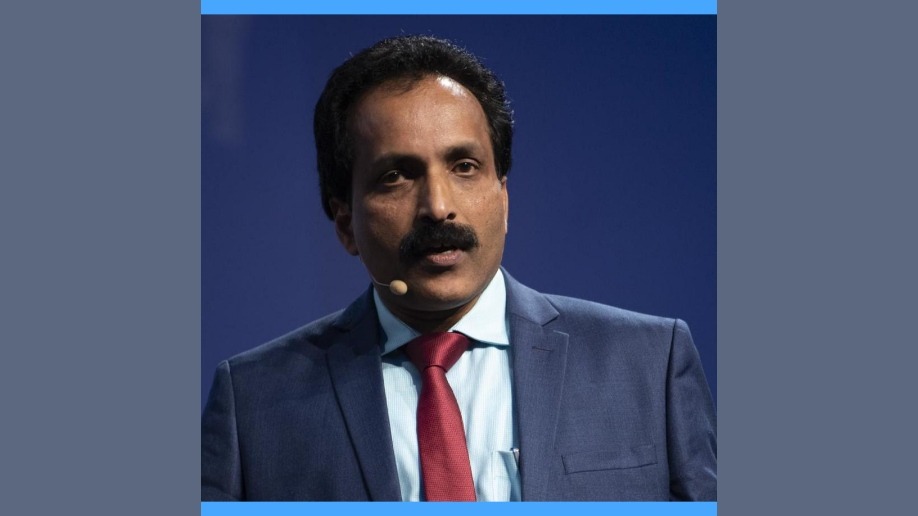
Who is S. Somanath?
- Intro: Dr. S. Somanath is an eminent Indian aerospace engineer and former Chairman of ISRO.
- He served as Secretary, Department of Space, Chairman, Space Commission, and Chairman, ISRO from January 2022 to January 2025.
- Education: He graduated in Mechanical Engineering from TKM College of Engineering, Kerala.
- He later earned a Master’s in Aerospace Engineering with Gold Medal from the Indian Institute of Science (IISc), Bengaluru.
- Technical Expertise: His core expertise includes launch vehicle design, structural dynamics, propulsion integration, mission engineering, pyrotechnics, and space systems architecture.
- Leadership Roles: Before leading ISRO, he served as Director of the Liquid Propulsion Systems Centre (LPSC).
- He later became Director of the Vikram Sarabhai Space Centre (VSSC), overseeing India’s rocket propulsion and launch vehicle programmes.
- ISRO Career: Dr. Somanath joined ISRO in 1985. His career spans nearly four decades.
- He became one of India’s foremost experts in space technology, launch vehicles, and systems engineering.
- Contributions & Achievements: He served as the Project Director for GSLV Mk-III (LVM3) from 2010 to 2014, playing a vital role in the vehicle’s overall architecture and system engineering.
- He contributed heavily to the successful development of indigenous cryogenic propulsion stages critical for launching heavier payloads.
- He piloted the National Space Policy and facilitated the activation of IN-SPACe, which opened India’s space sector to private entities and start-ups.
- Under his leadership, Chandrayaan-3 achieved the world’s first successful landing near the Moon’s south polar region.
- ISRO also launched Aditya-L1, advanced Gaganyaan, developed SSLV, and tested the Pushpak Reusable Launch Vehicle.
- Dr. Somanath has authored numerous technical papers on structural dynamics, vibration analysis, launch vehicle design, and space mission engineering.
- Vision: He strongly promoted commercialisation, private-sector participation, reusable launch systems, and future human spaceflight.
- His vision aligns with Space Vision 2047 and long-term national space capability.
About Agnikul Cosmos
- Intro: Agnikul Cosmos is an Indian private space technology startup founded in 2017.
- It is headquartered at the IIT Madras Research Park, Chennai.
- The company develops orbital-class launch vehicles for small satellites.
- Its objective is to provide customized, affordable, and on-demand access to space.
- Founder: The company was founded by Srinath Ravichandran, Moin SPM, Prof. Satyanarayanan Chakravarthy, and Janardhana Raju.
- It was incubated at IIT Madras and works closely with ISRO and IN-SPACe under India’s space-sector reforms.
- Launch Vehicle: Its flagship rocket, Agnibaan, is a two-stage orbital launch vehicle.
- It can place up to 300 kg payloads into 700 km Low Earth Orbit (LEO).
- The rocket supports multiple orbital inclinations and mobile launch capability.
- 3D-Printed Engine: Agnikul developed Agnilet, the world’s first single-piece 3D-printed semi-cryogenic rocket engine.
- This innovation reduces manufacturing complexity, lowers costs, and enables faster production of launch vehicles.
- Achievement: On 30 May 2024, Agnikul successfully launched Agnibaan SOrTeD from India’s first private launchpad at Sriharikota.
- The mission achieved several milestones, including the world’s first flight using a single-piece 3D-printed engine.
- Indigenous Innovation: The company employs additive manufacturing, electric pump-fed propulsion, and semi-cryogenic technology.
- These technologies improve reliability, reduce launch costs, and strengthen Atmanirbhar Bharat in the strategic space sector.
- Agnikul is a leading NewSpace company emerging after India’s space-sector liberalisation.
- Latest Development: The company is preparing Mission-02, an orbital-class launch featuring an attempt to recover its booster on Indian soil.
- The mission will also demonstrate a convertible upper stage capable of continuing operations after satellite deployment.
- Agnikul estimates that successful booster reusability could reduce launch costs by up to 80%.
- Agnikul will soon announce Mission 02’s schedule after receiving the required approvals.
- If successful, it would mark India’s first reusable booster recovery, reducing launch costs and improving sustainability.
Significance of the Board Appointment
- The appointment of Dr. S. Somanath as Board Observer comes just before Mission-02. His induction strengthens strategic decision-making during a critical development phase.
- Dr. Somanath spent nearly 40 years in India’s space programme. He led the development of major launch systems including Gaganyaan Test Vehicle. His experience directly supports Agnikul’s reusable launch ambitions.
- Mission-02 involves complex technologies such as controlled booster recovery, precision guidance, advanced avionics, and on-orbit upper-stage operations. These demand multidisciplinary engineering.
- The appointment supports India’s transition towards reusable launch vehicles (RLVs). Reusability is becoming the global industry standard for reducing launch costs and increasing launch frequency.
- The move reflects deepening collaboration between ISRO veterans and private space startups. It demonstrates how government expertise is supporting India’s NewSpace ecosystem after the 2020 space-sector reforms.
- India aims to expand its space economy through greater private participation. A successful Mission-02, backed by experienced leadership, can increase commercial launches, attract investment, and create high-technology jobs.
FAQs:
1. Who is S. Somanath?
S. Somanath is a former ISRO Chairman and renowned aerospace engineer specializing in launch vehicle development.
2. What is Agnikul Cosmos?
Agnikul Cosmos is an Indian private space startup developing small satellite launch vehicles using advanced 3D-printed rocket engines.
3. Why has S. Somanath joined the Agnikul Cosmos board?
He joined as a Board Observer to guide Mission-02 and strengthen reusable launch vehicle development.
4. What does Agnikul Cosmos specialize in?
It specializes in small satellite launches, 3D-printed semi-cryogenic engines, and cost-effective orbital launch vehicles.
5. How will S. Somanath’s appointment benefit Agnikul Cosmos?
His expertise will improve technical strategy, mission reliability, innovation, and global credibility.
6. What is Agnikul Cosmos’ role in India’s private space sector?
It advances India’s private space ecosystem through indigenous launch technologies, commercialization, and NewSpace innovation.
Disclaimer: Information in this article is based on official announcements and public records. Regulations and implementation details may evolve over time.
| Also Read: Agnikul-ICEYE SAR Satellite MoU |