




Andhra Pradesh Lithium and Gallium Exploration Pact
| General Studies Paper III: Important Elements, Government Policies & Interventions |
Why in News?
Recently, the Andhra Pradesh Department of Mines and Geology signed an MoU with the Council of Scientific & Industrial Research-National Geophysical Research Institute (CSIR-NGRI) for Andhra Pradesh Lithium and Gallium Exploration in Kadapa Basin.
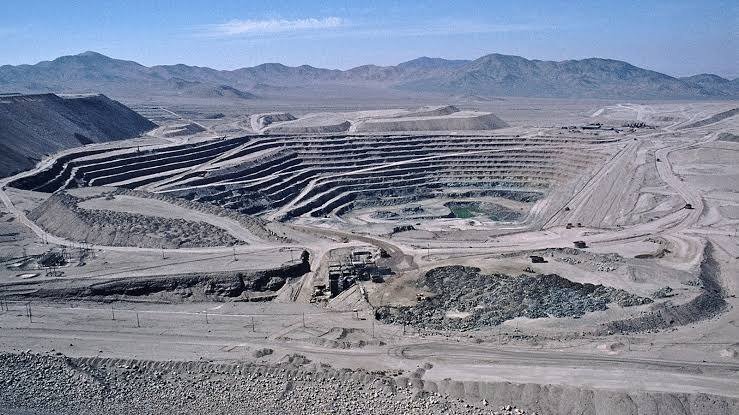
Highlights of Andhra Pradesh Lithium and Gallium Exploration Pact
- Partnership: On 12 August 2026, Andhra Pradesh signed an MoU with CSIR-NGRI for extensive exploration of lithium and gallium in Andhra Pradesh.
- The agreement was signed by the State Mines and Geology Department and NGRI in the presence of Chief Minister N. Chandrababu Naidu.
- Exploration Area: The extensive exploration of lithium and gallium will focus on Vempalle and Thummalapalle areas of the Kadapa Basin.
- The Kadapa Basin is a large, crescent-shaped Proterozoic sedimentary basin in Andhra Pradesh.
- It covers roughly 44,000 square kilometers. It contains deep layers of ancient shales, limestones, and sandstones. It holds rich reserves of uranium, barytes, asbestos, and cement-grade limestone.
- The project follows NGRI preliminary studies around Thummalapalle, which indicated lithium and gallium mineralisation.
- Reported concentrations reach up to 1,000 ppm lithium and 250 ppm gallium. These are exploration-stage concentration estimates, not established reserves.
- India had previously identified lithium potential in Anantapur and Kadapa districts through GSI’s 2021–22 G4 reconnaissance exploration, including the Tatireddipalle block.
- Fund: The detailed exploration is estimated to cost ₹140 crore, with 100% funding from the National Mineral Exploration Trust (NMET).
- NMET is a non-profit statutory body established by the Central Government under Section 9C of the Mines and Minerals (Development and Regulation) Act, 1957.
- Its funding for this project is intended to support scientific investigation and resource assessment.
- It will help to establish whether the identified mineralisation can progress towards economically viable development.
- Capacity Building: Alongside the NGRI agreement, Andhra Pradesh signed an MoU with IIT (ISM) Dhanbad-TEXMiN to establish a Centre of Excellence for Mining.
- It will focus on research, advanced technologies and skilled manpower, and seek to strengthen the State’s critical-mineral exploration and mining ecosystem.
- Significance: Ministry of Mines data show Andhra Pradesh had 182 mines reporting MCDR returns in 2023–24.
- Its mineral production includes limestone, manganese, gold and other resources; the new exploration could diversify this mineral base.
- The exploration supports India’s objective of reducing vulnerability to concentrated global mineral supply chains and developing domestic critical-mineral capabilities.
- It complements national measures covering exploration, mining, processing, recycling and technology development for critical minerals.
Lithium and Gallium: Properties, Uses and Importance
- Properties:
- Lithium (Li) is a soft, silvery-white alkali metal with atomic number 3 and atomic mass about 6.94 u.
- With a density of only 0.534 g/cm³, it is the lightest metal. Its high electrochemical potential makes it particularly valuable for rechargeable batteries.
- Highly reactive and flammable, it never occurs freely in nature.
- Gallium (Ga) is a soft, silvery metal with atomic number 31. Unusually, it melts at approximately 29.8°C, allowing it to melt near body temperature.
- It generally occurs only in trace quantities and is recovered mainly as a by-product of processing bauxite and zinc ores.
- Lithium (Li) is a soft, silvery-white alkali metal with atomic number 3 and atomic mass about 6.94 u.
- Uses:
- Lithium is mostly used for lithium-ion batteries, powering electric vehicles, smartphones, laptops and grid-scale energy storage.
- It is also used in ceramics and glass, lubricating greases, polymers and specialised alloys. Growing electrification has significantly increased its strategic importance.
- Gallium is especially important for semiconductors and optoelectronics.
- Compounds such as gallium arsenide (GaAs) and gallium nitride (GaN) are used in high-frequency electronics, LEDs, power electronics, communications and advanced technologies.
- Lithium is mostly used for lithium-ion batteries, powering electric vehicles, smartphones, laptops and grid-scale energy storage.
- Importance:
- Lithium is a key input for the clean-energy transition, linking mineral security with EV manufacturing, renewable-energy integration and energy storage.
- It powers the energy sector, with rechargeable lithium-ion batteries consuming roughly 88% of global production for electric vehicles (EVs) and grid storage.
- Global lithium mine production reached 290,000 metric tons. Australia leads global extraction at 92,000 tons, followed by China (62,000 tons) and Chile (56,000 tons).
- India currently has zero commercial domestic production of primary lithium or gallium. India treats lithium as a critical mineral, making domestic exploration.
- Gallium is strategically sensitive because production is highly geographically concentrated, particularly in China.
- Chinese export controls on gallium and germanium since 2023 highlighted the vulnerability of global semiconductor supply chains.
- China controls roughly 99% of the world’s primary low-purity gallium production and 60% of high-purity refining capacity.
- India identifies gallium among its critical and strategic minerals.
- These minerals are essential for electronics, defence, telecommunications, aerospace, fertilisers and advanced manufacturing.
- Lithium is a key input for the clean-energy transition, linking mineral security with EV manufacturing, renewable-energy integration and energy storage.
India’s Critical Mineral Strategy
- 30 Critical Minerals: In 2023, India identified 30 critical minerals, including lithium, cobalt, nickel, graphite, gallium, germanium, rare earth elements and tungsten.
- The selection considers economic importance and supply risk; 14 minerals were assessed as having both high economic importance and high supply risk.
- India currently faces severe 93% to 100% import dependence for its core battery minerals like lithium and cobalt.
- Regulatory Reform: The MMDR Amendment Act, 2023 placed 24 critical and strategic minerals in Part D of Schedule I.
- It empowered the Central Government to auction their mining leases and composite licences.
- Auction revenues accrue to the concerned State Governments, strengthening federal participation.
- National Critical Mineral Mission: The National Critical Mineral Mission (NCMM) was approved on 29 January 2025.
- The mission was launched with a financial outlay of ₹34,300 crore over seven years (FY 2024-25 to FY 2030-31).
- It created an integrated framework covering exploration, mining, processing, recycling, overseas acquisition, research, innovation and skilling.
- It targets 1,000 patents and establishes 7 Centre of Excellence for Critical Minerals (CECM) for critical technologies.
- Domestic Exploration:Geographical Survey of India (GSI)’s critical-mineral projects increased from 59 in 2021–22 to 227 in 2025–26, according to the Ministry of Mines.
- Cumulative resources reported include 12.3 million tonnes of lithium and 74 million tonnes of gallium ore; these are resources, not automatically economically recoverable reserves.
- The GSI discovered substantial inferred reserves, including 5.9 million metric tons in Jammu & Kashmir (Reasi) and deposits in Karnataka and Rajasthan.
- Auctioning Mineral Blocks; The Central Government has accelerated auctions to convert geological potential into commercial resources.
- By 2025–26, 55 unique critical and strategic mineral blocks had been offered across five tranches, with 34 successfully auctioned.
- This marks a shift from identification towards resource development and production.
- Overseas Mineral Security; Domestic resources alone cannot satisfy future demand. Khanij Bidesh India Ltd. (KABIL) pursues overseas assets; notably.
- Its 2024 Argentina agreement covers five lithium brine blocks spanning 15,703 hectares in Catamarca, targeting extraction by 2027–2029.
- To secure external supply chains, India became a member of the US-led Minerals Security Partnership (MSP).
- Value Addition: NCMM emphasises urban mining and recycling to recover minerals from batteries, electronics and other secondary sources.
- A ₹1,500-crore incentive scheme has been envisaged for critical-mineral recycling.
- The strategic goal is therefore mine-to-material-to-manufacturin, not simply exporting ores.
- The state-run National Aluminium Company (NALCO) has set up a prototype facility at its Damanjodi refinery in Odisha. It is on track to establish India’s first commercial 10-tonne-per-year gallium extraction facility.
Frequently Asked Questions (FAQs):
1. What is the lithium and gallium exploration pact signed by Andhra Pradesh?
Andhra Pradesh signed an MoU with CSIR-NGRI for detailed lithium-gallium exploration in the Kadapa Basin, backed by ₹140 crore NMET funding.
2. Why are lithium and gallium important for India?
Lithium supports batteries and clean energy, while gallium enables semiconductors and advanced electronics, making both strategically important critical minerals.
3. Where will lithium and gallium exploration take place in Andhra Pradesh?
Lithium exploration will focus on Vempalle and Thummalapalle areas within the Kadapa Basin, following preliminary indications of mineralisation.
4. Why is India exploring critical minerals such as lithium and gallium?
India seeks to reduce import dependence, diversify supply chains and secure minerals essential for EVs, semiconductors, renewable energy and advanced manufacturing.
5. How is lithium used in electric vehicle batteries?
Lithium ions move between cathode and anode during charging and discharging, enabling rechargeable batteries with high energy density for electric vehicles.
6. Why is gallium important for the semiconductor industry?
Gallium compounds such as GaAs and GaN provide high-frequency, high-power and efficient semiconductor performance for communications, LEDs and power electronics.
Disclaimer: Information in this article is based on official announcements and public records. Regulations and implementation details may evolve over time.