India-China Corps Commander Meeting 2026, Meeting of WMCC on India-China Border Affairs
| General Studies Paper II: India and its Neighbourhood, Groupings & Agreements Involving India and/or Affecting India’s Interests |
Why in News?
Recently, India-China Corps Commander talks in Arunachal Pradesh marked first-ever eastern-sector military dialogue, seeking peace-building measures bilaterally.
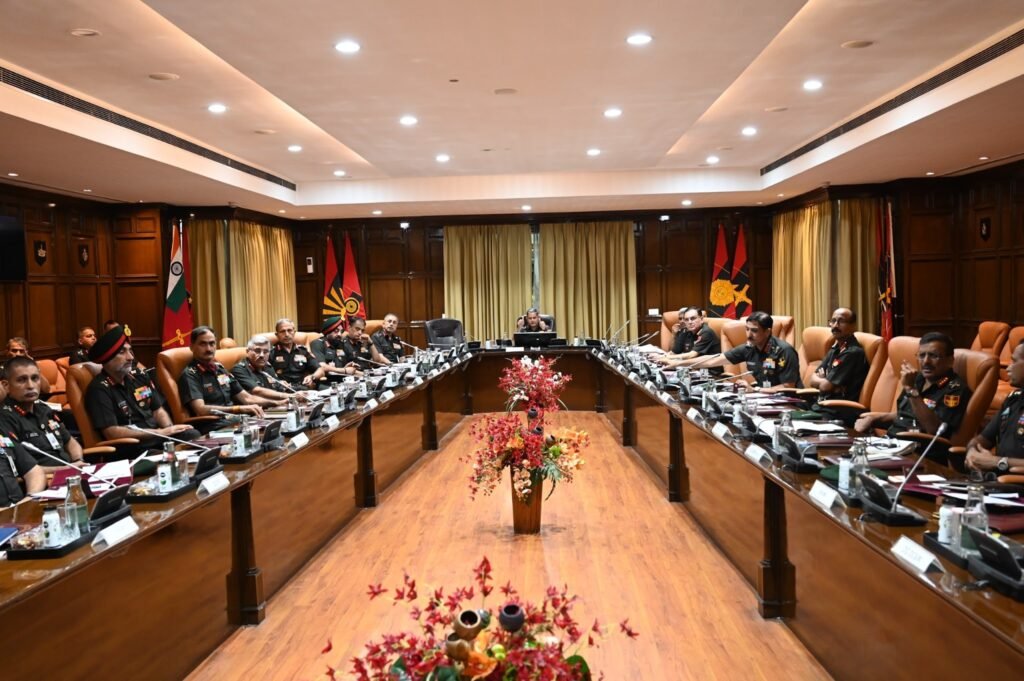
Highlights of India-China Corps Commander Meeting 2026
- Meeting: On 6 September 2026, India and China held their first-ever Corps Commander-level meeting in Arunachal Pradesh, expanding the military dialogue mechanism beyond the traditional focus on Eastern Ladakh.
- Representation: India was represented by Lieutenant General Girish Kalia, Commander of the Army’s III Corps (Spear Corps), headquartered at Rangapahar in Nagaland.
- Along with III Corps, the IV Corps, headquartered at Tezpur, has operational responsibilities along India’s LAC with China in Arunachal Pradesh.
- Meeting Point: The talks were held at the Wacha-Damai Border Meeting Point (BMP) on the Indian side of the Line of Actual Control (LAC).
- Wacha-Damai is India’s easternmost Border Personnel Meeting (BPM) point, located in the Kibithoo sector of Arunachal Pradesh along the Line of Actual Control (LAC).
- It became operational in 2014 and sits roughly 2.5 kilometers away from its Chinese counterpart, Damai.
- Wacha-Damai is India’s easternmost Border Personnel Meeting (BPM) point, located in the Kibithoo sector of Arunachal Pradesh along the Line of Actual Control (LAC).
- Trigger: The meeting came amid reports of tensions around the Taksing area of Upper Subansiri district.
- Holding discussions close to the disputed frontier allows commanders to address operational concerns at the local level before they develop into larger military confrontations.
- Background: The military meeting followed the 25th round of India-China Special Representatives’ talks held in Beijing on 25 August 2026, between India’s NSA Ajit Doval and China’s Wang Yi.
- Significance:
- The meeting is important because the eastern sector is strategically sensitive for India’s national security.
- Arunachal Pradesh borders China, Bhutan and Myanmar, while its terrain provides important approaches towards India’s Northeast.
- Regular commander-level communication can help prevent miscalculation, accidental escalation and local face-offs.
- This meeting expanded a diplomatic mechanism previously used almost exclusively at the Chushul-Moldo border point in eastern Ladakh after the 2020 Galwan Valley clashes.
- Following 23 rounds in Ladakh—with the most recent in October 2025—this shift shows both nations are opening new channels to manage border tensions.
- It also strengthens India’s ability to combine military preparedness with institutionalised dialogue.
- India will host the 18th BRICS Summit in New Delhi on September 12–13, 2026, with Chinese President Xi Jinping expected to make his first visit to the country in seven years.
- The meeting is important because the eastern sector is strategically sensitive for India’s national security.
India-China Border Dispute
- Nature: India and China do not have a mutually agreed and physically demarcated boundary across the entire frontier. Instead, the Line of Actual Control (LAC) broadly separates areas controlled by the two countries.
- Different perceptions of the LAC can result in patrolling confrontations, face-offs and competing territorial claims.
- Broad Sectors: The India-China boundary is conventionally discussed in Western, Middle and Eastern sectors.
- The Western sector primarily involves Ladakh and the Aksai Chin area.
- The Middle sector covers Himachal Pradesh and Uttarakhand; while the Eastern sector largely concerns Arunachal Pradesh and adjoining areas.
- India administers Arunachal Pradesh as a full-fledged state, while China claims large parts of it and refers to the region as “Zangnan”.
- India firmly rejects China’s territorial claims and maintains that Arunachal Pradesh is an integral part of India.
- The dispute is particularly sensitive around Tawang, which has religious, historical and strategic importance.
- Tawang is strategically important because of its location near the India-China-Bhutan region and its historical connection with Tibetan Buddhism.
- The area has witnessed military confrontations, including the 2022 Yangtse/Tawang face-off, demonstrating how differing perceptions of the LAC can produce friction even without a declared conflict.
- Clash: The most serious recent deterioration occurred in Eastern Ladakh in 2020, culminating in the Galwan Valley clash.
- India subsequently engaged China through diplomatic and military channels to pursue disengagement and restoration of peace.
- In October 2024, India and China reached an agreement on patrolling arrangements in Depsang and Demchok, leading to disengagement from the remaining friction points associated with the 2020 crisis.
- Historical Agreements: India and China developed several mechanisms to reduce border tensions, including
- The 1993 Agreement on Maintenance of Peace and Tranquillity, 1996 Confidence-Building Measures Agreement,
- The 2005 Protocol, and the 2005 Agreement on Political Parameters and Guiding Principles.
- These agreements established principles for managing the frontier and pursuing a future settlement.
India-China Military and Diplomatic Mechanisms
- Special Representatives: The Special Representatives (SR) mechanism was established in 2003 to address the India-China boundary question at a high political level.
- It is the principal channel for negotiations concerning the broader boundary settlement. India’s Special Representative is National Security Adviser Ajit Doval, while China’s is Wang Yi.
- The 25th round was held in Beijing on 25 August 2026.
- Both countries reached an eight-point consensus. They reaffirmed the objective of maintaining peace and tranquillity and agreed to advance discussions towards a framework for a fair, reasonable and mutually acceptable boundary settlement.
- The consensus included strengthening boundary negotiations, improving border-control mechanisms, using existing diplomatic and military channels to avoid misunderstanding, adding two military meeting points, establishing two additional border defence military hotlines, expanding cross-border cooperation and holding another expert-level meeting on trans-border rivers.
- The 26th SR meeting is scheduled to be held in India in 2027.
- It is the principal channel for negotiations concerning the broader boundary settlement. India’s Special Representative is National Security Adviser Ajit Doval, while China’s is Wang Yi.
- WMCC: The Working Mechanism for Consultation and Coordination on India-China Border Affairs (WMCC) was established in January 2012.
- It provides a diplomatic and inter-governmental platform for discussing border-related developments, coordination and confidence-building.
- The 36th WMCC meeting was held in New Delhi on 6 August 2026. India’s delegation was led by Sujit Ghosh, Joint Secretary (East Asia), while China’s delegation was headed by Hou Yanqi, Director General of the Boundary and Oceanic Affairs Department.
- Both sides reviewed the LAC situation and emphasised that peace and tranquillity are essential for broader bilateral relations.
- The meeting discussed boundary delimitation, border management, mechanism-building and cross-border cooperation.
- Both sides agreed to maintain diplomatic and military communication.
- India also emphasised an early meeting of the Expert Level Mechanism on trans-border rivers and sought technical information regarding upstream projects.
- It provides a diplomatic and inter-governmental platform for discussing border-related developments, coordination and confidence-building.
- Corps Commander-Level Mechanism: Corps Commander meetings provide a direct military channel for addressing operational problems along the LAC.
- They became especially important after the 2020 Eastern Ladakh crisis, when senior military commanders were involved in negotiations over disengagement and de-escalation.
Implications, Challenges and Way Forward for India-China Relations
- Implications: The sequence of the 36th WMCC meeting, 25th SR talks and the first eastern-sector Corps Commander dialogue indicates a broader effort to institutionalise India-China border management.
- Instead of depending on one channel, both countries are increasingly using diplomatic, political and military communication simultaneously.
- The 25th SR consensus linked future negotiations with the 2005 Political Parameters and Guiding Principles Agreement. This potentially moves the dialogue beyond simply managing military tensions.
- Stable borders are important for India’s broader relationship with China because unresolved military tensions affect trade, investment, technology, connectivity and regional cooperation. At the same time, India and China remain major Asian powers with competing strategic interests, making complete strategic convergence unrealistic.
- Challenges: The major challenges include unresolved territorial claims, different perceptions of the LAC, military infrastructure, trust deficit, border incidents, strategic competition and differing interpretations of existing agreements.
- India faces a widening trade deficit with China, constrained by market access barriers for Indian IT and pharmaceuticals.
- China’s “String of Pearls” maritime strategy, the China-Pakistan Economic Corridor (CPEC) passing through territory claimed by India, and transboundary dam projects on the Brahmaputra raise acute security concerns.
- Way Forward: India should pursue verified disengagement, effective border management, stronger surveillance and infrastructure.
- India should maintain continuous high-level dialogue to address boundary delimitation based on mutually agreed political parameters.
Frequently Asked Questions (FAQs):
1. Why did India and China hold the first Corps Commander meeting in Arunachal Pradesh?
To address local border tensions, improve military communication, and prevent escalation along the eastern-sector LAC.
2. Where was the India-China Corps Commander meeting held?
It was held at the Wacha-Damai Border Meeting Point in Arunachal Pradesh on 6 September 2026.
3. What was the main purpose of the India-China military talks?
The talks aimed to address friction points, maintain peace, improve communication, and facilitate de-escalation along the LAC.
4. What is the significance of the first Corps Commander-level meeting in Arunachal Pradesh?
It expands military dialogue into the eastern sector, strengthening crisis-management mechanisms and reducing risks of miscalculation.
5. What is the Line of Actual Control?
The LAC is the de facto military boundary separating areas controlled by India and China, although its alignment remains disputed.
Disclaimer: Information in this article is based on official announcements and public records. Regulations and implementation details may evolve over time.