



NMDC Mega Iron Ore Processing Plant, Carriers 15 MTPA Capacity Pipeline
| General Studies Paper II: Mineral & Energy Resources, Government Policies |
Why in News?
Recently, state-run mining major National Mineral Development Corporation (NMDC) commissioned a ₹5,427-crore integrated mega iron ore processing project in Chhattisgarh.
NMDC Integrated Project Highlights
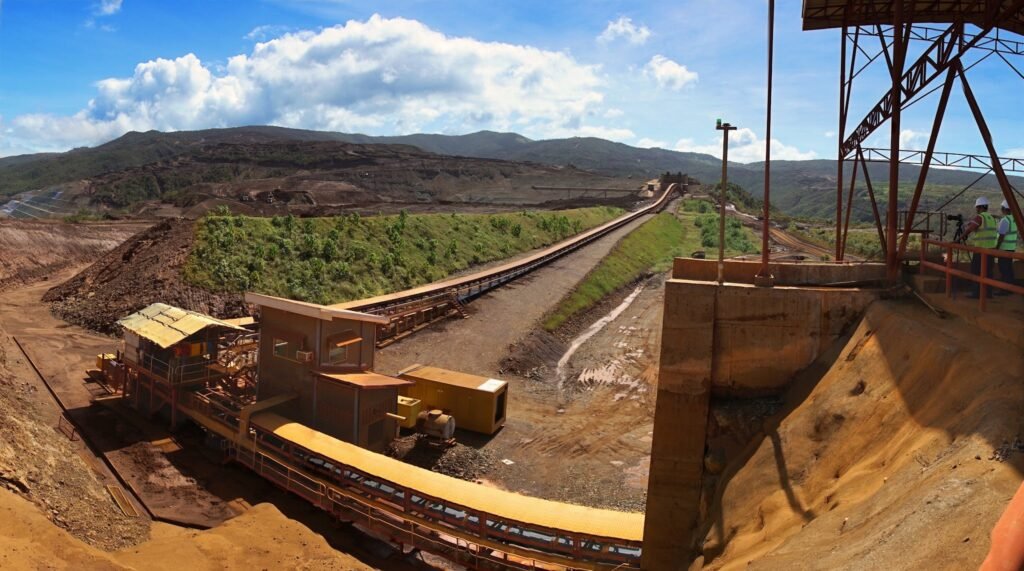
- Location: NMDC commissioned an integrated ₹5,427-crore iron-ore processing, slurry-pipeline and pelletisation project in Bastar, Chhattisgarh.
- The project connects NMDC’s Bacheli iron-ore operations with its Nagarnar steel plant, creating a more integrated mineral-to-steel value chain.
- Bacheli Processing Facility: The project includes a new iron-ore processing plant at Bacheli, located in the Bailadila mining region.
- Its purpose is to process iron-ore fines and slimes generated during mining and convert them into usable concentrate, improving utilisation of material that otherwise has lower direct economic value.
- Nagarnar Pellet Plant: At the downstream end, NMDC has commissioned a 2 million tonnes per annum (MTPA) pellet plant at Nagarnar.
- The facility converts processed iron-ore concentrate into pellets, an important feedstock for iron and steel production.
- The Nagarnar pellet plant uses Straight Grate Induration technology.
- Slurry Pipeline: A major component is the 135-km slurry pipeline with a capacity of 15 million tonnes per annum (MTPA).
- It transports processed iron-ore concentrate from Bacheli to Nagarnar, providing an alternative to conventional road movement.
- The pipeline passes through 61 villages in Bastar and Dantewada districts.
- Strategic Expansion: The project forms part of NMDC’s wider expansion and diversification strategy.
- NMDC is working towards a long-term iron-ore production capacity of 100 million tonnes.
- NMDC describes itself as India’s largest iron-ore producer. Its FY2025-26 production was 53.16 MT, with 50.24 MT sales, providing the resource base and operational context for expanding downstream capabilities.
Iron Ore Processing
- About: Iron ore processing converts raw mined rock into high-grade iron concentrate and pellets by crushing, grinding, and separating valuable minerals from waste.
- It forms the backbone of the secondary economic sector.
- Iron ores are classified based on their chemical composition, metallic iron (Fe) content, and color.
- Steps:
- Crushing and Screening: Raw ore from mines is broken down using jaw or cone crushers and sorted over vibrating screens to achieve the correct particle size.
- Grinding: The crushed ore goes into mills (such as ball mills) with water to form a fine slurry or pulp.
- Beneficiation (Separation): Physical and chemical techniques remove impurities like silica, alumina, and phosphorus. Key methods include:
- Magnetic Separation: Uses magnets to pull out magnetic iron particles (like magnetite).
- Gravity Separation: Uses spirals or dense medium separators to separate minerals based on weight.
- Flotation: Uses chemicals to float and isolate specific fine minerals.
- Dewatering and Transport: The processed slurry is filtered and dried or pumped through long-distance slurry pipelines (such as the recent NMDC Iron Ore Project).
- Agglomeration: Fine iron concentrates are turned into solid shapes through sintering (fusing with heat and coke) or pelletizing (rolling and firing at high temperatures) to prepare them for blast furnaces.
Strategic Importance for India
- Raw-Material Security: Iron ore is a fundamental raw material for India’s steel industry. Greater domestic processing and pellet production can strengthen the domestic raw-material chain, particularly as India seeks expansion of steelmaking capacity.
- Link with National Policy: The National Steel Policy 2017 envisages 300 MT crude-steel capacity and 255 MT crude-steel production by 2030-31.
- It also emphasises raw-material security, infrastructure, logistics, technology and energy efficiency.
- National Mineral Strategy: The project fits the broader National Mineral Policy 2019 emphasis on scientific mining, beneficiation, infrastructure, sustainable development, mineral security and efficient mineral transportation.
- Value Addition: Instead of moving only mined ore, the project creates value through processing and pelletisation. This supports a broader policy objective of increasing domestic mineral value addition and strengthening links between mining and manufacturing.
- Logistics Efficiency: The 135-km slurry pipeline creates a dedicated mineral-transport corridor. It can reduce dependence on road evacuation and supplement railway capacity.
- NMDC has described the slurry pipeline as a mechanism to reduce its carbon footprint and fugitive emissions associated with road movement.
- Regional Industrialisation: The project strengthens the Bacheli–Nagarnar industrial linkage in Chhattisgarh. It connects a mineral-producing region with a downstream steelmaking centre, supporting the development of a more integrated regional industrial ecosystem.
- Local Infrastructure: Large mineral projects generate demand for roads, electricity, water, logistics and services. NMDC has also engaged with local Panchayat representatives in Dantewada regarding issues including drinking water, roads, healthcare, electricity and rural infrastructure.
- Employment and Economic Activity: Integrated mining and processing facilities create direct operational requirements and indirect opportunities through transportation, maintenance, construction, services and ancillary activities.
Environmental Concerns
- Land Disturbance: Iron-ore mining involves land excavation, overburden removal, waste generation and alteration of terrain. These impacts become particularly significant in hilly landscapes such as the Bailadila region.
- Forest and Biodiversity: The Bailadila region forms part of the ecologically sensitive Bastar landscape. Expansion of mining and associated infrastructure can create concerns regarding forest diversion, habitat fragmentation, biodiversity and wildlife movement.
- Water Management: Iron-ore processing and pelletisation involve water requirements. Slurry transportation also requires water as the carrier medium. Consequently, water sourcing, recycling, leakage prevention and effluent management are important environmental considerations.
- Dust and Air Pollution: Mining, crushing, screening, material handling and transportation can generate particulate matter and fugitive dust. Processing plants therefore require dust suppression, enclosed material-handling systems and continuous environmental monitoring.
- Mining Waste: Mining generates overburden, waste rock, fines and slimes. The new processing system is significant because it seeks greater utilisation of fines and slimes, potentially improving resource efficiency and reducing the proportion of material treated as waste.
India’s Iron Ore Processing Framework, Production, Challenges and Initiatives
- Framework:
- India’s mineral sector operates primarily under the Mines and Minerals (Development and Regulation) Act, 1957 (MMDR Act).
- The framework provides for systematic mineral development and conservation, with important roles for both the Central and State Governments.
- The National Mineral Policy 2019 replaced the 2008 policy. It promotes transparency, scientific mining, beneficiation, infrastructure, sustainable development, mineral security and long-term export-import policy.
- The Ministry of Mines frames mineral-sector policy, while the Indian Bureau of Mines (IBM) performs important functions relating to mineral statistics, conservation, mine inspection and technical information.
- India’s mineral sector operates primarily under the Mines and Minerals (Development and Regulation) Act, 1957 (MMDR Act).
- Production:
- According to IBM’s Indian Minerals Yearbook 2024, India’s provisional iron-ore production reached 277.332 million tonnes in 2023-24, compared with 258.312 MT in 2022-23.
- Fines accounted for 202.309 MT, while calibrated lump ore accounted for 46.335 MT.
- Odisha is India’s leading iron-ore producer. In 2023-24, it accounted for more than 53.7% of national iron-ore production by quantity, while its production reached about 169 million tonnes. Karnataka, Chhattisgarh and Jharkhand are also major producing states.
- Odisha-Jharkhand Belt: Odisha is India’s largest producer (>55%). Key areas include the Barabil-Koira Valley (Keonjhar, Sundargarh, Mayurbhanj districts). In Jharkhand, Singhbhum (Noamandi and Gua mines) produces premier hematite.
- Durg-Bastar-Chandrapur Belt: Spans Chhattisgarh and Maharashtra. The Bailadila mine (Bastar, Chhattisgarh) is Asia’s largest fully mechanized iron ore mine, producing ultra-high-grade ore.
- Bellary-Chitradurga-Tumakuru Belt: Located in Karnataka. Bababudan Hills (Chikkamagaluru) and Bellary-Hospet host immense reserves. Kudremukh holds large magnetite deposits.
- Goa-Ratnagiri Belt: Found in Goa and Maharashtra (Gadchiroli/Ratnagiri). Characterized by lower-grade ores that are easily open-cast mined and traditionally exported.
- According to IBM’s Indian Minerals Yearbook 2024, India’s provisional iron-ore production reached 277.332 million tonnes in 2023-24, compared with 258.312 MT in 2022-23.
- Export: In 2023-24, iron ore contributed 15.17% of India’s total ores-and-minerals export value. Total exports of ores and minerals were valued at ₹2,13,740 crore.
- Import: India also imports iron ore for specific quality and logistical requirements. IBM recorded 4.96 million tonnes of total iron-ore imports in 2023-24, valued at about ₹4,396.84 crore. Australia supplied approximately 3.467 MT, making it the largest source that year.
- Challenges:
- Alumina-to-Silica Dilemma: Indian hematite ores uniquely suffer from a high Alumina (Al₂O₃) content. A mere 1% increase in alumina in a blast furnace drops operational productivity by 4% and hikes coke fuel consumption by 2.2%. Advanced wet beneficiation is mandatory but costly.
- Accumulation of Slimes: Beneficiation generates massive quantities of slimes (micro-fines). These slimes account for 20–25% of mined materials, locking away precious iron resources while overflowing tailings dams and creating serious environmental liabilities.
- High Carbon Footprint: Processing relies heavily on coal/coke-driven blast furnaces. This subjects Indian exports to climate border penalties like the European Union’s Carbon Border Adjustment Mechanism (CBAM).
- Infrastructure Bottlenecks: Transporting bulk minerals via overloaded rail networks increases costs. Moving toward underground slurry pipelines to pump iron concentrate over long distances remains slow.
- Socio-Ecological Conflicts: Mining frequently overlaps with tribal lands and dense wildlife habitats (e.g., recent protests over processing plants near tiger corridors in Gadchiroli, Maharashtra), invoking strict compliance friction with the Forest Rights Act (FRA).
- Initiatives:
- Purvodaya Scheme: Aims to turn Eastern India (Odisha, Jharkhand, West Bengal, Chhattisgarh) into an integrated steel hub via logistical upgrades.
- District Mineral Foundation: Mines and Minerals (Development and Regulation) Amendment Acts mandated transparent e-auctions for mining leases and established the District Mineral Foundation (DMF) to funnel mining revenues back into local tribal communities.
- Technological Shift: Promoting Green Steel Task Forces, scaling up pelletization plants to process micro-fines, using AI-driven exploration, and shifting toward Green Hydrogen-based Direct Reduced Iron (DRI) to bypass coal dependencies.
Frequently Asked Questions (FAQs):
1. What is the NMDC ₹5,427 crore integrated project?
It integrates Bacheli ore processing, a 15-MTPA slurry pipeline, and a 2-MTPA Nagarnar pellet plant in Chhattisgarh.
2. Where is the new NMDC iron ore processing plant located?
The new iron ore processing plant is located at Bacheli, in Chhattisgarh’s Bailadila mining region.
3. What is the capacity of the NMDC slurry pipeline?
The Bacheli–Nagarnar slurry pipeline has a capacity of 15 million tonnes per annum (MTPA).
4. What is the capacity of the Nagarnar pellet plant?
The Nagarnar pellet plant has a capacity of 2 million tonnes per annum (MTPA), using Straight Grate Induration technology.
5. How long is the Bacheli-Nagarnar slurry pipeline?
The Bacheli–Nagarnar slurry pipeline is 135 kilometres long, providing an alternative to road-based ore transportation.
6. How will the project benefit NMDC’s operations?
It improves fines and slimes utilisation, strengthens beneficiation and logistics, adds pellets as a value-added product, and integrates NMDC’s iron-ore value chain.
Disclaimer: Information in this article is based on official announcements and public records. Details may evolve over time.