India May Get Plastic Currency Notes Soon
| General Studies Paper II: Government Policies & Interventions, Mobilization of Resources |
Why in News?
Recently, the Reserve Bank of India (RBI) advanced plans to pilot polymer currency notes by inviting global suppliers for security-grade substrates.
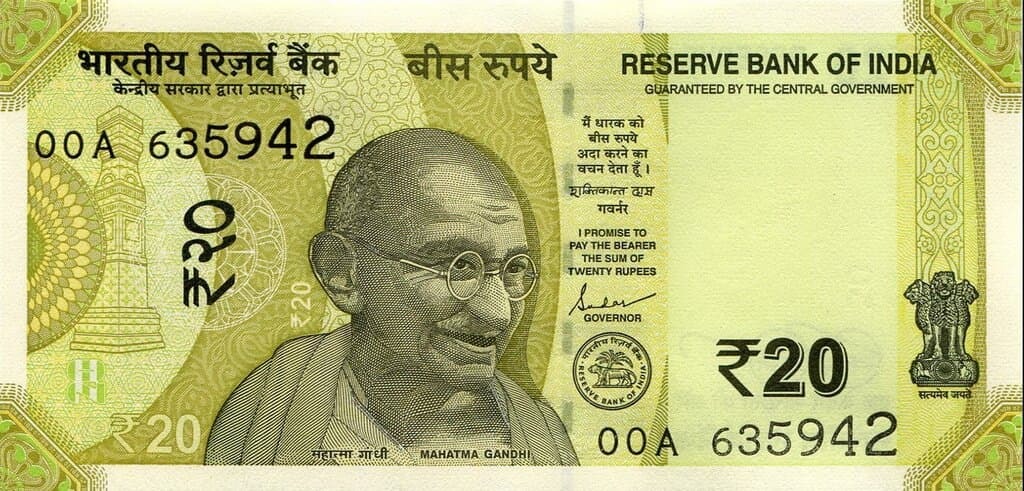
RBI Plastic Currency Notes Trial Project
- Announcement: The Reserve Bank of India (RBI) initiated a trial project for polymer (plastic) currency notes through its subsidiary.
- A global Expression of Interest (EOI) has been issued to identify suppliers of security-grade polymer substrates.
- This is a preparatory procurement step, not a nationwide rollout decision.
- Agency: The project is being executed by Bharatiya Reserve Bank Note Mudran Private Limited (BRBNMPL), a wholly owned RBI subsidiary.
- Polymer sheets will be supplied for printing at BRBNMPL and Security Printing and Minting Corporation of India (SPMCIL) currency presses during the trial phase.
- Specifications: The tender seeks 68,000 reams of Biaxially Oriented Polypropylene (BOPP) Opacified Polymer Substrate.
- The quantity is divided equally into 34,000 reams each for two denominations, indicating a structured field trial.
- Bidders must also demonstrate the capacity to supply at least 20,400 reams, which is 30% of the indicative requirement.
- Suppliers must also have at least three years of prior experience in providing such materials to central banks.
- Bidders must provide proof of net worth, manufacturing capacity, and submit at least 10 sample polymer sheets (certified free of animal tallow/DNA) for lab testing.
- Likely Denominations: The proposed pilot focuses on ₹10 and ₹20 banknotes.
- These are among the most frequently circulated denominations, making them suitable for evaluating durability, handling and circulation performance.
- Security Requirements: The tender specifies security-featured polymer substrates incorporating advanced anti-counterfeiting characteristics.
- Supplier eligibility also includes stringent security and geopolitical conditions for procurement.
- Purpose: The pilot will evaluate printing quality, circulation performance, note lifespan, public handling, and security effectiveness before any policy decision on wider adoption.
- Timeline: The global tender was issued on 17 July 2026. Interested suppliers must submit bids by 18 August 2026.
- The field trial will proceed only after procurement and technical evaluation are completed.
- RBI may begin a full-scale rollout of these polymer notes in the country by 2027.
- Both paper currency and polymer notes will continue to circulate in the Indian market simultaneously.
- Any changes will be done gradually and all in a phase manner.
What are Plastic Currency Notes?
- About: Plastic currency notes, also called polymer banknotes, are banknotes printed on Biaxially Oriented Polypropylene (BOPP), a durable plastic substrate instead of cotton-based paper.
- They are designed to improve durability, security, and currency lifecycle efficiency.
- Composition: Unlike conventional notes made primarily from cotton fibres, polymer notes use a non-porous, non-fibrous polypropylene film coated for high-quality printing.
- This material is lightweight, waterproof, flexible, and resistant to dirt and moisture.
- Origin: Modern polymer banknotes were pioneered by the Reserve Bank of Australia during the late 1980s after extensive research.
- Features: Polymer notes support sophisticated security features such as transparent windows, microtext, holographic elements, optically variable inks, raised printing, and complex optical effects.
- A major advantage is extended durability. Polymer notes generally last 2.5–4 times longer than conventional paper notes, reducing replacement frequency.
- They require fewer replacements. They are also recyclable into plastic products after withdrawal, reducing lifecycle environmental impacts.
- Polymer banknotes are water-resistant, tear-resistant, cleaner, and maintain print quality for longer periods. Their smooth, non-absorbent surface prevents rapid deterioration. They do not absorb sweat, oils, or moisture.
- Although polymer notes cost more to print upfront, their extended lifespan significantly reduces long-term printing and replacement costs.
- Global Adoption: Over 50 countries have adopted polymer currency wholly or partially.
- Countries including Australia, New Zealand, the United Kingdom, Canada, Singapore, Malaysia, Nigeria, Romania, Vietnam, and the Philippines use polymer banknotes in various denominations.
- In 2012, India proposed field trials for one billion ₹10 polymer notes across Jaipur, Kochi, Mysuru, Bhubaneswar, and Shimla.
- The trial was eventually shelved due to operational challenges.
- In 2026, the RBI revived the initiative by initiating procurement of polymer substrates for fresh pilot testing.
Why India Is Considering Polymer Currency Notes?
- Escalating Currency Management Cost: The RBI Annual Report 2024–25 shows banknote security printing expenditure surged by nearly 25% in FY25 to ₹6,372.8 crore, up from ₹5,101.4 crore the previous year.
- Replacing worn-out paper notes repeatedly raises costs for printing, transportation, storage, verification and destruction.
- Frequent replacement of damaged paper notes increases the workload of currency chests, bank branches and RBI processing centres.
- Limitations of Present Security Threads: Current paper notes use windowed security threads, micro-lettering and colour-shifting ink.
- Criminals increasingly imitate metallic threads using foil strips, high-resolution offset printing and digital imaging, making fake notes visually convincing to the public, although machines may still detect many counterfeits.
- ATM and Cash-Handling Challenges: Paper notes gradually become creased, torn and limp, causing ATM dispensing errors, note jams and rejection by currency-sorting machines.
- India’s 2012 polymer note pilot was shelved partly because ATMs and currency-processing machines were not fully compatible with polymer substrates.
- Current next-generation ATMs, note-sorters, and currency verification systems can reliably identify polymer notes, removing a major technological barrier.
- Persistent Cash Economy: India continues to rely heavily on physical currency despite rapid digital payments.
- In March 2026, currency in circulation reached ₹41.23 trillion, up 12% year-on-year, while the currency-to-GDP ratio increased to 12.1%.
- The ₹500 note alone accounts for about 86% of total currency value, making durable banknotes a strategic necessity.
- Modernisation of Currency Infrastructure: The RBI’s July 2026 global procurement initiative reflects a shift towards next-generation banknote technology.
- The RBI’s latest procurement seeks polymer substrates with embedded security features from experienced global suppliers serving central banks.
FAQs:
1. When will plastic currency notes start in India?
RBI has only initiated a trial project. No official launch date has been announced. RBI may begin a full-scale rollout of these polymer notes by 2027.
2. Why are ₹10 and ₹20 plastic notes being introduced?
These denominations circulate most frequently. The trial will evaluate durability, security, handling performance, and replacement costs under real circulation conditions.
3. What is Polymer Currency?
Polymer currency consists of plastic-based BOPP substrate instead of cotton paper, offering greater durability, advanced security features, and longer circulation life.
4. Will old paper currency notes be discontinued?
No. The RBI has not announced withdrawal of existing paper notes. The current initiative is only a pilot trial, not a replacement programme.
5. What are the advantages of plastic currency notes?
Polymer notes are longer-lasting, water-resistant, tear-resistant, cleaner, and harder to counterfeit, reducing long-term currency management and replacement costs.
Disclaimer: Information in this article is based on official announcements and public records. Regulations and implementation details may evolve over time.