




Deportation of Navpreet Singh from Türkiye, Strengthening India’s Counter-Terror Framework
| General Studies Paper II: Internal Security, Extradition & Diplomacy |
Why in News?
Recently, India successfully secured the deportation of notorious narco-trafficking kingpin Navpreet Singh from Türkiye on 3 October 2026.
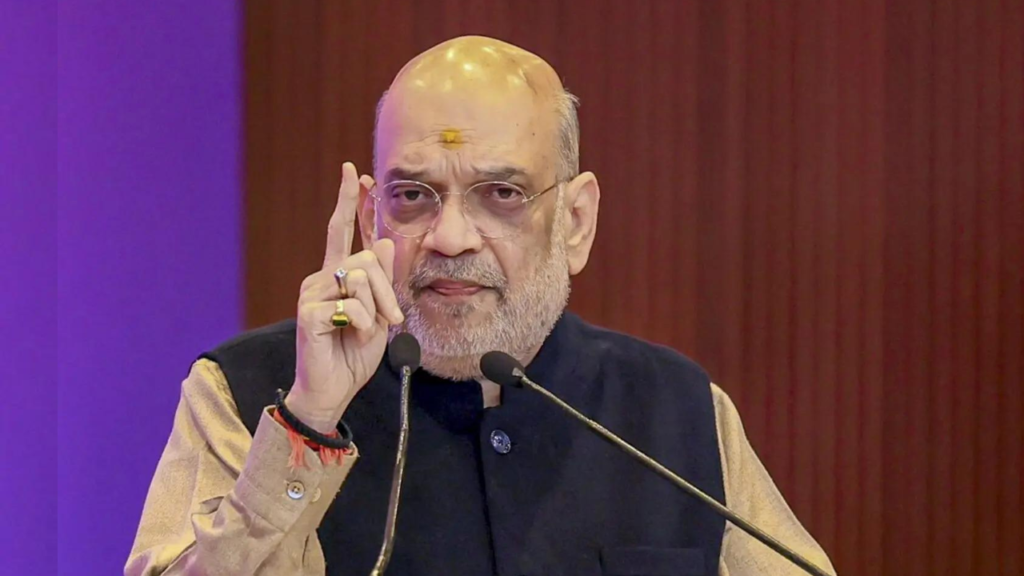
- Union Home Minister Amit Shah hailed the operation as a “historic milestone” in the government’s ongoing crackdown on transnational drug syndicates.
Who Is Navpreet Singh?
- About:
- Navpreet Singh, also known as Navab Bhullar or Nav, is a notorious international narco-trafficking kingpin.
- He orchestrated a massive transnational syndicate smuggling heroin and methamphetamine from Afghanistan into India.
- He obtained Turkish citizenship using the false identity “Navab Virk” and continued operating a cross-border narcotics network while staying in Türkiye.
- Cases:
- May 2016 (First Arrest): Singh was arrested by Punjab Police in a major drug recovery case. He secured bail in November 2016 because investigators failed to file a chargesheet within the 180-day deadline.
- January 2017 (Acquittal): A Jalandhar court acquitted Singh due to inadmissible custodial statements, which reportedly emboldened him to expand his operations.
- Mid-2019 (The Escape): While on trial in Hoshiarpur, he skipped court dates using fake medical certificates and fled India via Bhutan to Dubai, eventually settling in Türkiye.
- 2021 (Syndicate Unmasked): The arrest of Rizwan Kashmiri in Delhi exposed a massive cross-border network involving Singh, leading to seizures of 358.08 kg of heroin in Faridabad.
- October 2024 (Record Drug Haul): Punjab Police linked Singh to a 105 kg heroin seizure.
- Along with this the Punjab Police recovered 31.93 kg of caffeine anhydrous, 17 kg of DMR, and six weapons from a rented house in Baba Bakala, Amritsar, in October 2024.
- He allegedly directed the smuggling of contraband from Pakistan into India via waterways using large rubber tubes.
- Investigators allege that Singh operated from abroad while coordinating the India-based distribution network.
- His cousin and alleged associate Prabhdeep Singh alias “Harry” was reportedly a conduit between Singh and other accused persons.
- July 2025 (Proclaimed Offender): An Amritsar court officially declared Singh a proclaimed offender after he repeatedly failed to appear for multiple trials.
- After Singh remained outside India, Indian authorities reportedly submitted a request for his extradition to Türkiye during 2023–24.
- October 2026 (Deportation & Arrest): Indian intelligence unmasked his fake Turkish identity, “Navab Virk,” leading to his deportation from Türkiye on October 3, 2026.
- He was subsequently produced before the Rouse Avenue Court in Delhi, which granted police 10 days of custodial interrogation in connection with the narcotics investigation.
- Significance of His Deportation:
- The case is important because it illustrates how transnational organised crime exploits borders, false identities and foreign jurisdictions.
- His return can help investigators interrogate an alleged central figure, identify suppliers, financiers, couriers and distribution channels, and trace illicit proceeds.
- It demonstrates India’s increasing reliance on INTERPOL cooperation, bilateral mechanisms and BHARATPOL to pursue fugitives beyond national territory.
What Is Deportation?
- About: Deportation broadly means the removal of a person from a country by its competent authorities.
- It typically occurs when an individual enters a country illegally, overstays their visa, or acts against public welfare and national security.
- It requires official nationality verification from the home country before the removal is executed.
- It is distinct from extradition, which is a formal legal process through which one state surrenders an accused or convicted person to another state for prosecution or punishment.
- Objective: Its principal objectives include maintaining immigration control, national security, public order and territorial sovereignty.
- It serves to deter unauthorized migration and provides a systematic mechanism to manage demographics and uphold domestic rule of law.
- Cooperation: International deportation relies heavily on bilateral agreements, Mutual Legal Assistance Treaties (MLATs), and international law conventions like the United Nations Convention against Transnational Organized Crime (UNTOC).
- States must collaborate to issue emergency travel documents and verify the biometrics of deportees.
- Modern fugitive management depends upon police-to-police information sharing, INTERPOL notices, immigration databases and diplomatic coordination.
- A Red Notice can help locate and provisionally arrest a wanted person pending extradition or similar lawful action, but it is not itself an international arrest warrant.
- India’s Legal Framework:
- India’s current immigration regime is governed principally by the Immigration and Foreigners Act, 2025, which came into force on 1 September 2025.
- It works alongside the Citizenship Act, 1955, defining illegal migrants.
- Under the Immigration and Foreigners Order, 2025, the central government holds absolute power to identify, detain, and deport unauthorized foreigners after judicial or tribunal verification.
- India’s anti-narcotics policy operates through the NDPS Act, 1985, the Prevention of Illicit Traffic in Narcotic Drugs and Psychotropic Substances Act, 1988, and international cooperation.
- For criminal surrender, India also relies upon extradition treaties/arrangements and applicable domestic procedures.
- Since citizenship and foreigners fall strictly under Union List, the Ministry of Home Affairs (MHA) serves as the nodal executive authority.
- MHA delegates operational deportation powers to individual State Governments and Union Territories.
- Under recent MHA guidelines, India operates a structured Updated Deportation Framework.
- This policy mandates District-level Special Task Forces (STF) to execute ground-level identification.
- It enforces a strict 90-day upper limit for the verification of suspected illegal migrants, recording biometrics on the Foreigners Identification Portal (FIP) to prevent fraud.
- The Supreme Court of India mandates that deportation cannot be arbitrary; it must follow due process of law under Article 21.
- Suspected foreigners are housed in designated Holding Centres equipped with basic amenities.
- No foreign national can be deported until their native country officially confirms their identity.
- The Central Bureau of Investigation (CBI) acts as India’s National Central Bureau (NCB) for Interpol.
- The CBI bridges domestic law enforcement with global networks, utilizing Interpol Red Notices to track transnational fugitives.
- When foreign criminals are intercepted at Indian ports, the CBI coordinates real-time communications to facilitate their deportation to requesting nations.
- To accelerate international police operations, the CBI utilizes the Bharatpol portal, which provides state police forces real-time access to Interpol resources for tracking fugitives.
- India drives Operation Trishul, a specialized initiative to geo-locate absconding criminals using digital footprints and satellite inputs for deportation and extradition.
- The government has set a target to eradicate and destroy every narco-cartel by December 2029.
- The government is executing the Vision Document on Narcotics Control 2026–2029, which includes enhanced international extradition coordination, advanced AI-based airport profiling, and screening programs.
- India’s current immigration regime is governed principally by the Immigration and Foreigners Act, 2025, which came into force on 1 September 2025.
Türkiye–India Cooperation in Tackling Transnational Crime
- India and Türkiye possess several institutional mechanisms relevant to cross-border crime.
- India lists a 2001 extradition arrangement with Türkiye, while the two countries also have a 2002 MoU on cooperation in the field of law and justice.
- These mechanisms provide channels for pursuing suspects and obtaining legal cooperation across jurisdictions.
- Türkiye occupies a strategically important position connecting South Asia, West Asia and Europe.
- Türkiye is among the countries with which India has an operational framework for Mutual Legal Assistance in Criminal Matters.
- Such cooperation can facilitate the transmission of judicial documents and other forms of assistance.
- To curb global networks, the countries operate institutional mechanisms like the Joint Working Group on Counter-Terrorism.
- India and Türkiye have a specific agreement concerning cooperation against illicit trafficking in narcotic drugs and psychotropic substances.
- It envisages cooperation in the prevention, investigation and prosecution of drug trafficking and information exchange concerning illicit narcotics and precursor substances.
- In April 2026, India announced the return of alleged drug trafficker Mohammad Salim Dola from Türkiye, with different authorities coordination.
- India and Türkiye align via international frameworks like the United Nations Convention against Transnational Organized Crime (UNTOC).
- They rely heavily on Interpol Red Notices to trace financial trails, execute coordinated border controls, and apprehend fugitives across the Mediterranean and South Asian corridors.
Frequently Asked Questions (FAQs):
1. Who is Navpreet Singh and why was he deported from Türkiye?
Navpreet Singh, alias Navab Virk, is an alleged narco-trafficking kingpin accused of operating internationally; Türkiye deported him to India.
2. Why did India seek the deportation of Navpreet Singh?
India sought his return to investigate alleged international drug trafficking, identify syndicate members, and prosecute him in Indian narcotics cases.
3. When was Navpreet Singh deported from Türkiye to India?
Navpreet Singh was deported from Türkiye and brought to India on October 3, 2026, where Delhi Police arrested him.
4. What allegations are linked to Navpreet Singh?
He is accused of using a false Turkish identity, coordinating narcotics trafficking, and smuggling heroin and methamphetamine from Afghanistan into India.
5. What is the Navpreet Singh drug trafficking case?
The case concerns a 2021 investigation involving seizure of 358.08 kg of heroin in Faridabad, with investigators alleging Singh’s links to the trafficking syndicate.
6. What did Amit Shah say about Navpreet Singh’s deportation?
Amit Shah called it a “historic milestone”, praising agencies for uncovering Singh’s identity and securing his deportation from Türkiye.
Disclaimer: Information in this article is based on official announcements and public records. Details may evolve over time.
| Also Read: Tahawwur Hussain Rana Extradition Case |