




Takeda QDENGA Vaccine Becomes India’s First Approved Dengue Vaccine
| General Studies Paper II: Health, Government Policies & Interventions |
Why in News?
Recently, India approved QDENGA Vaccine, the country’s first dengue vaccine, marking a transformative public health milestone
What is QDENGA Vaccine?
- About: QDENGA Vaccine (TAK-003) is the world’s first widely approved live-attenuated tetravalent dengue vaccine that can be administered irrespective of previous dengue infection (serostatus).
- It reduces the risk of symptomatic dengue, severe disease and hospitalization.
- Developed By: The vaccine was developed by Takeda Pharmaceutical Company Limited (Japan).
- It originated from research using a DENV-2 backbone and has undergone extensive Phase III TIDES clinical trials across dengue-endemic countries.
- Technology: QDENGA is a live-attenuated recombinant tetravalent vaccine.
- It contains weakened dengue viruses that stimulate both humoral (antibody) and cell-mediated immune responses without causing dengue disease.
- It is prepared in Vero cells using recombinant DNA technology. It falls under the category of Genetically Modified Organisms (GMOs).
- Features:
- Serostatus Independent: Unlike Dengvaxia, pre-vaccination testing is not required, making deployment simpler in endemic regions.
- Broad Protection: It is designed to provide protection against all four dengue virus serotypes (DENV-1, DENV-2, DENV-3 and DENV-4).
- It stimulates both humoral (antibody) and cell-mediated immune responses.
- Two-Dose Schedule: Administered as two 0.5 mL doses with a three-month interval, improving operational feasibility.
- High Effectiveness: Clinical studies reported about 80.2% efficacy against confirmed dengue and 90.4% protection against dengue-related hospitalization.
- Long-term studies also indicate protection extending for up to seven years in follow-up analyses.
- Working Mechanism: Following vaccination, weakened viruses replicate minimally and trigger neutralizing antibodies and T-cell responses against DENV-1 to DENV-4.
- This immune memory enables rapid viral neutralization during future exposure, significantly lowering disease severity.
- Global Status: It was first approved in the European Union in 2022. It currently has regulatory approval in 43 countries worldwide.
- QDENGA has also received approvals in Indonesia, the United Kingdom, Brazil, Argentina, Thailand and several other countries.
- It is also WHO-recommended/prequalified for eligible settings, strengthening its global public health acceptance.
- Approval in India: In July 2026, the Drug Controller General of India (DCGI) granted market authorization, making QDENGA India’s first approved dengue vaccine.
- It is approved for individuals aged 4–60 years, with commercial rollout expected through private healthcare initially.
- The approval has been granted based on scientific evaluation under the Drugs and Cosmetics Act, 1940 and safety data from Phase-III clinical trials conducted in India.
- Manufacturing: Takeda plans an annual global production capacity of 100 million doses by 2030.
- To ensure availability of vaccines in India, Takeda has partnered with Hyderabad-based Biological E, which will produce 50 million doses annually in India.
- In India, the vaccine is expected to be officially commercially available in the private and public health sectors in the first half of 2027.
- Significance: QDENGA is expected to reduce hospitalizations, severe dengue and mortality, while complementing vector control and surveillance, not replacing them.
- Limitations: The vaccine does not eliminate mosquito transmission, and is not 100% protective.
- Continued measures such as source reduction, personal protection, early diagnosis and surveillance remain essential for dengue control.
- A full two-dose course is estimated to cost between Rs 6,000 and Rs 12,000, posing significant affordability and compliance challenges for rural and low-income populations.
India’s Dengue Burden and Need for Vaccination
- Epidemiological Profile: Dengue has emerged as India’s most prevalent viral vector-borne disease, accounting for nearly 34% of global clinical infections.
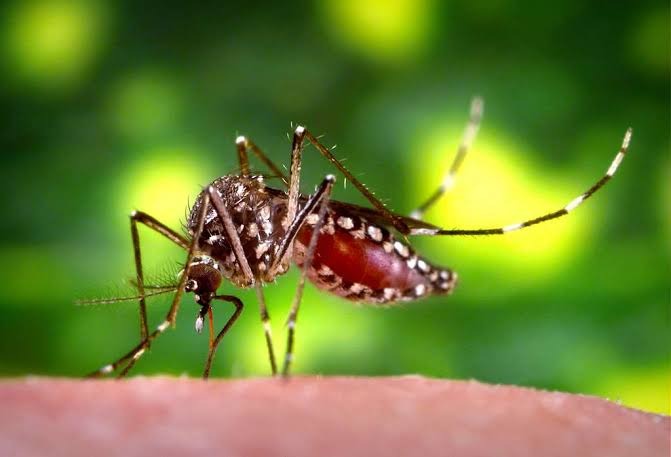
- Caused by the Flavivirus with four distinct serotypes, it is primarily transmitted by the Aedes aegypti and Aedes albopictus mosquitoes.
- According to Global Burden of Disease reports, India escalated dramatically, expanding from 11.2 million cases in 1990 to 28.2 million in 2021.
- This increase demonstrates an annual increase of 1.55% in the Age-Standardized Incidence Rate (ASIR).
- India remains a major hotspot in the WHO South-East Asia Region.
- Geographical Expansion: According to the National Centre for Vector Borne Disease Control (NCVBDC), dengue is now reported from all 36 States and Union Territories, except Lakshadweep.
- States like Punjab, Gujarat, Karnataka, Kerala, and Tamil Nadu report high endemicity, ranging between 21 and 50 cases per million population.
- It has aggressively penetrated hilly terrain and rural ecosystems, notably across the hilly districts of Himachal Pradesh and North-Eastern states like Assam.
- The rising burden is linked to unplanned urbanization, population density, water storage practices, climate change, international travel, and vector adaptation.
- Outbreak Dynamics: India experienced its watershed epidemic in 1996, registering over 16,000 cases and 545 deaths, which catalyzed national notification protocols.
- While the Case Fatality Rate (CFR) has systematically decreased under improved clinical paradigms to 0.07%, macro-level transmission cycles remain intense.
- During the global upsurge, the country recorded an extensive outbreak of 232,425 cases, highlighting recurrent multi-annual cycles driven by seasonal monsoon variations.
- Recent analyses indicate an over 11-fold rise in reported cases, driven by rapid urbanization, improved surveillance.
- Demographic Vulnerability: Data from the Global Burden of Disease (GBD) studies indicate that the highest Disability-Adjusted Life Years (DALYs) are concentrated within the productive 15–49 age group.
- Epidemiological reviews demonstrate a distinct male gender predominance in reported clinical settings (often exceeding 60%), while females experience a slightly elevated severe clinical vulnerability.
- Severe dengue manifestations, such as Dengue Shock Syndrome (DSS), present a leading cause of vector-borne childhood hospitalisation across the nation.
- Macro-Economic Burden: The economic strain of dengue in India is profound, estimating the aggregate societal cost at approximately US$ 5.71 billion.
- This economic impact is divided almost equally between direct medical costs (49% for diagnostics, drugs, and hospital beds) and indirect costs (51% due to loss of economic productivity and caregiver absenteeism).
- Households face severe financial vulnerability, spending a substantial average Out-of-Pocket Expenditure (OOPE) of ₹5,567 per episode, with private facility admissions skyrocketing costs up to ₹21,859 per case.
- Environmental Drivers: Climate change acts as a primary catalyst for the “Dengue Triangle” of virus, vector, and human host.
- Fluctuating rainfall patterns coupled with relative humidity markers sustained between 60% and 78% generate optimum vector microclimates.
- Projections indicate that escalating global temperatures mean metrics could surge dengue-related mortality in India by up to 40% by 2050.
Government Measures to Combat Dengue in India
- National Centre for Vector Borne Disease Control (NCVBDC): The NCVBDC, under the Ministry of Health & Family Welfare (MoHFW), is the nodal agency implementing the National Vector Borne Disease Control Programme (NVBDCP).
- It provides technical guidance, policy support, financial assistance, and operational planning to States and UTs for dengue prevention and outbreak management.
- Under the National Health Mission (NHM), States and UTs receive financial assistance.
- Integrated Disease Surveillance Programme (IDSP): The IDSP, under the National Health Mission (NHM), strengthens laboratory-based, IT-enabled surveillance for epidemic-prone diseases.
- It enables real-time reporting, trend analysis, Rapid Response Teams (RRTs), and early outbreak detection to contain dengue transmission promptly.
- Sentinel Surveillance Network: The Government has established 869 Sentinel Surveillance Hospitals (SSHs), supported by 27 Apex Referral Laboratories (ARLs), to strengthen early diagnosis, laboratory confirmation, and surveillance.
- Free Diagnostic Support: To ensure uniform and reliable diagnosis, the Government supplies IgM MAC ELISA diagnostic kits through the ICMR–National Institute of Virology (NIV), Pune. Annual allocations and emergency buffer stocks are maintained.
- National Standard Protocols: MoHFW has issued National Guidelines for Clinical Management of Dengue (2023), Integrated Vector Management (IVM) guidelines, and hospital Aedes control protocols to standardize prevention and treatment nationwide.
- Integrated Vector Management (IVM): India follows Integrated Vector Management, combining source reduction, environmental sanitation, fogging during outbreaks, and personal protective measures.
- Capacity Building and Awareness: The Government conducts regular training programmes for healthcare workers, programme managers, and laboratory personnel.
- Simultaneously, nationwide IEC/BCC campaigns promote “Dry Day” activities, elimination of stagnant water, and community participation to reduce mosquito breeding.
- Active social mobilization campaigns like National Dengue Day (May 16) to bridge public awareness gaps.
- Real Time Tracking: The Ministry actively deploys real-time tracking systems.
- A major technical leap includes the conceptualisation of the Dengue Early Warning System, which leverages machine learning and AI to predict regional outbreaks up to two months in advance.
- Indigenous Pipeline: ‘DengiAll’ is a single-shot, tetravalent live-attenuated vaccine developed by Panacea Biotec and the ICMR.
- Designed to provide balanced protection across all four dengue serotypes, it is currently in large Phase III trials across India.
- The vaccine is based on the National Institutes of Health (NIH) TV003 platform and is anticipated for rollout around 2027.
FAQs:
1. What is the QDENGA vaccine?
QDENGA is a live-attenuated tetravalent dengue vaccine protecting against all four dengue virus serotypes.
2. Why is QDENGA significant for India?
It is India’s first approved dengue vaccine, strengthening prevention against severe dengue and hospitalizations.
3. Who approved the QDENGA vaccine in India?
The Drug Controller General of India (DCGI) approved QDENGA in July 2026.
4. Who is eligible to receive the QDENGA vaccine?
Individuals aged 4–60 years are eligible under the current DCGI approval.
5. How effective is the QDENGA vaccine against dengue?
It showed about 80.2% efficacy and 90.4% protection against dengue-related hospitalization.
6. When will QDENGA be available in India?
Commercial rollout is expected after regulatory approval, beginning through the private healthcare sector.
Disclaimer: Information in this article is based on official announcements and public records. Regulations and implementation details may evolve over time.
| Also Read: CDSCO Approval for Wegovy MASH Treatment |