



ONGC Venezuela Operations Receives US Licence
| General Studies Paper II: Effect of Policies & Politics of Countries on India’s Interests |
Why in News?
Recently, Indian oil company Oil and Natural Gas Corp (ONGC) Videsh Ltd. Or OVL secured a licence from the United States Treasury’s Office of Foreign Assets Control (OFAC) to resume full oil-field operations in Venezuela.
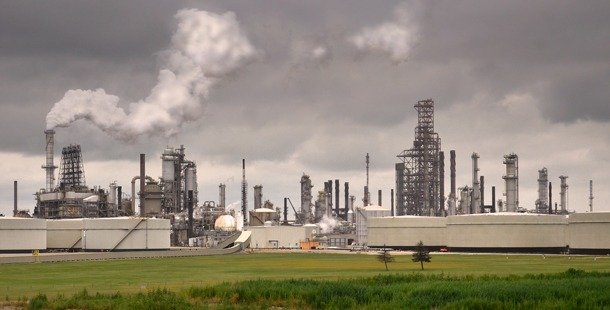
US OFAC Licence Approval for ONGC Venezuela Operations
- ONGC Videsh Ltd. (OVL) received a US Treasury Office of Foreign Assets Control (OFAC) licence permitting it to resume full operations in Venezuela.
- The approval removes the sanctions-related regulatory barrier that had restricted OVL’s activities in its Venezuelan oil investments.
- ONGC confirmed the development through its senior management following its Q1 FY27 results.
- The OFAC is a U.S. Treasury agency that enforces economic sanctions.
- An OFAC license grants official permission to carry out specific financial or business transactions that U.S. law otherwise restricts in sanctioned regions.
- OFAC issued General Licences 48, 49 and 50 in February, authorising specified supply, investment-negotiation and oil-and-gas transactions involving eligible entities.
- GL 50A specifically expanded authorised oil-sector transactions for listed companies under defined conditions.
- The licence represents a significant relaxation. OVL can now undertake activities associated with its Venezuelan upstream projects.
- This potentially covers operational management, investment-related activities and financial transactions necessary for continuing its participation in the projects, subject to the licence’s specific conditions.
- OVL will now be able to pursue the recovery and repatriation of accumulated dividends from its Venezuelan investments.
- More than $500 million, with estimates approaching $600 million, has remained outstanding because sanctions and payment restrictions complicated financial flows.
| Note: ONGC Videsh Limited is the overseas arm and wholly owned subsidiary of the state-owned Oil and Natural Gas Corporation (ONGC) of India. It focuses on finding, developing, and producing oil and gas outside of India |
ONGC Videsh’s Venezuelan Assets and Sanctions
- Assets & Stakes: ONGC Videsh Ltd (OVL) holds a 40% participating interest in the San Cristóbal oil project located in the Orinoco Heavy Oil Belt.
- It also holds an 11% stake in the Carabobo-1 project, making it a major player in Venezuela’s energy architecture.
- Production: FY2024-25 production was about 1,870 bpd from San Cristobal and 970 bpd from Carabobo-1.
- The San Cristóbal field produced merely 0.265 million tonnes of oil equivalent in FY26.
- With new investments, OVL aims to lift output from 12,000–15,000 bpd to 30,000 bpd within a year.
- Long-term field capacity can surge to 80,000–100,000 bpd using advanced extraction techniques.
- Operatorship Transfer: Leveraging Venezuela’s new petroleum law, OVL is currently negotiating to take over direct operatorship of two blocks from Petroleos de Venezuela S.A. (PDVSA), the state-owned oil company of Venezuela.
- Sanction: The US Department of the Treasury intensified primary economic sanctions on Venezuela’s oil sector in January 2019, drastically penalizing entities dealing directly or indirectly with state-owned PDVSA.
- US sanctions intensified amid the Maduro government’s disputed political legitimacy, repression concerns and democratic deterioration.
- Sanctions created severe compliance, financing, technology and equipment constraints, limiting OVL’s ability to operate efficiently.
- Due to strict international banking blocks, over $500 million (and up to $600 million) in accumulated dividends owed by PDVSA to OVL remained frozen since 2014.
- While Venezuela satisfies under 1% of current imports, expanding these assets allows India to diversify away from Middle Eastern concentration risks, lowering global price volatility.
Significance of OFAC Approval
- Access to Distinct Crude Basket: Venezuela offers heavy and sour crude, unlike many lighter grades.
- EIA classifies heavy crude generally around 22° API or below.
- The crude contains elevated sulfur levels exceeding 2%, requiring sophisticated, multi-stage catalytic desulfurization processes.
- Direct imports help bypass volatile shipping constraints seen in the Strait of Hormuz.
- Exceptional Resource Base: Venezuela possesses the world’s largest proven crude-oil reserves (estimated at over 300 billion barrels), overwhelmingly concentrated in heavy/extra-heavy deposits, particularly the Orinoco Oil Belt.
- Venezuela is a founding member of Organisation of the Petroleum Exporting Countries (OPEC). Its heavy crude contains more complex hydrocarbon fractions and generally requires advanced refining equipment.
- Indian facilities, particularly Reliance’s Jamnagar complex (NCI 21.1), possess a Nelson Complexity Index over 12, allowing them to efficiently process these heavy bottoms.
- Import Diversification: India imported crude from 41 countries, up from 27 earlier, demonstrating deliberate geographical diversification.
- Venezuelan supplies strengthen this strategy by expanding India’s footprint into Latin America.
- While Venezuela satisfies under 1% of current imports, expanding these assets allows India to diversify away from Middle Eastern.
- Russia supplied a record 50.83% of India’s crude imports in July 2026. Venezuelan access cannot replace Russian volumes immediately, but it can broaden the portfolio.
- Venezuela offers significant discounts of $10–$12 per barrel to counter high transportation costs, providing a cost-effective alternative to other grades.
Frequently Asked Questions (FAQs):
1. What US licence has ONGC received?
ONGC Videsh received a US Treasury OFAC licence permitting it to resume full operations in Venezuela.
2. Why does ONGC need a US licence to operate in Venezuela?
Because US sanctions on Venezuela and PDVSA restricted transactions involving Venezuelan oil operations, creating compliance risks for OVL.
3. What is ONGC Videsh’s role in Venezuela?
OVL is ONGC’s overseas investment arm, holding equity interests in Venezuelan upstream oil projects alongside PDVSA.
4. What oil assets does ONGC have in Venezuela?
OVL holds 40% in San Cristobal and 11% in Carabobo-1, both Venezuelan upstream oil projects.
5. How will the US licence affect ONGC Venezuela operations?
It removes major sanctions-related barriers, enabling expanded operations, investment, financial management and potential production increases.
Disclaimer: Information in this article is based on official announcements and public records. Regulations and implementation details may evolve over time.