Approval of Permanent Ladakh Bench for J&K High Court
| General Studies Paper II: Indian Constitution, Government Policies & Interventions |
Why in News?
Recently, the Union Cabinet approved a Permanent Ladakh Bench for J&K High Court on August 20, 2026, strengthening access to justice for remote Ladakh residents.
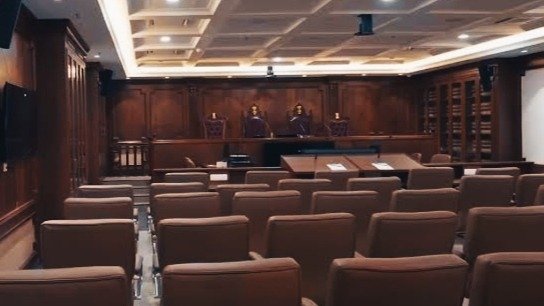
High Court of Jammu & Kashmir and Ladakh
- About: The High Court of Jammu & Kashmir and Ladakh serves as the apex judicial institution for the region.
- It is the common High Court for both Union Territories: Jammu & Kashmir and Ladakh.
- Following the J&K Reorganisation Act, 2019, the institution was formally renamed via a presidential order in 2021.
- Foundation: The court was established on March 26, 1928, via Order No. 1.
- It was issued by the then ruler, Maharaja Hari Singh.
- It transitioned the region from a monarchical decree system to a codified, formal judicial administration.
- The court historically follows a unique biannual “Darbar Move” infrastructure.
- It operates dynamically out of dual headquarters located in both Srinagar (summer) and Jammu (winter).
- Composition: The apex bench comprised one Chief Justice and two puisne judges.
- Lala Kanwar Sein was appointed as its historic first Chief Justice.
- Jurisdiction: Its absolute legal boundary covers the Union Territory of Jammu & Kashmir and the Union Territory of Ladakh.
- Srinagar and Jammu are the two existing seats of the court.
- On 20 August 2026, the Union Cabinet cleared a permanent High Court bench for Ladakh.
- It will become the High Court’s third judicial location, alongside its existing principal seats.
- Bench Strength: The total sanctioned strength of the judiciary was expanded to 25 judges.
- This framework mandates a division of 19 permanent judges and 6 additional judges.
- Appointment Quota: Judges are formally appointed by the President of India.
- The recruitment pool follows a strict legislative ratio of 66% from the Bar and 33% from judicial services.
- Writ Jurisdiction: The court commands powerful constitutional remedies to enforce fundamental rights.
- Under Article 226 of the Constitution of India, it issues mandates including Habeas Corpus and Mandamus.
- Under explicit constitutional provisions, the High Court holds absolute administrative control over lower courts.
- It oversees 174 subordinate courts, including District Judges and Munsiffs.
- Constitutional Foundation: It operates within India’s constitutional framework.
- Article 241 empowers Parliament to constitute High Courts for Union Territories and applies relevant High Court provisions.
- Article 231 permits Parliament to establish a common High Court for two or more States and Union Territories.
- The decisive statutory framework is the Jammu and Kashmir Reorganisation Act, 2019 (Act 34 of 2019), reorganising the former State into two Union Territories.
- Section 3 created the Union Territory of Ladakh without a legislature, while Section 4 created Jammu and Kashmir with a legislature.
- Section 75 expressly provides that the High Court of Jammu and Kashmir shall be the common High Court for the Union Territories of Jammu and Kashmir and Ladakh.
- Section 76 contains special provisions concerning the Bar Council and advocates, while Section 77 addresses practice and procedure in the common High Court.
- Section 78 contains savings provisions, while the Act’s wider transitional framework preserves necessary legal and institutional continuity following reorganisation.
Why Ladakh Needs a Permanent High Court Bench?
- Geographical Remoteness: Ladakh covers about 59,136 sq km, with nearly 90% mountainous terrain. Scattered settlements make access to distant judicial institutions exceptionally difficult.
- Travel Burden: Residents requiring High Court remedies have historically faced the practical difficulty of travelling outside Ladakh. A local Bench directly addresses this time and mobility barrier.
- Difficult Terrain: High-altitude terrain, harsh winters and geographically fragmented habitation make physical connectivity more challenging than in ordinary regions. This magnifies the cost of accessing justice.
- Remote Populations: Ladakh contains extensive far-flung and border settlements. The judicial-access problem therefore concerns citizens living considerable distances from administrative hubs.
- Case Pendency & Judicial Capacity: Data presented to Parliament recorded 44,557 pending cases before the High Court as of July 30, 2026, which includes 6,106 cases pending for over ten years.
- As of 13 March 2026, the J&K and Ladakh High Court had 25 sanctioned judges, 14 working judges, and 11 vacancies, highlighting capacity considerations.
- Leh–Kargil Spread: Ladakh’s judicial administration historically covered Leh and Kargil, its two districts. The High Court itself lists separate district-court systems for both, highlighting the territory’s dispersed judicial geography.
- Administrative Expansion: In April 2026, Ladakh’s districts increased from two to seven through the creation of Sham, Nubra, Changthang, Zanskar and Drass. This makes geographically accessible higher judicial services increasingly relevant.
- Access-To-Justice Principle: The proposed Bench advances substantive access to justice by bringing High Court-level judicial services physically closer to citizens, thereby strengthening Article 39A’s access-to-justice objective.
- Time Efficiency: The Union Government specifically stated that the Bench would reduce the time required to avail legal services. This can improve practical access.
- Digital Justice Insufficient: Ladakh already benefits from e-Sewa Kendras and video-conferencing infrastructure, but physical judicial presence remains important where technology cannot completely substitute for hearings and legal assistance.
High Courts under the Constitution of India, 1950
High Courts serve as the highest judicial authority at the state level within India’s single integrated legal system.
- Constitutional Provisions: Under Article 214 of the Constitution, each state is mandated to possess its own judicial seat.
- The comprehensive framework governing these institutions resides within Articles 214 to 231 under Part VI of the Indian Constitution.
- Total Count: There are 25 High Courts operating across 28 states and 8 Union Territories.
- While the Calcutta High Court stands as the oldest established in 1862, the Andhra Pradesh High Court remains the newest, founded in 2019.
- Shared Jurisdiction: Under Article 231, Parliament holds the legal authority to create a common High Court for multiple states.
- Currently, three High Courts maintain shared territorial boundaries, such as the Bombay High Court .
- Court Composition: Each bench is composed of a Chief Justice along with other judges.
- The exact sanctioned judicial strength is not fixed by law; it is determined periodically by the President of India based on caseloads.
- Judge Appointments: Judges are formally appointed by the President via the Judicial Collegium system.
- This process requires active consultation with the Chief Justice of India, the regional Governor, and the specific state’s Chief Justice.
- Tenure Bounds: A High Court judge possesses a secure tenure up to the retirement age of 62 years.
- They can only be removed before this age threshold by an explicit order from the President following parliamentary impeachment.
- Writ Powers: Under Article 226, the court wields extraordinary authority to issue writs like Habeas Corpus and Mandamus.
- This reach is wider than the Supreme Court’s Article 32 as it protects both Fundamental Rights and ordinary legal rights.
- Appellate Domain: These bodies function as the chief courts of appeal within state boundaries.
- They hold the jurisdiction to review or overturn civil, criminal, and revenue rulings issued by subordinate courts.
- Supervisory Authority: Under Article 227, High Courts hold absolute power of superintendence over lower courts and tribunals.
- They formulate administrative protocols, call for legal case records, and strictly regulate subordinate judiciary operations.
- Court of Record: Functioning as a court of record, all testimonies, judgments, and legal proceedings are permanently archived.
- These historical records carry absolute evidentiary value and serve as mandatory legal precedents for lower courts.
Frequently Asked Questions (FAQs):
1. What did the Union Cabinet approve for Ladakh regarding the J&K High Court?
The Cabinet approved establishing a High Court Bench in Ladakh, improving access to justice for remote residents.
2. What is a permanent bench of the J&K High Court in Ladakh?
It is a local sitting of the common High Court of J&K and Ladakh, not a separate High Court.
3. Why does Ladakh need a permanent High Court bench?
It reduces travel difficulties, time and geographical barriers faced by litigants accessing High Court services from Ladakh.
4. Where will the permanent Ladakh bench be located?
The Cabinet announcement has not yet officially specified whether the Bench will be located at Leh or Kargil.
5. What cases can be heard by the Ladakh bench of the J&K High Court?
It can hear matters within the High Court’s jurisdiction, subject to notified territorial, roster and procedural arrangements.
Disclaimer: Information in this article is based on official announcements and public records. Regulations and implementation details may evolve over time.
| Also Read: Formation of 5 New Districts in Ladakh |