India First Contactless Load Measurement System
| General Studies Paper III: Science and Innovation, Indigenous Technical |
Why in News?
Recently, the Technology Development Board supported commercialization of India’s first fully contactless programmable Load Magnetic Overload (LMO) system.
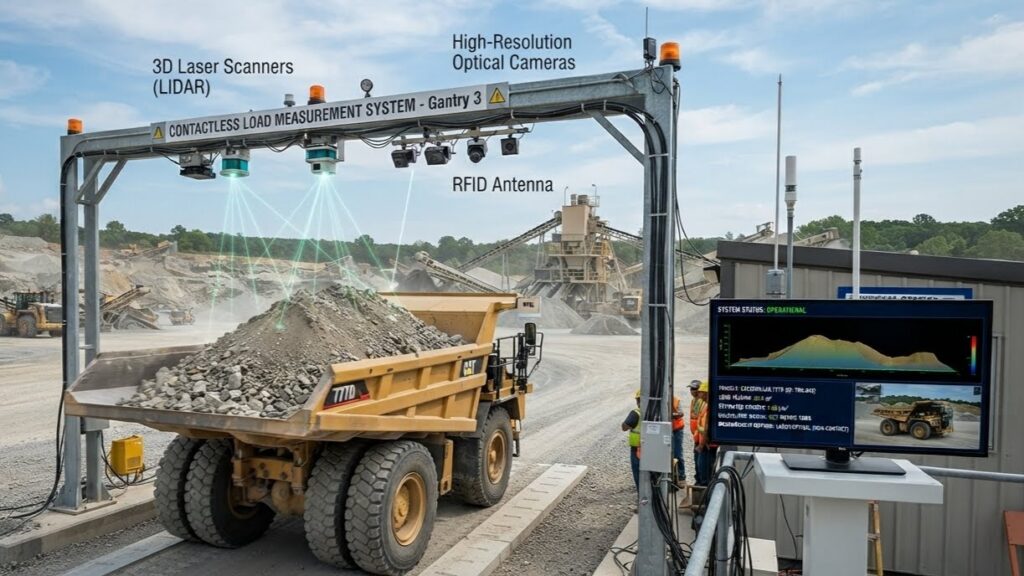
What is India’s First Contactless Load Measurement System?
- About: India’s first fully contactless programmable Load Measurement System, called the LMO (Load Magnetic Overload Sensor), is an indigenous next-generation load sensing technology.
- It accurately measures load without physical contact between the sensing element and the measured component.
- Developed By: It is developed by Puretronics India Pvt. Ltd. with commercialization support from the Technology Development Board (TDB) under the Department of Science and Technology (DST).
- The Board has supported 444 agreements, committed over ₹3,261.60 crore, and facilitated creation of 70,000+ jobs across sectors.
- Purpose: The system accurately measures load and overload conditions in safety-critical equipment without physical contact.
- It aims to improve industrial safety, operational reliability, and automation efficiency while reducing dependence on imported sensing technologies.
- Technology: Unlike conventional strain-gauge load cells, the LMO uses a non-contact magnetic sensing principle.
- It detects load through changes in magnetic characteristics rather than mechanical deformation, eliminating direct physical contact.
- Components: The platform integrates high-resolution magnetic sensors, advanced digital signal processing (DSP), and programmable embedded electronics.
- Together, these ensure highly accurate, configurable, and real-time load measurement.
- Programmable Architecture: Its programmable design enables application-specific customization, configurable overload limits, and seamless adaptation across different industrial machines.
- Industrial Integration: The system supports direct integration with PLC (Programmable Logic Controller), SCADA (Supervisory Control and Data Acquisition), and IoT-based industrial automation platforms.
- It enables continuous monitoring, predictive maintenance, and smart factory operations under Industry 4.0.
- Applications: The LMO is designed for elevators, cranes, hoists, material-handling systems, cable machinery, and other safety-critical industrial equipment requiring precise load monitoring.
- Advantages: The contactless design offers minimal calibration, low maintenance, high vibration resistance, simplified installation, and reliable operation even in harsh industrial environments.
- The technology strengthens India’s indigenous industrial electronics capability, promotes import substitution, and advances the national vision of Atmanirbhar Bharat in advanced sensor manufacturing.
- It represents a major advancement in India’s industrial automation, and advanced electronics ecosystem.
- Commercial production is expected to provide cost-effective, globally competitive sensing solutions, strengthening India’s industrial supply chain.
Major Indian Innovations in Industrial Sensing Technologies
- Indigenous MEMS Sensor Development: India is expanding MEMS (Micro-Electro-Mechanical Systems) technology through the Sensor Technology Development Centre (STDC) at CMTI, Bengaluru.
- The facility has 6-inch wafer fabrication, advanced cleanrooms, and focuses on indigenous pressure, temperature, inertial and industrial sensors.
- AI-Based Earthquake Monitoring Sensors: NanoAI Technology’s BhuWaivs is India’s first indigenous Strong Motion Accelerograph.
- It combines AI, IoT, tri-axial MEMS accelerometers, cloud analytics and GPS synchronization for earthquake early warning, dam safety and structural health monitoring.
- Touchless Sensor Technology: Scientists at CeNS and JNCASR developed a touchless touchscreen sensor capable of detecting finger movement from nearly 9 cm away.
- The low-cost transparent electrode technology supports kiosks, ATMs and medical devices.
- Indigenous mmWave Radar: Gahan AI has built India’s production-ready 77 GHz mmWave radar platform for ADAS, industrial automation and smart infrastructure.
- Indigenous radar technology reduces import dependence in high-end sensing systems.
- AnuPath Biosensor Platform: CeNSE’s AnuPath is a portable electrochemical biosensor capable of multiple blood and urine tests using a tiny sample.
- Bluetooth-enabled diagnostics support rapid healthcare delivery and digital health monitoring.
- Industrial Vision Sensors: MeitY’s iVIS 10GigE CMOS Vision System combines high-speed imaging with onboard processing for automated inspection, robotics and smart manufacturing applications under Industry 4.0.
- Smart Agri-Sensor Technologies: MeitY’s AgriEnIcs programme introduced AI-driven sensor systems for cattle health, crop-quality assessment and real-time odour monitoring, advancing precision agriculture and environmental management.
Government Policies Supporting Sensor Innovation in India
- Technology Development Board (TDB): The Technology Development Board (TDB) under the Department of Science and Technology (DST) funds commercialization of indigenous technologies.
- National Policy on Electronics 2019: The NPE 2019 aims to establish India as a global Electronics System Design and Manufacturing (ESDM) hub by promoting R&D, innovation, component manufacturing and high-value electronics.
- National Mission on Interdisciplinary Cyber-Physical Systems (NM-ICPS): Launched in 2018 with a ₹3,660 crore outlay, NM-ICPS promotes AI, robotics, sensors, IoT, automation and cyber-physical systems through translational research, commercialization and startup support.
- Technology Innovation Hubs (TIHs): Under NM-ICPS, 25 Technology Innovation Hubs have been established at premier institutions including IITs and IISc.
- Several hubs specialize in sensors, networking, robotics, precision technologies and industrial automation, accelerating indigenous innovation.
- India Semiconductor Mission (ISM): The India Semiconductor Mission builds a domestic ecosystem for semiconductor fabrication, MEMS sensors, silicon photonics and packaging, strengthening India’s strategic electronics manufacturing capabilities.
- Design Linked Incentive (DLI) Scheme: The DLI Scheme provides financial incentives, EDA tools and design infrastructure for Indian startups and MSMEs developing ICs, chipsets, SoCs and semiconductor-linked designs, encouraging indigenous sensor technologies.
- Production Linked Incentive (PLI): The PLI Scheme for Electronics Manufacturing incentivizes domestic production of electronic components and advanced hardware, strengthening the supply chain required for industrial sensing technologies.
- Startup and Industry Collaboration: Government programmes encourage collaboration among academia, industry, startups and research institutions, enabling prototype development, technology transfer and commercialization of advanced industrial sensors.
FAQs:
1. What is the LMO Contactless Load Measurement System?
India’s first programmable magnetic sensing system that measures loads without physical contact for industrial safety and automation.
2. How does the LMO Contactless Load Measurement System work?
It detects magnetic field changes caused by applied loads and processes them using embedded digital electronics.
3. What are the advantages of contactless load measurement?
It offers higher reliability, lower maintenance, reduced wear, accurate measurements and longer equipment life.
4. Where is the LMO system used?
It is used in cranes, elevators, hoists, material-handling equipment and other industrial load-monitoring applications.
5. Why is contactless load measurement important in industries?
It improves equipment safety, minimizes failures, enhances efficiency and supports predictive maintenance.
6. What technologies are used in the LMO system?
It combines magnetic sensing, digital signal processing, programmable embedded electronics and industrial automation technologies.
7. How does the system improve operational safety?
It continuously detects overload conditions, enabling timely alerts and preventing equipment damage or accidents.
8. Can the LMO system provide real-time load monitoring?
Yes, it provides continuous real-time load monitoring and integrates with industrial automation and control systems.
Disclaimer: Information in this article is based on official announcements and public records. Regulations and implementation details may evolve over time.
| Also Read: DRDO’s Breakthrough in Quantum Communication |